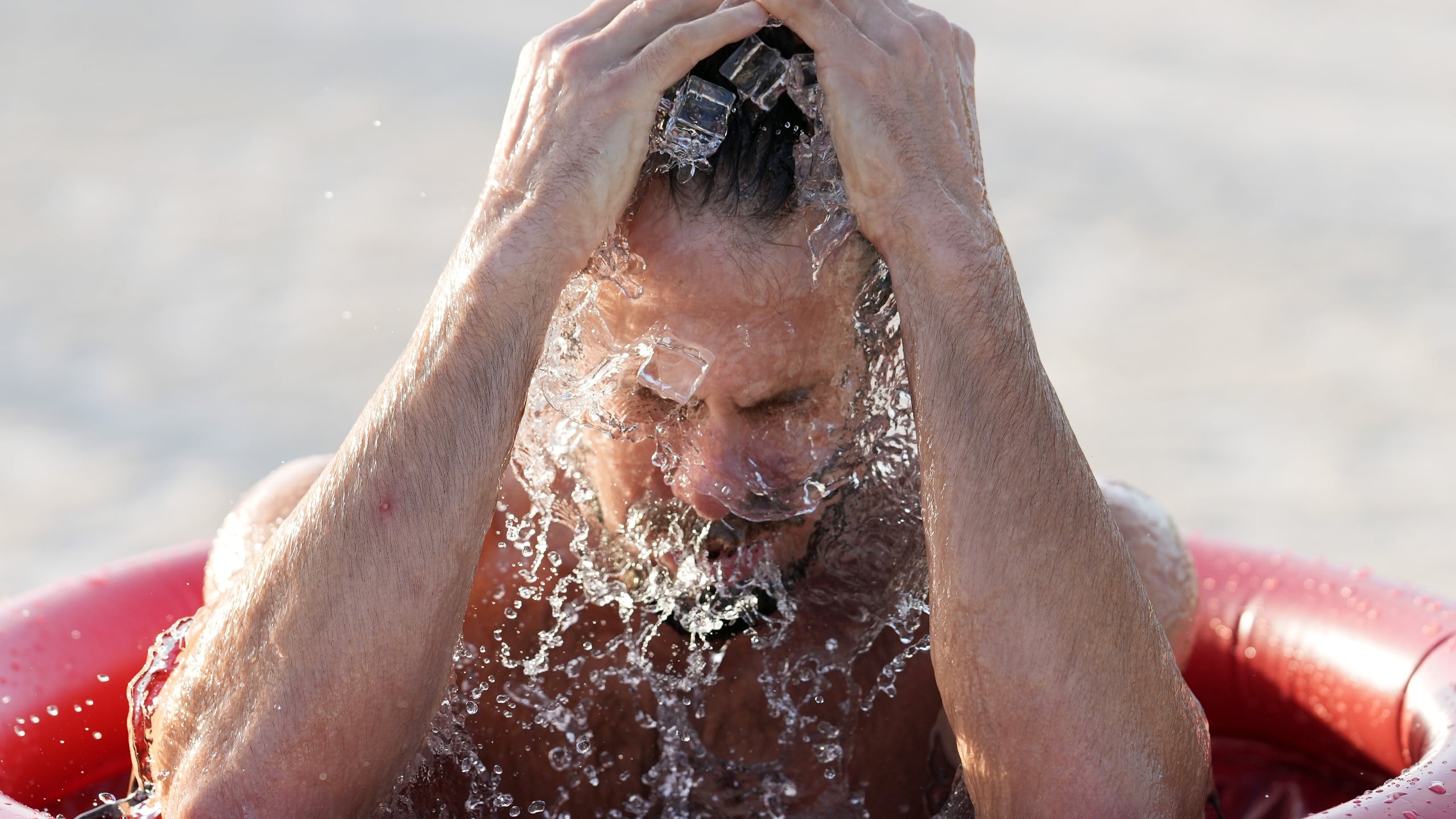
Cold-water immersion is not a one-size-fits-all recovery tool,” said Erfan Berjisian, lead author and exercise researcher at Edith Cowan University in Australia.
“Its benefits depend heavily on the athlete’s goals, the type of exercise completed, and when the next performance session is scheduled.”
A new umbrella review published in Sports Medicine – Open analyzed 15 prior reviews and meta-analyses covering 161 individual studies and 3,210 participants, finding that ice baths after exercise can reduce muscle soreness for up to four days, with the strongest effect after high-intensity workouts. The underlying studies measured many different outcomes in different ways and were not all of equal quality, so the overall picture is broad rather than precise.
The review also found that cold-water immersion lowers blood levels of creatine kinase, a marker of muscle damage, from roughly 24 to 72 hours post-exercise, and improves heart-rate variability, indicating faster nervous-system recovery. No consistent reductions were seen in two key inflammatory markers, according to the researchers.
Performance effects depend heavily on timing. Endurance performance improved only when athletes exercised within the first hour after immersion, with benefits fading thereafter. “Cold-water immersion appears especially useful when recovery time is limited, such as during tournaments, congested competition schedules or repeated high-intensity training sessions,” Berjisian said.
Muscular power and jump performance showed gains at 24 to 72 hours, yet explosive output worsened in the first few hours after cooling, likely because cold temporarily reduces muscles’ force-generating capacity.
“If athletes need to perform high-speed or explosive movements soon after cooling, cold-water immersion may be counterproductive unless sufficient re-warming occurs,” said Kristina Kendall, an exercise scientist at Edith Cowan University.
The biggest trade-off appeared in muscle building. Repeated cold-water immersion after resistance training blunted hypertrophy, resulting in smaller long-term gains in muscle size and strength.
“Cold water immersion attenuates gains in maximal strength, strength endurance, and ballistic performance when applied repeatedly after strength training,” the researchers write in their paper. The authors link this to mechanistic evidence of reduced muscle protein synthesis and dampened anabolic signaling when cooling follows strength work.
Berjisian emphasized that the practice should be matched to an athlete’s goals and schedule, not viewed as inherently beneficial or harmful. For general recovery, the team suggests 10 to 15 minutes in water at 10–15 °C (50–59 °F); a colder 5–10 °C (41–50 °F) may better limit muscle damage and aid jump recovery.
The findings are reported in Sports Medicine – Open.
Worth a look

BJP, Akali Dal Revive Alliance After Six Years for Punjab Assembly Elections
Six years after walking out over contentious farm legislation, the Shiromani Akali Dal and the Bharatiya Janata Party...

Maxon Launches Maxon Plus and Agentic Licenses with AI Tools
Maxon launched Maxon Plus and Agentic licenses on Monday, bringing AI-assisted creation tools and headless instances for agent-driven...

Indonesian Police Arrest Suspects in Separate Mercenary Recruitment Networks for Russia
Economic desperation has collided with front-line infantry demands as police across Indonesia dismantle trafficking pipelines luring citizens into...

Social Media Trends Drive Magnesium Supplement Interest, Expert Details Forms
A surge in social media wellness trends and celebrity endorsements has driven commercial interest toward magnesium supplements, prompting...