
University of Delaware engineers are developing microscopic robots that could break up blood clots in hours instead of the weeks standard drug therapy requires, WDEL reported.
- Researchers call the devices “clot bots” and say thousands can be injected near a clot to physically tear it apart while delivering medication.
- A portable version could be ready for clinical trials within the next few years, the team says.
- Production cost may be roughly a hundred dollars for twenty or thirty thousand robots, according to lead Sambeeta Das.
How the robots work
The machines are too small to see with the naked eye but appear on a screen as they move through fluid. The Newark campus team has built several designs with different shapes and capabilities. Once injected near a clot, the robots physically shred the blockage while releasing drugs directly at the site, WDEL reported.
The number deployed depends on clot size: “Depends on how big the clot is, but we would put in, I want to say, like a thousand or ten thousand at a time,” Das said.
Operators can let the swarm run autonomously or steer it remotely. Researchers have demonstrated precise navigation using a PlayStation 5 controller, WDEL reported. The robots are made from materials designed to disintegrate safely after finishing the job.
Materials cost yields thousands of robots
Das estimated that about a hundred dollars worth of materials yields twenty or thirty thousand robots, a figure she gave to WDEL. The technology has not yet reached clinical trials. The team hopes to have a portable system ready for human testing within the next few years, with the ultimate goal of putting it in doctors’ hands as soon as possible, WDEL reported.
The University of Delaware, classified as an R1 institution with very high research activity, reported $186 million in research and development expenditures in 2018, underscoring the institutional capacity supporting advanced engineering projects such as the “clot bots” under development at its Newark campus. This project leverages the university’s land-grant research infrastructure to translate microrobotics from laboratory demonstration toward clinical application.
Why it matters now
Philadelphia Eagles quarterback Jalen Hurts’ recent clot diagnosis has drawn public attention to the condition, but Das emphasized the broader scope. “It’s not just him, but it’s also a huge problem in pregnancy too. Serena Williams actually had that as well,” she told WDEL.
Standard treatment relies on blood thinners administered over weeks; the researchers envision a procedure lasting a couple of hours.
“I think that’s why we are doing it. Before things get bad we want to be able to solve we want to help doctors detect things faster, treat things faster better safer,” Das said.

Autodesk Beats Q3 Estimates, Raises FY27 Outlook
Autodesk reported third-quarter fiscal 2027 results, with revenue and earnings per share exceeding the high end of its...
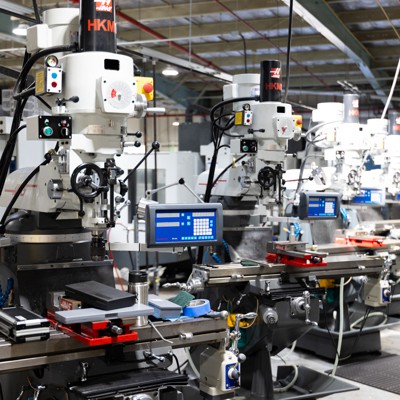
Pentagon-Funded Hawaii Program Aims to Build Defense Manufacturing Base
"Our shop here is, in my professional opinion, one of the most advanced and well-rounded…training facilities out there,...

Expert Review Recommends Plug-in Balcony Solar Panels for Ireland
Minister for Climate, Environment and Energy Darragh O'Brien will brief Cabinet on Tuesday on an expert review recommending...

Wyoming Conservation Groups Join Nationwide Call for Federal Data Center Moratorium on Public Lands
Wyoming conservation groups joined 115 organizations calling for a federal moratorium on data centers on public lands on...