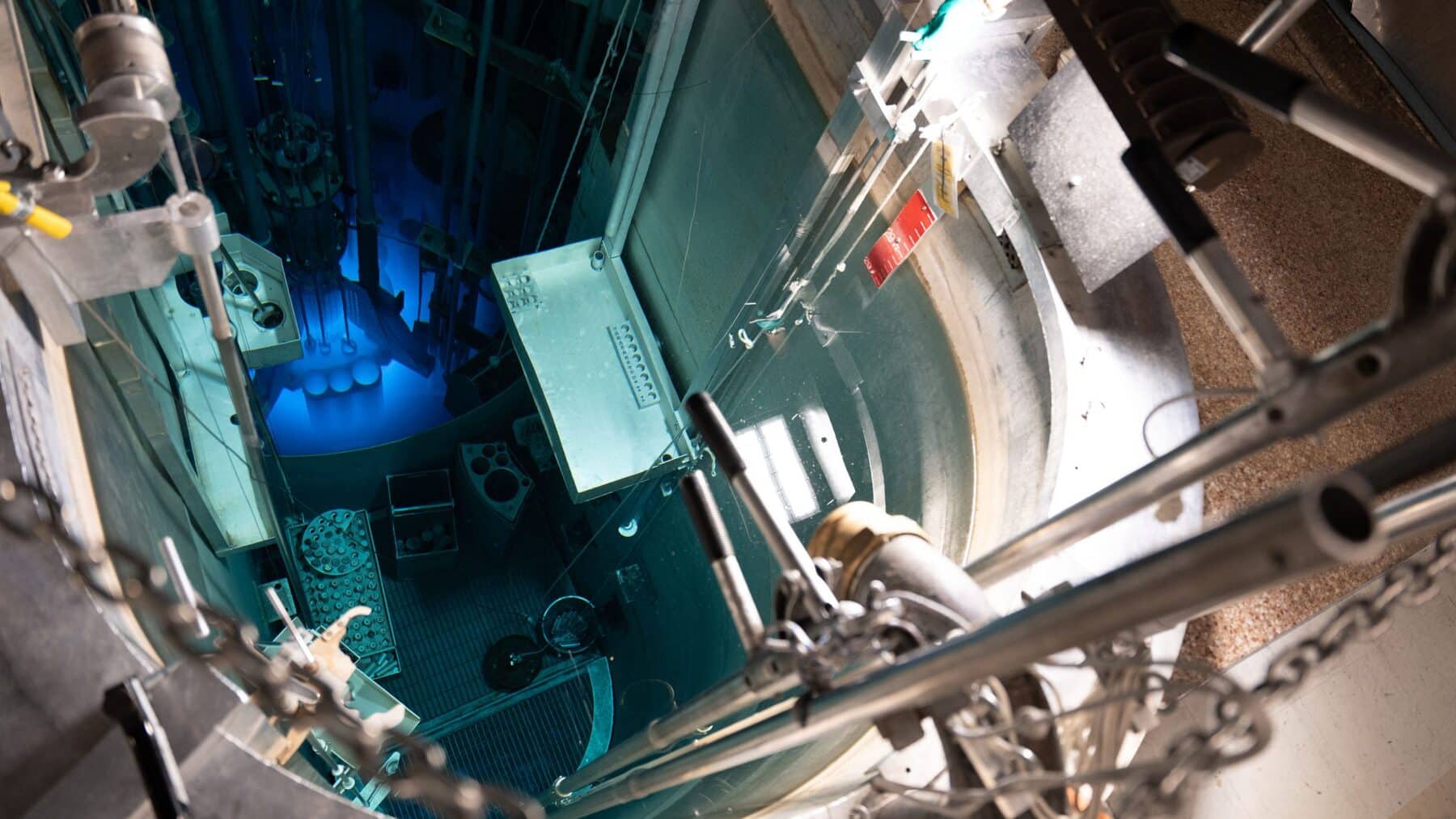
Reactor pipe burst in Columbia, Missouri, early on Friday.
A low power research unit at a university facility experienced an unplanned scram after a firemain pipe ruptured.
This wasn’t a core coolant failure, but a plumbing issue that triggered automatic safety logic.
The crew acted exactly as procedure called for, manually scramming the reactor when an unexplained pressure drop occurred near five in the morning.
The significance here isn’t a nuclear emergency, but a materials science question wrapped in regulatory paperwork; Energies Media reported that the firemain is separate from the primary coolant boundary.
“A scram is the system working, not failing.”
said a facility operator working in the reactor hall.
Inside that small reactor hall, not much bigger than a high school gymnasium, the crew worked around pipe runs threading along the walls like exposed veins. They found the twelve inch steel pipe split along its seam, not a joint blowing out.
The sequence shows a measured response: at 0502 the reactor was manually scrammed, and by 0514 the ruptured firemain was discovered and isolated to restore pressure.
The facility moved carefully after the trip, gaining permission from the facility director to restart the reactor at 1245 that same day, roughly seven and a half hours later.
The formal sequence comes from an event notification filed with federal nuclear regulators event notification filed with federal nuclear regulators.
Regulators’ own language for the pipe was blunt, describing it as found split from fitting to fitting, with the cause still under investigation at the time of the report.
Research reactors operate at a fraction of commercial power, meaning a firemain rupture remains a contained event rather than a full-blown emergency.
The immediate impact is on maintenance teams, who now have a concrete data point to fold into their next inspection cycle regarding aging infrastructure.
The strongest counter-argument is that this event is routine for smaller units, allowing for quick isolation and restart within hours instead of days.
Yet, this physical mechanism warrants attention; a pipe splitting seam to seam under normal pressure points directly to materials and inspection standards across the industry.
“The 12-inch firemain was found split from fitting to fitting. The cause is still being investigated.”
stated the filing.
For the community, the takeaway isn’t alarm, but confirmation: a facility’s safety systems can correctly respond to a failure unrelated to the core fuel, demonstrating sound design philosophy.
This logic mirrored a response to a reactor trip on Lake Michigan’s shore after a generator lockout.
The university hasn’t published the root cause, and the event notification confirms investigators were still working the question when the report went out.
The demographic most affected here isn’t the public, but the engineers and technicians responsible for aging infrastructure management and future fuel development efforts receiving federal backing.
Worth a look

KC Current Reach NWSL Championship After Early-Season Adversity
Kansas City Current reaches the NWSL Championship on Saturday after a 2026 season that began with four losses...

Hegseth Issued Classified Memo Restricting U.S.-Canada Defense Relationship
Defense Secretary Pete Hegseth issued a classified memo restricting U.S.-Canada defense relationship last week. The Washington Post reported...
Montrose Saloon Closes January as Owners Announce Decision
Montrose Saloon closes January after owners assess 50-year history. The neighborhood spot at 2933 W. Montrose Ave. has...

LightSource Reports on Topeka Foundry’s 150 Years of Metal Fabrication
One hundred fifty years after its first pour, Topeka Foundry & Iron Works still runs a 150,000-square-foot plant...