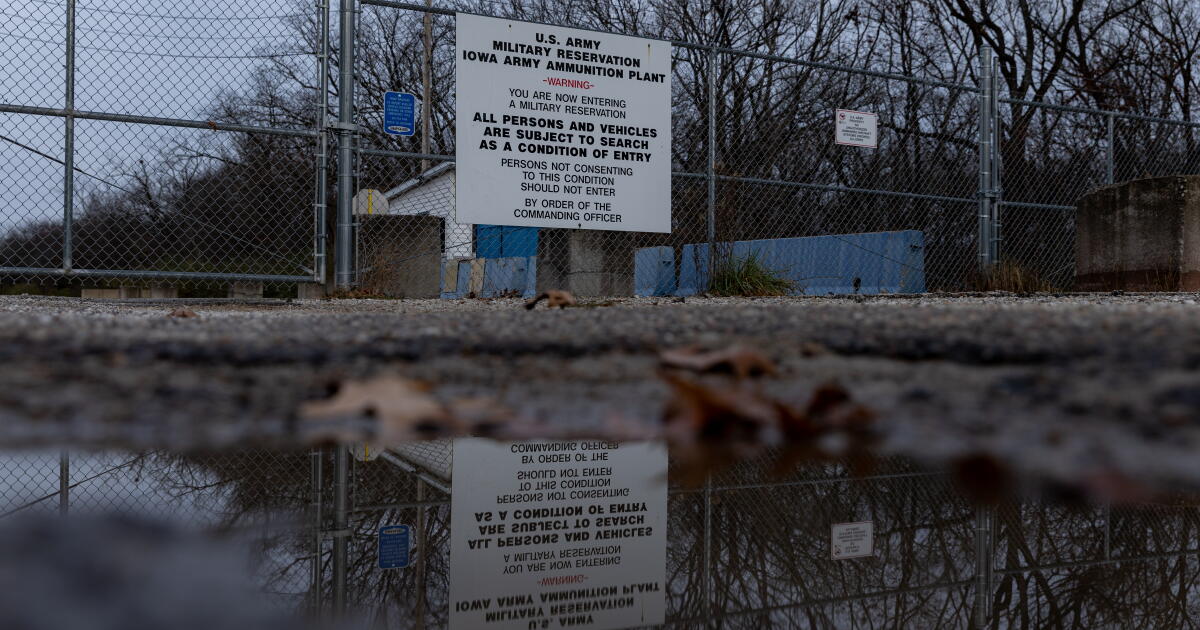
The U.S. Army detonated the nation’s entire stockpile of lead azide — five tons in 68 barrels — at the Iowa Army Ammunition Plant near Middletown on Wednesday, after officials said the degraded chemical risked exploding on its own as temperatures dropped.
Air monitors show no lead so far
EPA air monitors around the plant were not reporting any lead in the air more than half an hour after the blast, AP reported. An AP reporter and several bystanders watched from less than a mile upwind. Two loud booms at about 9 a.m. local time sent wispy white plumes upward before they quickly dissipated. No one at the roadside wore masks or eye protection.
“It was nothing,” Burlington resident Tim Brandt told AP. “It seemed like government put fear in a lot of people over nothing.”
The Army encased the two bunkers in concrete and sand barriers two stories high, surrounded the barrels with ballistic gels and foams to absorb lead dust, and planned to douse the site with more than 100,000 gallons of water to tamp down any plume, AP reported.
Colin Wellenkamp, executive director of the Mississippi River Cities and Towns Initiative, told AP the measures appeared to have limited lead dispersal. Water treatment facilities on the Mississippi and Missouri rivers began periodic testing within hours.
Crystallized stockpile forced the decision
The lead azide had been consolidated at the Iowa plant from bases around the country in 2009, according to Robert Cekada, director of the Bureau of Alcohol, Tobacco, Firearms and Explosives. A March inspection found the chemical had partially crystallized, making it sensitive to friction and cold and creating a risk of spontaneous detonation.
Maj. Gen. Eric Shirley, who led the operation, said “inaction is no longer an option.” The Army concluded that alternatives such as thermal treatment were not as safe as a controlled detonation.
Court clears the way after environmental challenge
Environmental groups sued to halt the plan, but a federal appeals court ruled Monday that the EPA had incorporated adequate safeguards to minimize lead dispersal, allowing the detonation to proceed. The blast had been scheduled for the previous Friday; the Army changed the date three times amid public backlash and to wait for favorable wind, court documents show.
Evacuation urged for five-mile radius
Officials encouraged residents within five miles of the plant to evacuate. Schools not already closed for Thanksgiving canceled classes. The wind was expected to carry any plume southwest toward Missouri and away from Burlington, a city of just under 25,000 on the Mississippi River, though hundreds of homes and farms remained in the potential path.
Officials declare success; testing continues
President Trump posted that early reports showed the “Army’s mitigation efforts have far exceeded expectations.” Acting Secretary of the Army Adam Telle and the Republican governors of Iowa and Missouri also called the explosion well-contained. Still, it remains unclear whether the plume carried toxic lead toward homes and farms. Federal and state researchers plan extensive environmental testing in the coming days.
“I don’t think lead danger goes away any time soon,” said Lucy Giehl, who lives in West Burlington. “It seems someone might have thought about all of this a little sooner before it came to this.”
More on Iowa Army Ammunition Plant
Related reading

Woodhouse Spa Opens First Nebraska Location in West Omaha
Woodhouse Spa has opened its first Nebraska location at Heartwood Preserve in West Omaha, debuting an approximately 6,700-square-foot...

Trump to Preside Over Dec. 4 TSMC Arizona Groundbreaking in Phoenix
President Donald Trump will headline the groundbreaking ceremony for Taiwan Semiconductor Manufacturing Co.’s latest Arizona expansion, transforming a...
U.S. Army Detonates Unstable Lead Azide in Iowa After Canceling Chemical Treatment Plan
The U.S. Army carried out a controlled detonation of 68 drums of unstable lead azide on Wednesday, Nov....

CRDA Reviews DHS Parking Lease Near Hartford Court After Mayor Requests Termination
The Capital Region Development Authority is reviewing a five-year parking lease signed by its garage operator with the...