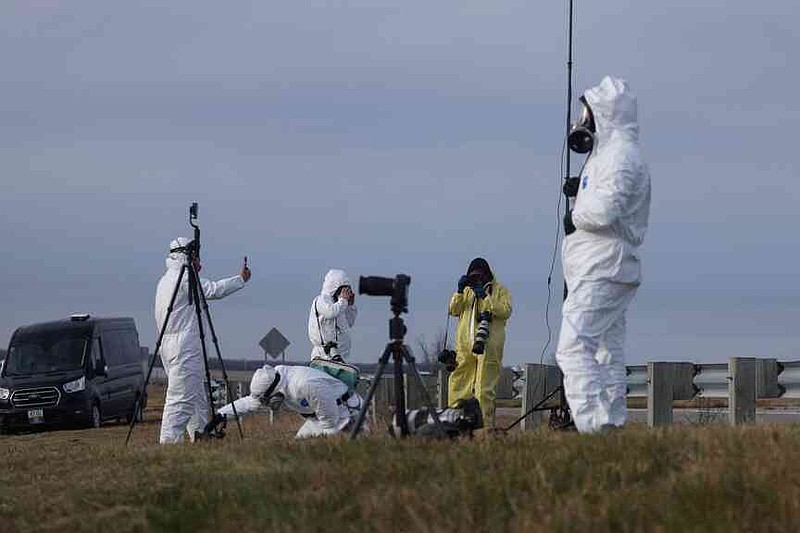
The US Army detonated the nation’s entire stockpile of lead azide in Iowa on Wednesday, calling the operation a success.
The 5-ton stockpile was destroyed at the Iowa army ammunition plant in Middletown, where it had been stored since 2009, to prevent a potential uncontrolled explosion as the chemical degraded. Earthen barriers, foam and water were used to absorb the blast, and initial monitoring from the US Environmental Protection Agency detected no lead in the air. FEMA and the army issued an all-clear, allowing residents to resume normal activities.
Maj Gen Eric Shirley, who led the army operation, said the risk was “reduced as close to zero as it’s absolutely humanly possible”. However, extensive environmental testing for lead in water sources, farms, homes and playgrounds is planned for the weeks ahead.
The two controlled blasts destroyed all 68 barrels and did not trigger any secondary explosions. The army scheduled the detonation because winds were blowing southwest, away from populated areas including Burlington. An Associated Press reporter filmed the blasts from less than a mile away and described them as two loud booms producing white plumes that quickly dissipated. Some residents who watched were unimpressed.
“It was nothing,” said Tim Brandt, a Burlington resident. “It seemed like government put fear in a lot of people over nothing.”
While officials declared the detonation a success, experts cautioned that it is too early to know the full health and environmental impact. The EPA’s air quality data was promising, but samples still need lab testing to determine risks, said Andrew Whelton, an environmental engineering professor at Purdue University.
“This should take days to weeks,” Whelton said. “But what we may see is different guidance issued to different communities based on how far they are from the detonation area and whether or not they were upwind or downwind.”
The two controlled blasts destroyed all 68 barrels and did not trigger any secondary explosions, according to Maj Gen Eric Shirley, who led the army operation.
Donald Trump posted on social media that the army did a “great job” detonating the stockpile.

However, final results from environmental testing are still pending, as researchers lab samples need to be analyzed to determine any potential health risks.
The detonation was originally planned for last Friday but was delayed due to a court ruling and public backlash over safety concerns. Environmental groups who sued to halt the detonation said legal action and public pressure forced the army to take more protective measures, including blast barriers and ballistic gels.
“Iowa and neighboring states deserve a full accounting of why the situation was allowed to get to the point of crisis,” said Sarah Green, executive director of the Iowa Environmental Council.
Some residents were concerned about the timing, just before Thanksgiving, while others worried about long-term effects.
“I don’t think lead danger goes away any time soon,” said Lucy Giehl, who lives nearby in West Burlington. “It seems someone might have thought about all of this a little sooner before it came to this.”
Related reading

Hawaii Women’s Basketball Defeats San Diego State 71-64 in Rainbow Wahine Showdown Opener
Hawaiʻi women's basketball defeated San Diego State 71–64 on Friday in the opening game of the American Savings...

Annapolis Firms Risk Losing Customers Over Outdated Digital Listings
Annapolis seafood restaurant owner Linda found her online listing still showed winter hours in July, a two-minute fix...

EPA Says No Rise in Lead Levels After US Army Iowa Detonation
Initial lab results show no rise in lead levels in drinking-water sources after the U.S. Army detonated five...

Sacramento State Travels to Hawai’i for Thanksgiving Weekend Game
Sacramento State travels to Honolulu on Saturday for a Thanksgiving-weekend game against Hawai'i that recalls a tradition conference...