
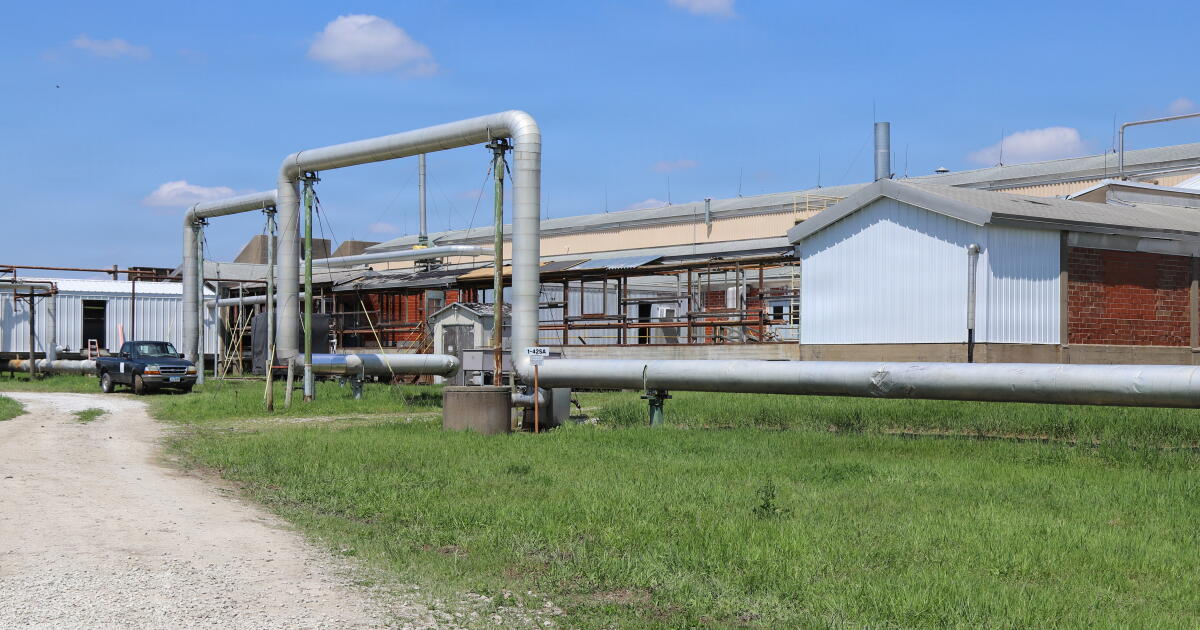
The U.S. Army plans to detonate roughly five tons of degraded lead azide at the Iowa Army Ammunition Plant on Monday, a controlled blast that could send a plume of lead‑containing dust up to 100 miles across southeast Iowa and into Illinois.
The operation, delayed from Friday to wait for favorable winds ahead of a temperature drop that could further destabilize the explosives, marks the latest possible moment to dispose of 68 drums of the bomb‑making compound discovered during a plant review last spring. Acting Army Secretary Adam Telle said the delay allows the service to act “prior to a forecasted temperature drop, which would risk further destabilization of the material.”
An Environmental Protection Agency emergency permit issued November 13 authorized the detonation and required five days’ public notice, air‑dispersion tracking, and post‑blast cleanup of any contaminated areas. That permit triggered the Army’s first public advisory on November 15 — five days before the original Friday date — covering communities as far as 100 miles downwind.
Public safety is the Army’s top priority, and I have directed Army Materiel Command to postpone tomorrow’s controlled detonation at the Iowa Army Ammunition Plant in Middletown, Iowa until Monday, November 23. This will delay the detonation until the latest possible moment prior…
“The safety of our people and our neighbors is non‑negotiable.”
Lt. Col. Daniel Nosse, commander of the plant, said at a March meeting acknowledging the volatility of lead azide.
Lead azide is a primary explosive used in detonators; when it degrades it becomes acutely sensitive to shock, friction, and static electricity, making transport or standard disposal extremely hazardous. The Army concluded that controlled detonation inside concrete structures surrounded by two‑story sand‑filled Hesco barriers was the safest option.
Modeling shows the dust plume drifting north and northeast toward Morning Sun, Wapello, and potentially across the Mississippi River into Mercer County, Illinois, before settling within about an hour. The Army’s maps identify a narrow central corridor of higher deposition surrounded by a broader zone of lower deposits. Airborne lead levels are predicted to remain well below the EPA threshold requiring mandatory protective actions, according to Army modeling.
Residents near Middletown’s City Park and Butterfly Park have been asked to leave their homes from 8 a.m. to 2 p.m. Central time on Monday because vibrations from the two rapid blasts could break windows. Nearly 400 people live in Middletown, but thousands more fall within the projected plume path.
Danville Community School District, a few miles northwest of the plant, canceled classes Friday and plans to remain closed Monday; Superintendent Pat Wallace said the uncertainty made closing “the most responsible decision.”
In Mediapolis, less than 20 miles northeast, city officials learned of their potential exposure only when the initial map placed them dead‑center in the deposition zone; schools and the public library closed Friday and the fire department planned to hose down playgrounds. An updated map later shifted the plume away from Mediapolis.
Johnson County Public Health said the county was outside the projected path as of November 18, while Linn County emergency management and public health officials continue coordinating with state agencies. The Illinois Department of Public Health posted an advisory November 19 warning that parts of Mercer County could be affected and urging residents to check updated exposure maps six hours before the blast and hourly thereafter.
“An unacceptable lack of communication and clarity has made Iowans understandably concerned and angry about this situation.”
governor‑elect Rob Sand wrote on X Thursday. “The public deserves to know, if this is the safest option, why other options were worse.”
Iowa Governor Kim Reynolds’ office was first briefed on the public advisory Monday — days after the EPA permit was issued. Telle acknowledged the criticism Thursday, writing on X that “public communication is essential to public trust” and that he was engaging state officials.
The safety of Iowans now and in the future should be government’s top concern. An unacceptable lack of communication and clarity has made Iowans understandably concerned and angry about this situation. The public deserves to know, if this is the safest option, why other options…
The Army advises anyone in the highlighted areas to stay indoors with windows and doors closed, turn off HVAC systems or set them to recirculate, and after the all‑clear, wet‑clean surfaces children may touch — playground equipment, toys, tables, chairs, handrails, and windowsills — to reduce exposure to deposited lead dust.
Lead exposure can damage the brain, nervous system, and kidneys, and at high levels cause seizures, coma, and death, according to the CDC.
The Army will issue a final estimate of the affected area after Monday’s detonations.
More on Mercer County
Worth a look

Portland Cultural Trust Selected to Manage Portland’5 Venues Starting July 2027
The City of Portland selected a brand-new nonprofit over a global entertainment giant to manage its five downtown...

Nashville Ballet Opens 2026 Holiday Season Nov. 27 With 22 Performances of Emmy-Winning Nutcracker at TPAC
Nashville Ballet will launch its 2026 holiday season on November 27 with 22 performances of Nashville's Nutcracker at...

Dr. Annette Reed Returns as Wileety College Dean of Students
Sacramento State president Luke Wood asked Dr. Annette Reed back to campus just weeks after she retired, tapping...

Alabama A&M Names Smith, Graham Bulldogs of the Week
Alabama A&M Athletics named women's volleyball setter Kaydee Smith and men's basketball forward James Graham III as its...