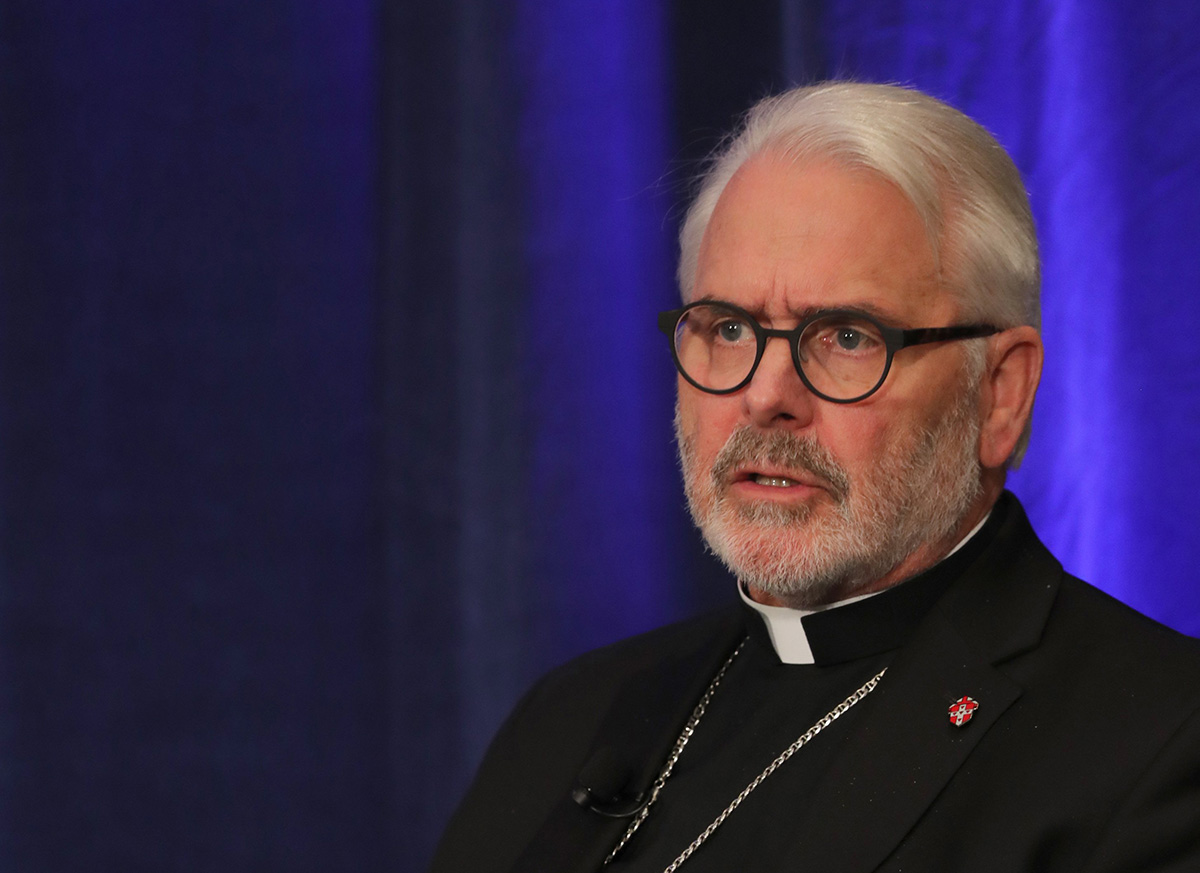
Leaders of the U.S. Conference of Catholic Bishops gathered in Baltimore on Nov. 17 to affirm that their advocacy for humane immigration policies will remain unchanged despite the shifting political situation following the recent midterm elections.
As the nation prepares for a new congressional session in January, the bishops emphasized their commitment to addressing the human and systemic challenges inherent in the current migration debate.
The assembly took place in the wake of a significant electoral shift, where Democrats secured a projected majority of more than 80 seats in the U.S. House and at least 55 seats in the U.S. Senate.
In the days following the election, President Donald Trump gave mixed signals on immigration, at first suggesting his approach may have been “too tough” and that he was open to working with Democrats, before his administration indicated its deportation policy would continue.
Archbishop Paul S. Coakley of Oklahoma City, president of the USCCB, addressed the press regarding how the conference intends to manage this transition. “I would say many of our concerns will remain the same,” he told reporters. He emphasized a consistent focus on the dignity of migrants, the necessity of reining in mass deportation policies, and the urgent need for improved conditions and pastoral care within detention centers.
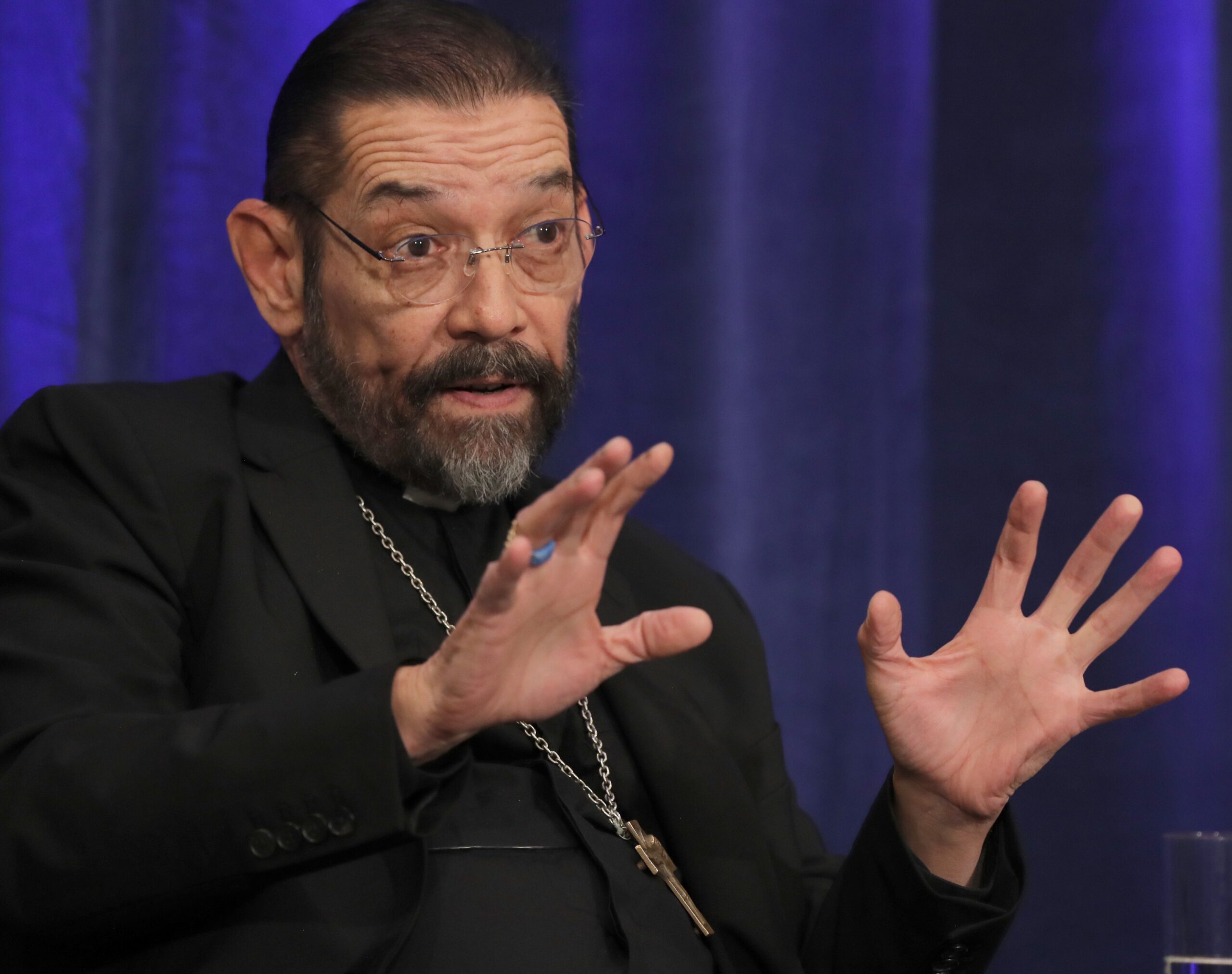
The bishops’ concerns extend beyond immediate policy shifts to the foundational principles of the American legal system. Bishop Daniel E. Flores of Brownsville, Texas, the USCCB vice president, highlighted the importance of due process during the same press conference.
He expressed specific alarm regarding what he termed a “de facto a mass deportation policy,” stressing that individuals possess inherent rights to legal counsel and the opportunity to defend themselves within an often intimidating and complex migration framework.
This perspective is rooted in a broader, decades-long call for comprehensive reform. Bishop Flores said that the bishops have consistently advocated for a system that balances national sovereignty with an orderly process for asylum seekers. He suggested that the current legislative climate might provide a rare window to reopen a conversation that has remained effectively frozen for years.
“We are here to help shape public policy according to our Catholic social teaching and the thinking of the common good, respecting the human dignity of every person, so we can find something in common with virtually anybody on the Hill that is willing to work with us, said Archbishop Paul S. Coakley, president of the U.S. Conference of Catholic Bishops.”
The bishops emphasized that their advocacy is not partisan, but rather driven by the principles of the common good. Archbishop Coakley stated a willingness to work with whoever occupies the White House or holds the majority on Capitol Hill, provided there is a pathway to address the human impact of these policies.
For those interested in the specific frameworks guiding these discussions, the U.S. Conference of Catholic Bishops provides ongoing resources on their social teaching, while official legislative developments can be monitored through Congress.gov.
The stakes for the coming year are significant for migrants, border communities, and the administrative agencies tasked with managing the influx of individuals at the border. While the political rhetoric often centers on national security or electoral strategy, the bishops are positioning the conversation back toward the individual, pointing to the practical, daily realities of those going through the system.
As the new Congress prepares to take office, the conference remains focused on the “low-hanging fruit” of immediate humanitarian improvements while maintaining their long-term goal of structural legislative reform.
Keep reading

Tavari Johnson Leads Charleston to 4-0 Start After Court Restores Fifth Year
Tavari Johnson missed five shots in his last two games combined. The Cougars are 4-0 for the first...

Seattle Schools Weigh Licton Springs Merger After 49 Students Enroll, Superintendent Says He Was Stunned
Seattle Public Schools is weighing a merger of Licton Springs K-8 with nearby Salmon Bay after district data...

Journey Museum Opens Dream Catchers Artists Guild Retrospective Oct. 10 with Living Members
Curator Keith BraveHeart will welcome three living members of the Dream Catchers Artists Guild to the opening reception...

Patriot League Rivalry Week Features 162nd Lafayette-Lehigh Meeting
One hundred sixty-two meetings. The 162nd meeting of The Rivalry between Lafayette and Lehigh highlights the Patriot League's...