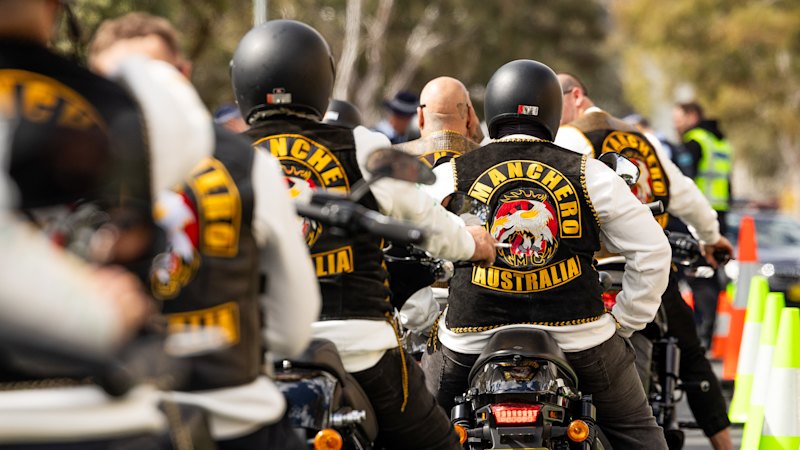
The United States Treasury Department imposed sweeping financial sanctions Thursday on the Comanchero outlaw motorcycle gang and the Italian ’Ndrangheta syndicate, targeting the Australian-based bikie group’s transnational drug pipeline and freezing any assets the organization holds in the U.S. financial system.
The designations, announced by the Office of Foreign Assets Control (OFAC), mark the first time the U.S. has sanctioned an Australian organized crime group and the second time criminals with a link to New Zealand have been blacklisted. Two high-ranking New Zealand chapter leaders — national president Pasilika Naufahu and founding member Vetekina Naufahu — were named individually alongside the organization itself.
“The Comancheros and the Ndrangheta operate sophisticated transnational criminal networks that facilitate large-scale drug trafficking and money laundering,” Treasury Secretary Scott Bessent said in the release. “The Ndrangheta controls a significant share of the European cocaine trade, while the Comancheros have helped open access to some of the world’s most lucrative illicit drug markets.”
The Pacific Pipeline
OFAC alleges the Comancheros have forged “strategic partnerships” with four designated terrorist cartels: the Sinaloa Cartel, Jalisco New Generation Cartel (CJNG), Clan del Golfo, and Los Choneros. The gang facilitated multi-hundred-kilogram cocaine shipments from South America to the United States, Australia, and Europe, according to the Treasury Department.
Because Australia and New Zealand are among the world’s most lucrative illicit drug markets — commanding substantial premiums over U.S. street prices due to geographic distance from production hubs — Mexican cartels have increasingly targeted the region. Authorities believe the Sinaloa Cartel has dispatched “sleeper cells” to Australia to establish distribution networks and cement ties with the Comancheros and other outlaw motorcycle gangs.

The Comancheros have also been linked to assassinations, arms trafficking, and money laundering operations worldwide, OFAC said. Nearly all of the gang’s members and associates are now facing criminal charges.
From Deportation to Designation
The Comancheros’ New Zealand footprint traces back to Australian deportations under Section 501 of the Migration Act, which accelerated after 2014. The first New Zealand chapter was established in 2018, a development Detective Superintendent Greg Williams, director of the NZ Police National Organised Crime Group, said brought “significant changes” to domestic crime.
“They rapidly evolved into being one of this country’s key transnational serious and organised crime threats,” Williams said. “Their influence brought about an exponential increase in the quantity and types of drugs being imported to New Zealand, greater sophistication in the operation of organised crime groups including their use of encrypted communications devices and money laundering schemes, and a more ready approach to serious violence.”
Police count 119 identified Comanchero members in New Zealand; 59 are currently in custody and 41 are under supervision or on release conditions. All six founding members of the New Zealand chapter have been convicted of drug dealing or money laundering.
“Money is central to organised crime group’s illegal operations, and these sanctions makes it extremely difficult for them to move money, use international banking systems and conduct its other illegal activities.”
Williams said. “The group’s bank accounts, businesses and assets are blocked, along with those of those named leaders and members.”
Brothers Behind Bars
Pasilika Naufahu is currently serving a sentence for money laundering. His brother Vetekina, a former national commander and senior patched member, has also been previously convicted of money laundering. Both are founding members of the New Zealand chapter, according to NZ Police.
The sanctions block all property and interests linked to the Comancheros in the United States and prohibit any U.S. person or entity from conducting business with the gang or the named individuals. Any entity owned 50 percent or more by a sanctioned person is also subject to restrictions, while global financial institutions face secondary sanctions risk for facilitating transactions.
Six-Year Investigation
OFAC said the investigation spanned six years and involved Homeland Security Investigations, the FBI, and the DEA, alongside “valued international partners” including the Australian Federal Police and New Zealand Police.
AFP Assistant Commissioner Stephen Nutt called the Comancheros a direct threat to Australians’ way of life. “This organised crime group floods our country with drugs, is responsible for violent crimes and murders, and peddles poison in our community and across the globe,” Nutt said.
He added that U.S. sanctions would constrain the gang’s access to international financial systems and increase risks for anyone doing business with them, including potential closure of Australian bank accounts and scrutiny on home loans.

Precedent and Reach
The action follows OFAC’s late 2024 sanctioning of Rokas Karpavicius, a Lithuanian citizen sentenced to 11-and-a-half years for importing large ecstasy shipments into Auckland. The U.S. alleged Karpavicius continued to traffic cocaine and methamphetamine, launder money, and engage in corruption from prison.
“OFAC sanctions continue to be applied to people with links to New Zealand, reinforcing the message that moving overseas does not put you beyond reach,” Williams said. “We are sending a clear message here that New Zealand is working closely with international partners to stop threats to our borders.”
Worth a look

Xi Hosts Russia-China-US Summit in Shenzhen Focused on Symbolism Over Substance
History was made in Shenzhen on Thursday, but breakthroughs were not. The optics were the substance. "Overall, very...

Filipino Actress Jorrybell Agoto, the Quiet Force Behind the Philippines’ Oscar Entry Filipiñana
Filipino actress Jorrybell Agoto, the quiet force behind the Philippines' Oscar entry Filipiñana, died November 17 at St.

Westside Cowboy wins BBC Introducing Artist of the Year 2026
really cool to be recognised for the music you make, said Paddy Murphy, bassist of Westside Cowboy, after...

China Bars Bloomberg Reporter From APEC Trilateral Summit After Nvidia Question
China expelled a Bloomberg correspondent from a historic trilateral summit in Shenzhen on Thursday after she shouted a...