
The conditions, documented at Dell Brothers Farm in Carroll County, show surface greenery masking dry subsoil that limits root access to moisture, according to reporting by Fox Baltimore.
At Dell Brothers Farm near Westminster, a spring-fed pond that normally spills over two white outlet pipes now sits well below them. “It is the lowest he has ever seen the pond,” Doug Dell of Dell Brothers Grain told Fox Baltimore. The family has farmed the ground for more than ten generations on his father’s side and eleven on his mother’s.
Corn yield forecast cut as subsoil stays dry
University of Maryland research professor James MacDonald said much of the state was in moderate drought at the time of his interview, with both topsoil and subsoil moisture low. The U.S. Department of Agriculture lowered its Maryland average corn yield estimate from 174 bushels per acre on Oct. 1 to 165 bushels a month later — a decline of about 5%, Fox Baltimore reported.
MacDonald estimated that would mean a similar drop in revenue for corn producers with little reduction in costs to offset it. Soybean yield projections were unchanged, partly because the crop is harvested earlier.
Livestock costs rise as pastures and hay suffer
Dell keeps about half his herd on the home farm, where springs and pasture dried up. “I was pumping water out of a pond to get water to the cattle because there was no water available in the pastures anymore,” he said.
He also fed hay during summer months when cattle would normally graze. MacDonald said late-season hay cuts tend to produce less and drought slows pasture regrowth, pushing farmers to buy additional hay and rotate fields more carefully to allow grass recovery.
Federal forage payments total millions
George Turner, Maryland state executive director of the USDA Farm Service Agency, described the agency’s programs as a “safety net” for producers. The Livestock Forage Program provides payments to eligible livestock producers who lose grazing because of drought. “So typically, it’s to assist them in providing additional feedstuff that would then help them get through,” Turner told Fox Baltimore.
Maryland payments through that program totaled about $117,000 in 2023, $1.3 million in 2024, $419,000 in 2025 and $379,000 in 2026 through the time of Turner’s interview, with the 2026 figure still accumulating. Those payments address eligible grazing losses only and do not measure the full economic impact of drought on farms.
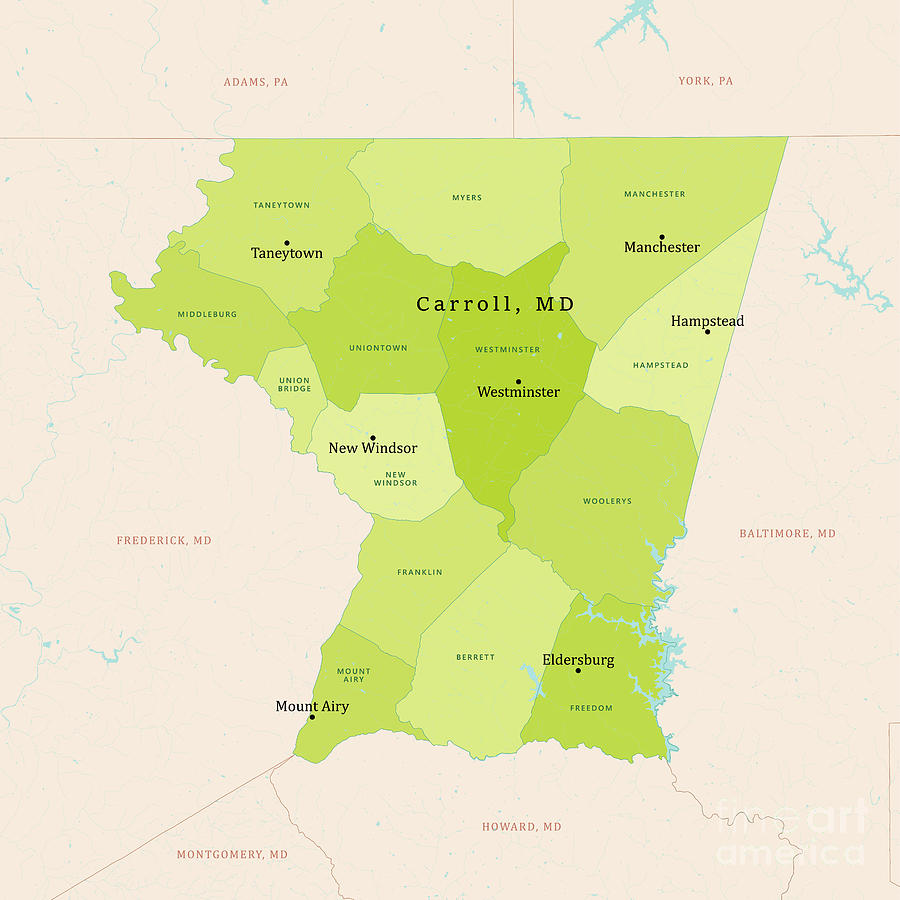
USDA records show nearly $5 million in drought-related indemnity payments to insured Maryland producers in 2025, with about $444,000 in Carroll County alone, according to Fox Baltimore. Insurance payments cover insured producers and depend on policy terms; they are not equivalent to total farm losses.
Adaptation options unfold over years, not weeks
MacDonald said farmers can consider reduced tillage, leaving crop residue on fields, and weighing irrigation — though drought can also lower well water. Longer-term shifts may include moving some acreage toward crops that need less water, such as wheat and barley instead of corn.
“Farmers have always had to manage uncertain weather,” MacDonald said, but he expects drought and severe storms to become more frequent risks. Higher temperatures and drought could also bring more insects, adding another challenge for livestock producers.
Winter recharge is the next benchmark
Dell is watching for winter rain and snow to refill ponds and reservoirs before the next growing season. The return to normal at the farm is easy to spot: “water flowing over those white pipes again,” he said. “Our livelihood depends on it.”
Related reading
One Year After Texas A&M Student Brianna Aguilera’s Death, Family Disputes Suicide Ruling
One year after 19-year-old Texas A&M student Brianna Aguilera fell 17 floors to her death outside an Austin...

Laba Scores First Goal as Rangers Beat Flames 1-0
Noah Laba scored his first goal of the season at 3:48 of the third period and Joonas Korpisalo...

Jonathan Taylor Snaps 18-Game 100-Yard Drought With 2 First-Half TDs vs Giants
Indianapolis Colts running back Jonathan Taylor rushed for two touchdowns of 30 yards or longer in the first...
Natural England to Take Precautionary Approach to Beaver Releases After bTB Found in Two Wild Beavers
Natural England will take a “precautionary approach” to future beaver releases after two wild beavers in south-west England...