
At its Sunday meeting, the Undergraduate Student Government senate at Princeton University approved an expanded NJ Transit ticket program making all student transit tickets entirely free.
As reported by The Daily Princetonian, the Undergraduate Student Government senate evaluated survey findings concerning how students adapt to Princeton, listened to a briefing regarding the University’s latest sustainability framework, and voted to greenlight funding requests that included transit passes for New York and Trenton.
Doubling Free Transit Access
Early in the meeting, the senate received a budget update from USG Treasurer Marvel Jem Roth ’28. She pointed out that approximately $109,000 would remain in the semesterly USG budget following the anticipated passage of the evening’s financial items, urging that more funds be directed toward student needs.
After processing contingencies, we are radically going to be underspending on student activity fees this semester. This is failing the student body.
Roth stated this during her financial update to the senate. Following her remarks, the senate approved three distinct budget requests, starting with an expanded transit initiative sponsored by Roth and run by U-Council Chair Isaac Barsoum ’28, who also serves as an associate Opinion editor for the student publication.
The new resolution doubles the number of available tickets and makes all of the tickets free. This year, the USG will offer 400 free round-trip tickets to New York City and 200 to Trenton. This marks an expansion from last year’s offering of 187 $10 tickets to New York City, a program that proved so popular that students claimed all the available tickets in seconds.
First-Year Transition Survey Findings
Beyond transit funding, USG Academics Committee Chair Isaac Bernstein ’28 and Diversity, Equity, and Inclusion Committee Chair Morgan Hoang ’27 presented results from a survey examining the first-year student experience and transition into Princeton. The survey gathered responses from 1,007 students across the Class of 2028 and Class of 2029.
“We have five findings that kind of stand out, and also a lot of these center around transparency and awareness in terms of promoting equitable resources and having students feel like they can access those,” Bernstein said.
The data revealed that a student's high school type affects academic readiness. Public-school graduates were twice as likely to feel unprepared for Princeton’s workload and pace compared to other students.
Introductory STEM classes in mathematics, computer science, and physics presented major hurdles. Between 40 and 60 percent of surveyed students felt only slightly prepared or not at all prepared for those classes.
“A lot of students just didn’t feel, coming in from high school, that they’re ready to tackle the workload and also the course preparedness,” Hoang said.
Additionally, the presentation highlighted that undergraduate course advisors are largely underutilized, initiatives such as the Freshman Scholars Institute have demonstrated high success rates, and half of the student body remains unaware of summer course credit options.
Sarah Boll Details Eight Primary Sustainability Focus Areas
The senate also heard a briefing on the University’s newly launched Campus Sustainability Framework delivered by Sarah Boll, executive director of sustainability for the University. Boll outlined eight core priorities: support healthy communities, plan for climate disruption, conserve and restore biodiversity, reduce emissions, activate the Campus as Lab program, support sustainable transportation, engage and communicate, and manage resources responsibly.
“We would continue to perhaps rethink strategies in another five to seven years, because in reality, some of the things that we thought were true in 2019, particularly around the power grid was going to decarbonize … and also the projections for campus growth have changed. And so, in another five to seven years, we might be dealing with a different set of realities,” Boll said.
Boll emphasized that student involvement is vital for gaining traction on these newer sustainability initiatives quickly.
Budget Resolutions Fund Campus Events and Constitutional Amendment Passes
Additional budget resolutions approved during the session funded USG movies, expanded the Projects Board budget, and secured support for the annual Chinese Students Association ‘Ducksgiving’ event. That event, featuring Peking duck for attendees, is scheduled for Dec. 5 from 5 p.m. to 7 p.m.
The legislative session concluded with the first of two votes to pass a constitutional amendment updating the meeting attendance policy to clarify proxy rules for USG members. To be adopted, the amendment must pass again at the next scheduled USG meeting on Sunday, Nov. 15, in Robertson 016.
Related reading

How to Correct Errors in Your EPF Account Online: A Step-by-Step Guide
Incorrect Employee Provident Fund details can block retirement claims and freeze fund transfers, forcing subscribers to use updated...

81St Annual Wyoming Valley Veterans Day Parade Held in Kingston and Wilkes-Barre
The 81st annual Wyoming Valley Veterans Day Parade stepped off on November 8, 2026, bringing marching bands, military...

Jayson Tatum Returns as Celtics Face Bucks in Milwaukee Tonight
The Boston Celtics travel to Milwaukee to face the Bucks at Fiserv Forum tonight at 8:00 PM ET,...
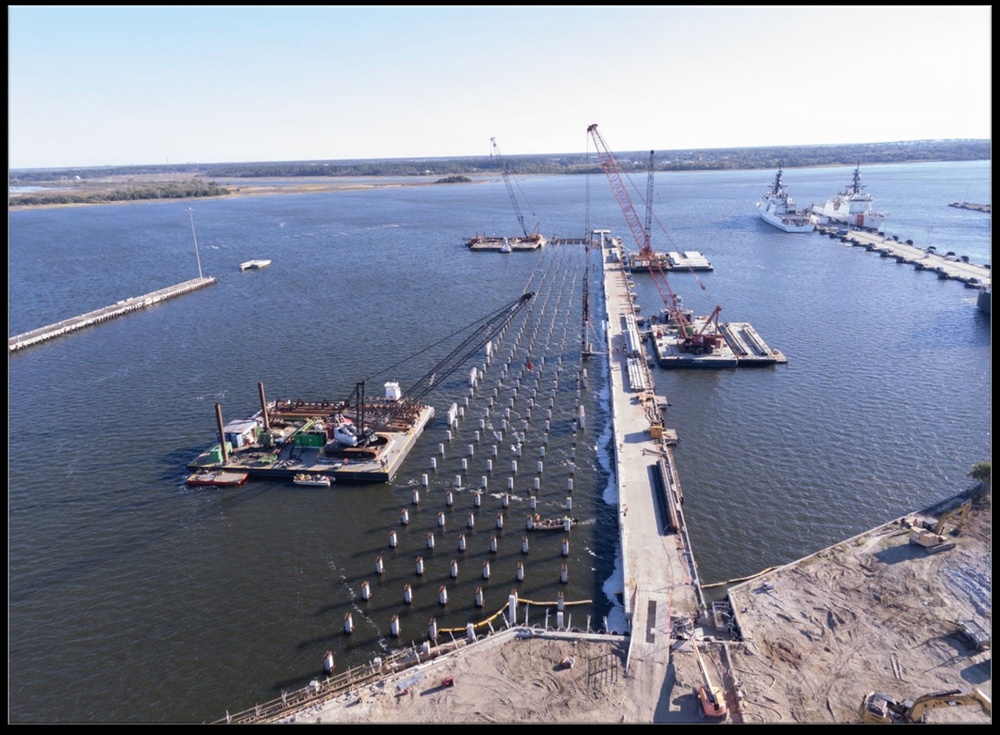
Coast Guard Expands Base Charleston With Major Pier Construction
Coast Guard Base Charleston expands local engineering, support facilities Thirty years after the military closure that reshaped the...