
Midterm Setbacks Force Immigration Pivot
President Donald Trump acknowledged that his administration’s hardline deportation crackdown was “too tough,” marking a sharp rhetorical shift after Republicans lost control of both the House and Senate in the midterm elections.
Speaking in an interview with Ross Douthat on CBS’s 60 Minutes broadcast on Sunday, Trump admitted that aggressive operations had become a political liability. While he maintained that closing the border and removing serious criminals earned high marks from voters, the removal of people who had established lives and jobs in the US hurt the party at the ballot box.
Voter polling on election day showed immigration ranked as the third most important issue behind the economy and the state of democracy. In traditionally conservative states like Texas, more Latino voters chose Democrats, helping the opposition win large majorities in Congress.
Striking Deals with Congressional Democrats
Following the electoral defeat, Trump expressed a willingness to negotiate an immigration arrangement with congressional Democrats. He suggested that an agreement could allow long-term undocumented residents—such as those working in sectors such as hospitality and landscaping for 10 or 15 years—to remain in the country legally.
1/ I'll explain exactly how this happened because I'm the person at Forbes who calculates these numbers. This is going to take some unraveling, but here's a spoiler: The president's answer here is nonsense. https://t.co/X5tz4shHzz
“Let the people that are here, and in some cases here for 10 and 15 years, work a deal for them,” Trump said on 60 Minutes. He added that such a compromise is “actually doable” and noted that several Democrats, including Texas Senator-elect James Talarico, had already contacted him regarding potential cooperation.
When asked if he could refrain from insulting Democratic lawmakers for six months to secure a legislative package, Trump replied, “Very easily.” However, Senate Majority Leader Chuck Schumer sharply criticized the president’s overtures. Schumer pointed out the contradiction between Trump’s conciliatory remarks and his decision to appoint Stephen Miller—the primary architect of the administration’s hardline immigration policies—as White House chief of staff.
Weighing Global Conflict and Economic Messaging
Beyond domestic policy, Trump attributed the Republican congressional losses to external factors, specifically pointing to the war with Iran, gas prices, and a “great dislike, incredibly, for Israel.” Despite the short-term political costs, the president defended his decision to prevent Iran from having a nuclear weapon, asserting that his answer to whether it should be prevented was an “emphatic yes.”
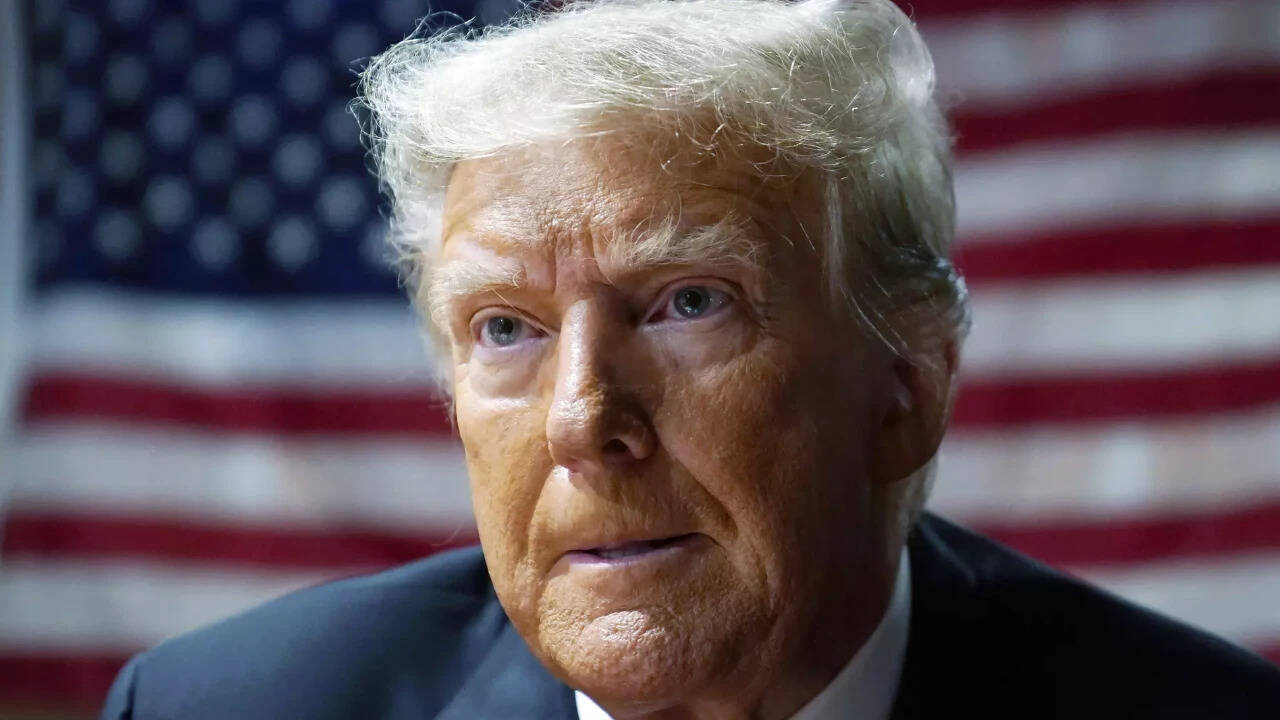
“My answer is an emphatic yes because you can’t let Iran have a nuclear weapon,” Trump said.
On the economic front, Trump conceded that his administration struggled to communicate its achievements effectively. “I think it was bad messaging, maybe by me,” he told interviewers.
Future Political Landscape and Personal Wealth
Looking toward the 2028 presidential succession, Trump stated he had not decided whether to endorse a candidate, suggesting he might be better off not getting involved. He praised Secretary of State Marco Rubio as doing a “fantastic job” while expressing confidence that the MAGA movement would endure.

The interview also addressed a Forbes estimate indicating Trump’s net worth had increased by $3bn from the autumn of 2024 to the autumn of 2025.
Concluding the broadcast, Douthat pressed Trump on whether he could forgive political opponents. Trump remained uncompromising.
“I probably cannot do that, no, because I do hate some of my enemies and I always will,” he said.
Worth a look

Actress Ji-an and Baseball Player Eom Jung-wook Marry in Seoul
Actress Ji-an and former professional baseball player Eom Jung-wook held a wedding ceremony on the 7th at a...

Stubb and Støre Call Putin, Drawing Criticism From European Allies
Finland and Norway’s 90-Minute Call Breaks European Ranks A joint 90-minute phone call to Vladimir Putin by Finnish...

Ukrainian Drone Attack Hits Russia’s Second-Largest Oil Refinery in Kirishi
Ukrainian long-range drones struck the Kirishi Petroleum Organic Synthesis plant in Leningrad Oblast overnight on Nov. 9, igniting...
Russia Unveils Crypto-Based Payment System to Boost Trade With Africa
Russia Unveils Fintech Platform to Bypass Global Banking At the third Russia–Africa Summit held in Moscow on October...