
Utah’s State Board of Canvassers voted unanimously Monday to certify the 2026 general election results, formalizing a blue wave that broke the Republican supermajority in the state House for the first time in decades, Utah Public Radio reported.
- Republicans lost 16 House seats, dropping their caucus from a two-thirds supermajority to a simple majority.
- Democrats doubled their House caucus from 14 to 28 members with help from two unaffiliated candidates.
- Senate Democrats gained two seats, but Republicans kept their supermajority in that chamber.
- Certification followed federal pressure on mail voting and a DOJ lawsuit over voter data.
The board — Lt. Gov. Deidre Henderson, Attorney General Derek Brown, Treasurer Marlo Oaks and Auditor Tina Cannon — certified the results after counties completed their canvasses, KSLC.com reported. Turnout landed at 59.3%, just over 1 million ballots cast out of nearly 1.8 million active registered voters. More than 90% of Utahns voted by mail or drop box.
“I think people in Utah are confident in the way we have our voting and they prefer vote-by-mail,” Henderson said. “It’s clear.”
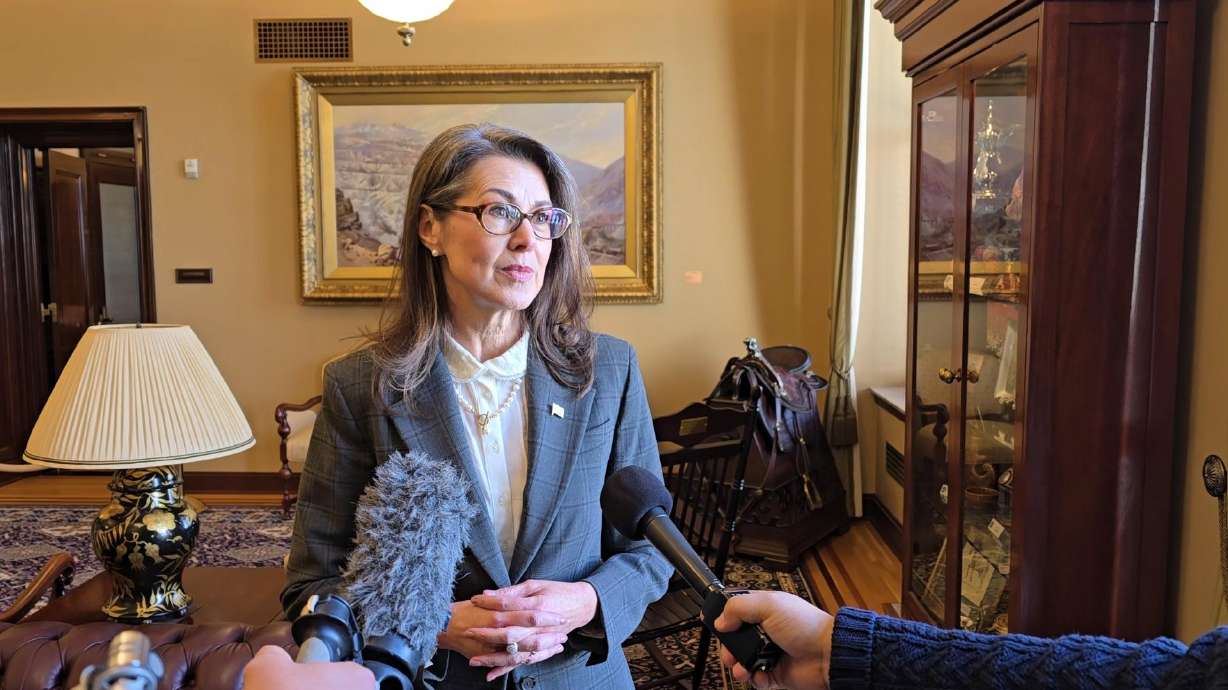
The election unfolded under unusual federal pressure. President Donald Trump sought to restrict mail-in ballots nationwide, the method used by over 90% of Utah voters. The U.S. Department of Justice sued Henderson and more than 20 other states to obtain full voter rolls; the department was unsuccessful in court, KSLC.com reported. The DOJ also sent a dozen federal election monitors to Salt Lake County polling places.
“My biggest concern was that voters would be afraid of monitors or afraid that their vote wouldn’t count or something because of all of the chaos and rhetoric leading up to it,” Henderson told reporters after the canvass. “I was really trying to message hard to voters that this would be normal, they would feel normal and that they should just vote however they normally would.”
“It did not feel normal for me in the months and weeks and days leading up to the election,” she added. “But Election Day itself — it was very smooth considering all of that.”
Former state Rep. Phil Lyman and other Republicans wrote to Henderson last week asking the board to delay certification and investigate election hardware and ballot paper stock. Henderson said the board has no statutory duty beyond computing and determining the vote for statewide and multi-county races.
“That’s it,” she said Monday. “The State Board of Canvassers has no other statutory duty or obligation to look into anything else.” She said there is “no merit” to the issues raised in the letter.

In the House, 14 Democrats and two unaffiliated candidates flipped 16 Republican seats, doubling the Democratic caucus from 14 to 28 and reducing the GOP to a simple majority. Republicans retain both chambers but lose their veto-proof margin in the House for the first time in nearly 30 years.
In the Senate, Republicans kept their two-thirds supermajority but saw their ranks dip from 22 to 21 while Democrats grew from six to eight. Senate Majority Leader Kirk Cullimore lost to Democrat Shana Anderson, and Democrats flipped an open seat previously held by retiring Sen. Ann Millner. Republicans retook one seat from Forward Party Sen. Emily Buss, who lost to Brooks Benson.
Henderson said she has not heard from the federal government since Election Day.
Related reading

Omaha Police Investigate Homicide of Lauren Becker at Kids Can Community Center; Suspect at Large
Omaha police are investigating the homicide of 22-year-old Lauren Becker, who died Tuesday morning in the parking lot...

Former Missouri Revenue Counsel Pleads Guilty to Attempted Child Enticement, Sex Trafficking
Daniel Follett, the former general counsel for the Missouri Department of Revenue, pleaded guilty to federal charges of...

Leon County Deputies Arrest Ricky Pagan-Cruz for Wife’s Shotgun Killing
Leon County deputies arrested Ricky Pagan-Cruz, 31, on Monday after investigators said he shot and killed his estranged...

Pierre “Peb” Bellocq Family Thanks Fans, Notes 100th Birthday
The family of Pierre "Peb" Bellocq, the longtime horse racing cartoonist and caricaturist, thanked fans and friends on...