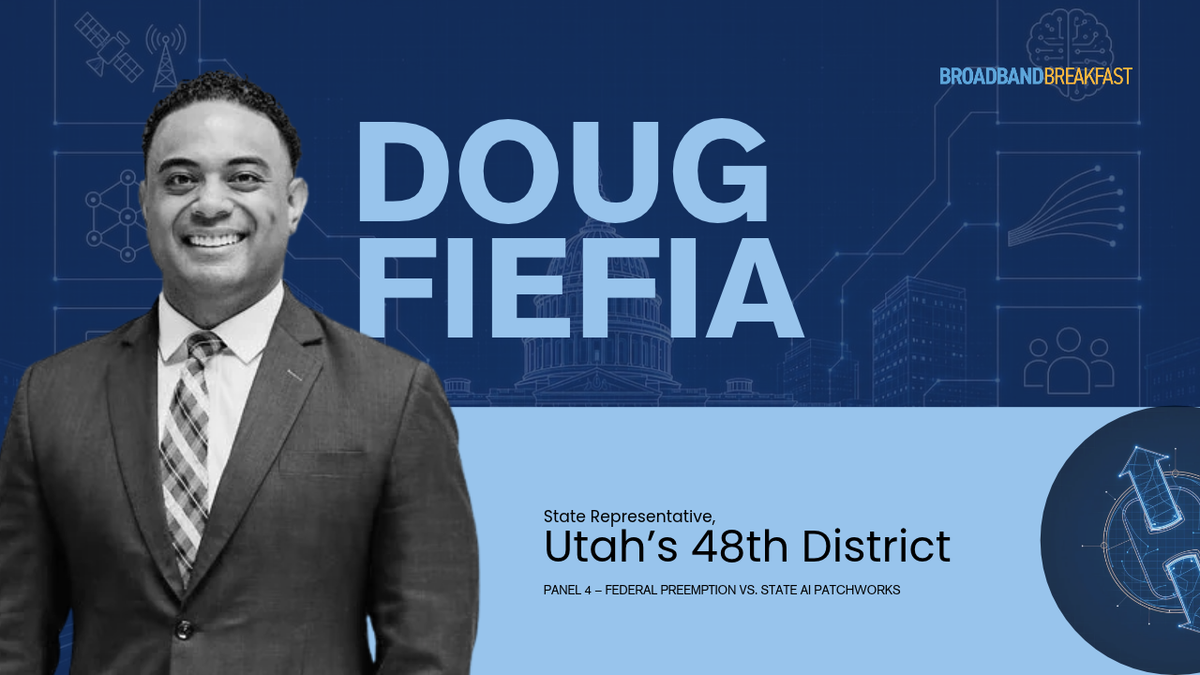
Utah Rep. Doug Fiefia, a Republican who wrote an AI safety bill the White House called “unfixable,” won a June primary to become senator-elect for Senate District 18 and will join a Dec. 1 panel in Washington debating whether states should keep writing their own AI rules.
Fiefia defeated incumbent Sen. Dan McCay with 69.5 percent of the vote on June 23, according to Broadband Breakfast. He is scheduled to appear at 3 p.m. on the “Federal Preemption vs. State AI Patchworks” panel at the Broadband and AI in the Next Congress event, moderated by Rebecca Kern of The Capitol Forum.
The legislation at issue, HB 286, would have applied to developers training models above 1026 operations, with the heaviest requirements on those earning at least $500 million annually. Those large developers would have had to publish a public safety plan and, for chatbots with 1 million monthly users that minors could foreseeably reach, a child protection plan.
Safety incidents would have been reported to the state’s Office of Artificial Intelligence Policy within 15 days, and whistleblowers would have gained a right to sue, Broadband Breakfast reports.
On Feb. 12, the White House Office of Intergovernmental Affairs wrote to Utah Senate Majority Leader Kirk Cullimore Jr. that “we are categorically opposed to Utah HB 286 and view it as an unfixable bill,” according to The Next Web as cited by Broadband Breakfast. The bill cleared a House committee without dissent but died in the Senate.

TechNewsReel reports that the White House memo said the proposed Utah law conflicts with the administration's broader AI agenda, showing a fundamental disagreement over how the technology should be governed at the state level. The outlet notes the clash occurs as states increasingly attempt to carve out their own regulatory frameworks while the federal government seeks a unified national strategy.
Fiefia, a former technology sales manager at Workday and Google and a first-generation American whose parents came from Tonga, has represented Utah House District 48 since January 2025. His first-year bill created the Utah Digital Choice Act, requiring social media services to let users take their data to rival services through an open protocol. A 2026 follow-up moved its start date to July 1, 2027.
On federal preemption, Fiefia was among 203 state lawmakers from 42 states who signed a June 16 letter opposing a three-year freeze on state AI laws in the Great American AI Act, a House discussion draft. The letter warned that “the tech industry will almost certainly weaponize such a provision in court to strike down state measures,” Broadband Breakfast reports.
With Vermont Rep. Monique Priestley, he co-chairs the National Task Force on State AI Policy at Future Caucus, a nonprofit network of younger lawmakers. “There’s concern about this state patchwork of laws, but that’s why we’re coming together,” he told Pluribus News in October 2025.
The House’s FRONTIER Act, H.R. 9925, from Reps. Jay Obernolte, R-Calif., and Lori Trahan, D-Mass., uses the same 1026 threshold. Its Section 9(b) would bar state obligations on developers in risk transparency, audits and incident reporting — the core of HB 286. A savings clause keeps state rules protecting minors, and Trahan’s Nov. 19 section-by-section would let more protective state laws stand, according to Broadband Breakfast.
TechNewsReel notes the tension highlights a growing struggle for jurisdiction over AI, and that Fiefia’s transition to a Senate run suggests the controversy has not dampened his standing within his constituency. Observers will watch whether he doubles down on HB 286’s tenets or attempts to reconcile his legislative goals with federal standards.
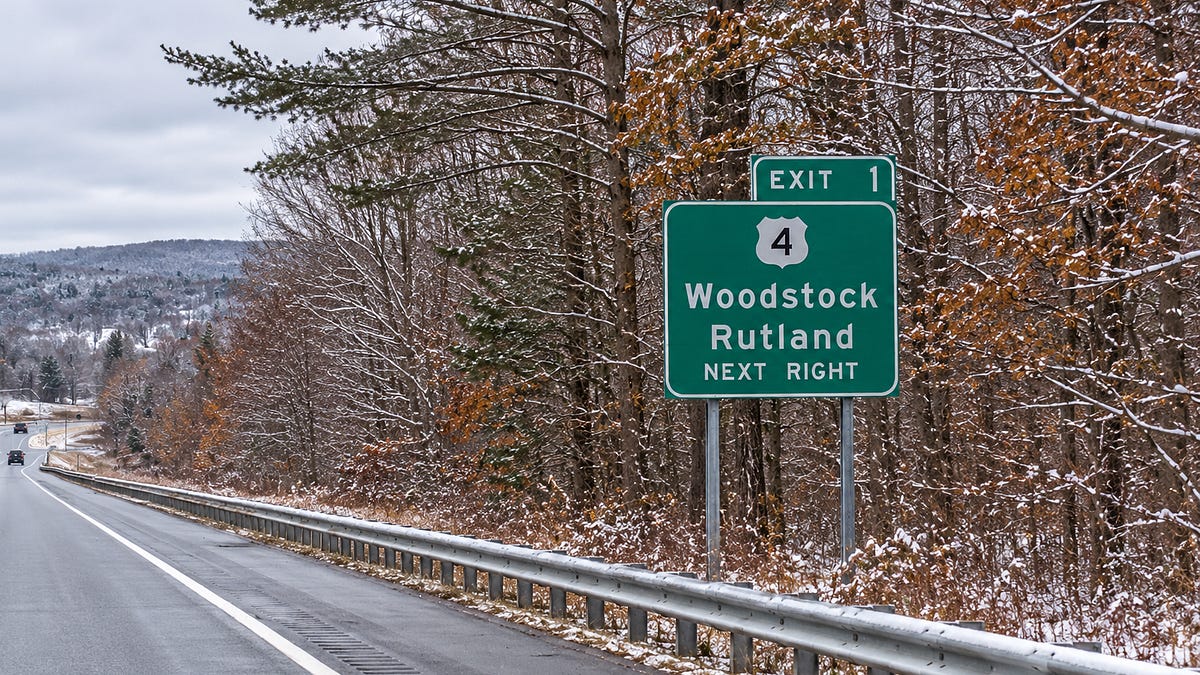
Jay Recounts Thanksgiving Trips From Somerville to Rutland in Early 2000s
In a column for Journeys with Jay, Jay recounts Thanksgiving road trips from Somerville, Massachusetts, to Rutland, Vermont,...

Ravens’ Marlon Humphrey Ends 110-Game Start Streak vs. Texans
Baltimore Ravens cornerback Marlon Humphrey did not start Sunday's game against the Houston Texans, ending a streak of...

EPC Services Company Hiring Temporary Field Construction Manager for Nationwide Projects
EPC Services Company is hiring a temporary Field Construction Manager to oversee substation and high-voltage duct bank projects...

Kansas City World Cup Tax Revenue $6.7 Million vs $35 Million Projection
Kansas City collected an estimated $6.7 million in additional summer tax revenue from the 2026 FIFA World Cup,...