
Fonterra applied on October 2 to vary seven Canterbury resource consents so it can dispose of up to 22 million litres of surplus raw milk this season if South Island processing capacity is exceeded, a move the co-op calls a precautionary contingency.
Fonterra applied to dump 22 million litres of raw milk at Clandeboye, Darfield and Studholme, exceeding its 15-year KickStart Breakfast donation total.
The applications target existing wastewater discharge consents at Clandeboye, Darfield and Studholme. Fonterra says it has not needed to dump milk this season and does not expect to next season either, but filed for current and future years because peak supply can outstrip factory throughput.
Consent would spread milk on farmland
The variation would let Fonterra spread treated surplus milk on farmland or send it through existing wastewater systems at the three plants. Documents filed with Environment Canterbury (ECan) estimate 22.3 million litres — roughly nine Olympic swimming pools — allocated 60 percent to Clandeboye, 37 percent to Darfield and the remainder to Studholme. The daily “worst case” figure is 808 cubic metres, or about nine tanker loads, limited to a 1.5 mm application rate on soil.
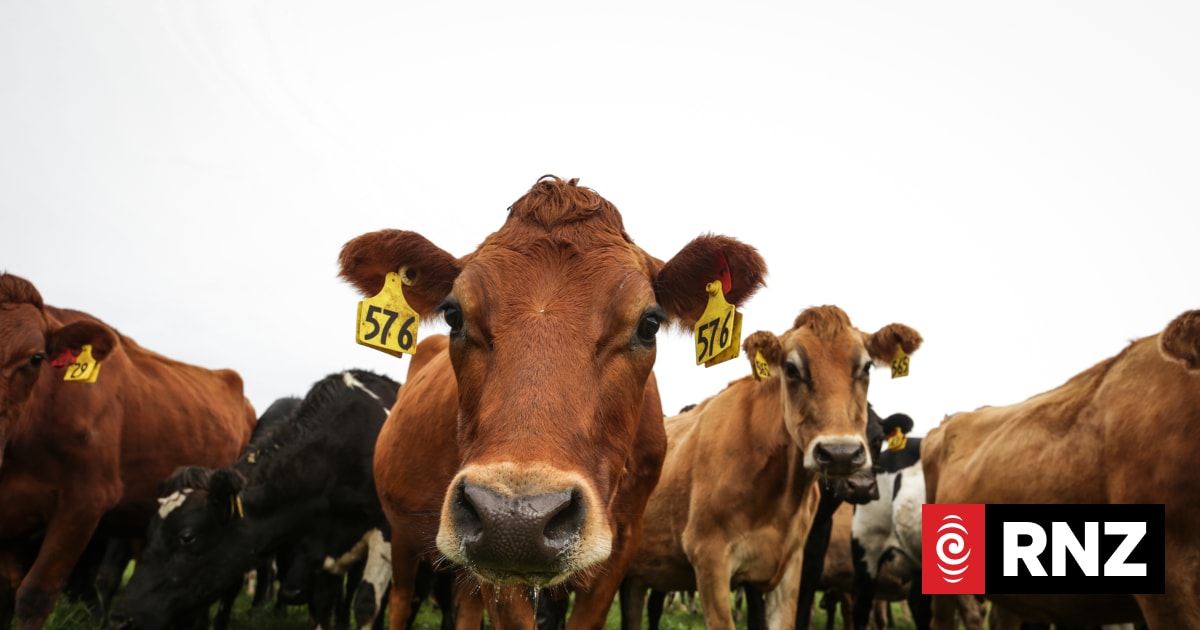
Fonterra’s director of New Zealand manufacturing, Chris Kane, told RNZ the company processed every drop during this year’s record South Island peak and has 24 sites nationwide to redirect milk. He described the consent wording about “processing constraints” as a technicality required for a force-majeure back-up such as a major power outage.
Critics warn of groundwater risk
Greenpeace freshwater campaigner Rhiannon Mackie warned that Canterbury’s porous soils make it easy for contaminants to reach groundwater, raising the risk of toxic algal blooms and further nitrate pollution. The Environmental Law Initiative’s Anna Sintenie argued the discharges should not be shoehorned into existing wastewater consents, and the Animal Justice Party called the plan “utterly morally bankrupt” given the industry’s animal-welfare footprint.
This is an industry built on forced pregnancies, the cruel separation of mothers and babies, the killing of unwanted babies and the pollution of our waterways. And now it wants permission to dump millions of litres of milk onto the ground. How utterly morally bankrupt have we become?
Danette Wereta, Animal Justice Party co-leader
Poverty researcher Dr Rebekah Graham contrasted the potential waste with food insecurity data showing one in three Waikato families cannot afford enough food. The Environmental Law Initiative noted the 22 million litres exceeds the total volume Fonterra has donated to the KickStart Breakfast programme over its 15-year history.
Industry says volume is small fraction of total
Dairy commentator Julia Jones, general manager of the Agri-Women’s Development Trust, put the volume in context: “Last year Fonterra collected 16.5 billion litres of milk and so its roughly about 0.14 per cent of all of that, or one litre in every 740 litres. I know nine Olympic swimming pools sounds huge. I know that 22 million litres sounds massive, but I just sort of wanted to bring that number back into perspective,” dairy commentator Julia Jones, general manager of the Agri-Women's Development Trust, said.
Lincoln University agribusiness lecturer Dr Nick Lees said no one wants milk wasted, but applying for consent is not the same as dumping; it is a contingency for peak periods when supply exceeds finite processing capacity.
Federated Farmers welcomed the application as prudent risk management. Fonterra also lifted its forecast farmgate milk price midpoint to $10.10 per kilogram of milk solids, up from $9.75, with revenue projected at $13.9 billion.
ELI calculates emissions and water footprint for milk production
The Environmental Law Initiative estimates that producing 22 million litres of milk generates approximately 20,000 tonnes of greenhouse gas emissions and requires 6.5 billion litres of freshwater, according to Scoop News and The Daily Blog.

ELI legal researcher Eliza Prestidge-Oldfield agreed with poverty researcher Dr Rebekah Graham that the prospect of dumping milk while families struggle to afford it reflects a systemic failure, RNZ reported. Graham said one in three families in the dairy-producing Waikato region do not have enough to eat.
Animal Justice Party condemns industry model
Animal Justice Party co-leader Danette Wereta called the proposal “utterly morally bankrupt,” describing the dairy industry as built on forced pregnancies, calf separation, killing of unwanted animals and waterway pollution, Scoop and The Daily Blog reported. The party is calling on Environment Canterbury to reject the application and end dairy expansion.
AJP argued New Zealand should lead a transition to plant-based agriculture rather than cling to an industry seeking permission to dump its own product. The group said consent variations could remain in place until 2045, locking in disposal rights for decades.
Environment Canterbury will assess the variation requests. Some proposed consent conditions could remain in force until 2045. Fonterra says its first response to any disruption would be redirecting milk to other South Island sites, then the North Island, and adjusting product mix to free up capacity — the consent is a last resort.
Related reading

Decommissioned Cold War Missile on Truck in Llangollen Field Goes Viral on TikTok
A decommissioned Cold War missile on a Bedford truck in a field near Llangollen, Denbighshire, became a viral...

Pope Francis’ Private Diary Published, Revealing Spiritual Crisis
Pope Francis wrote those words on Jan.

EU Proposes 22nd Sanctions Package to Target Russian Banks and Athletes
The European Commission on Monday proposed its 22nd sanctions package against Russia, targeting 60 banks, cryptocurrency platforms, a...

PLA Navy to Display Type 055 Destroyer, Three Warships at Zhuhai Airshow
China will put its newest warships on public display at the Zhuhai Airshow for the first time next...