
Negotiation classes at Vermont Law and Graduate School require students to adapt to interactive simulations and multi-party deal-making dynamics over a rigorous four-day intensive course schedule.
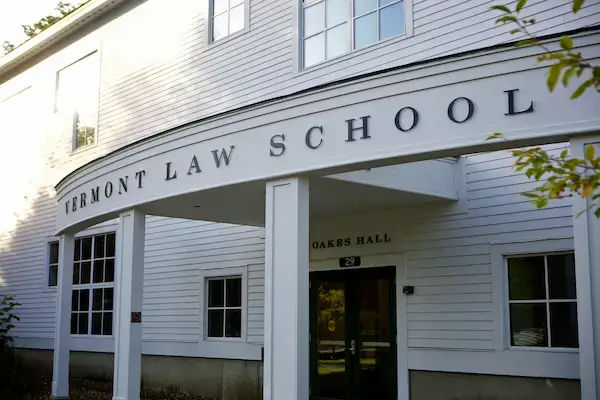
Vermont Law School reported that students must master deal-making and dispute resolution while navigating how personal values and codes of ethics influence behavior as dynamics shift from two-party to multi-party negotiations. Students play roles as negotiators, acting both as agents or attorneys and clients, while meeting in Oakes 208.
Set against mandatory attendance and the requirement to arrive at least five minutes early—with late arrivals officially marked—the syllabus outlines a strict grading policy split between practical performance and written work. Two-thirds of a student’s grade relies on class participation and the development and application of skills in simulations, focusing on process rather than individual results.
The academic schedule begins with Class 1 on Oct. 23, 2026, requiring prior reading of assigned chapters from Negotiation Genius—specifically Parts I and II, covering Chapters 1 and 2 (pages 15-82) and Chapters 4 and 5 (pages 105-138), with Chapters 3 and 6 recommended—and Vermont Rule of Professional Conduct 4.1.
Class 3 meets on Nov. 6, 2026, after additional required reading from Part III of Negotiation Genius, covering Chapters 7 and 8 (pages 159-195) and Chapters 11 and 12 (pages 236-279), with Chapters 9 and 10 recommended. Class 4 takes place on Nov. 7, 2026, with no additional assignments.
Course requirements conclude with a final paper due by midnight on Sunday, Nov. 22, 2026. According to the syllabus, the roughly 1500-word paper must debrief the simulation exercises, tie in lecture and text concepts, and explore real-life negotiation comparisons. Substantially shorter entries receive reduced grades, while longer entries gain no extra credit.
Final papers must be submitted by email to [email protected] and [email protected], with the student’s last name included in the file name in .doc, .docx, or pdf format. The document explicitly prohibits artificial intelligence generation, warning that AI-generated work violates the school’s plagiarism policy.
Keep reading

Kazakhstan Ranks 29th Among 55 Nations in 2026 Global Pension Index; Score Dips to 64.8 on Tax Changes
Kazakhstan’s retirement system ranked 29th among 55 nations in the 2026 Marsh CFA Institute Global Pension Index with...

Sonesta Essential Fairmont Allows Dogs Up to 45 lbs With $25 Fee
The Sonesta Essential Fairmont now welcomes dogs under a policy that caps stays at two pets per room...

UW Rodeo Teams Lead Central Rocky Mountain Region as Fall Schedule Winds Down
University of Wyoming rodeo teams hold the top spots in the Central Rocky Mountain Region standings with the...

Nvidia Interim CEO Colette Kress Faces Pressure Over Family Roles After Jensen Huang’s Exit
Colette Kress, the longtime chief financial officer now serving as interim CEO, inherits a company where the former...