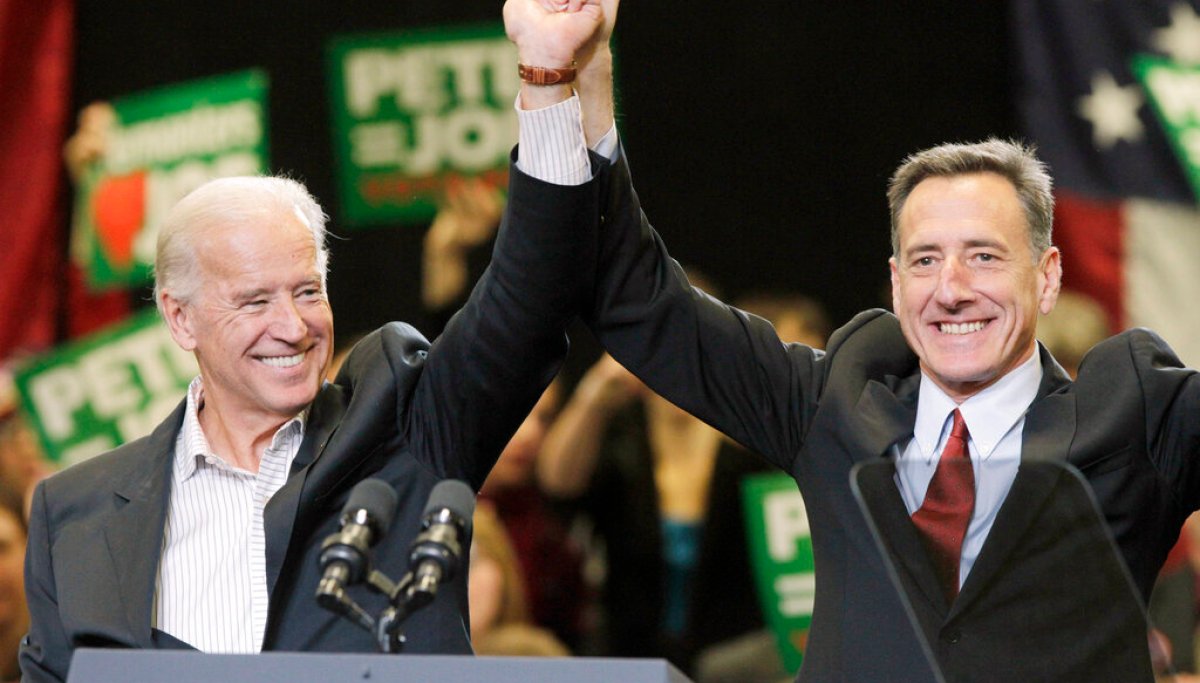
- Green Mountain Care passed in 2011 but was shelved in December 2014 after cost projections required an 11.5% employer payroll tax and up to 9.5% household income tax.
- Sen. Bernie Sanders, incoming Senate health committee chairman, championed the Vermont model in 2013 and now plans to push Medicare for All and a lower eligibility age.
- The Committee for a Responsible Federal Budget estimated in 2020 that a Sanders-style “Medicare for all” plan could cost between $25 and $35 trillion over ten years.
Democrats in Vermont launched their campaign for a state-run insurance system after the Affordable Care Act passed in March 2010, dissatisfied that the federal law relied on subsidized private plans rather than a public program.
The legislature passed Green Mountain Care in 2011, with implementation targeted for 2017 when federal innovation waivers would become available, Washington Examiner reported.
A 2011 Harvard analysis projected the system would receive $420 million in federal funds and require a 9.4% employer payroll tax plus a 3.1% household income tax.
By 2014, Shumlin’s advisers found the state would receive only $106 million in federal revenue, and closing the gap without cutting benefits would demand a 45% increase in the state budget — an 11.5% payroll tax on employers and a sliding scale up to 9.5% of household income for employees, Washington Examiner reported.
“The risk of economic shock is too high,” Shumlin said in December 2014, announcing he would not pursue the payment mechanism. “We obviously wish that the numbers were different. It’s a huge disappointment for me, it’s the biggest disappointment of my public service so far.”

Jessica Schubel, a Democratic health policy strategist who worked at the Centers for Medicare & Medicaid Services at the time, told Washington Examiner the Obama administration worked with Vermont to make the plan work, but “the realization that what they wanted to do and accomplish was going to require additional state resources that they didn’t have” proved decisive.
National ambitions, familiar math
Sanders, who praised Green Mountain Care on multiple occasions before launching his national Medicare for All agenda, predicted in a 2013 MSNBC appearance that Vermont’s success would inspire New York and California and eventually push “the entire federal government” toward single-payer. “We need some good models out there to show that a single-payer system can work. I hope Vermont leads the country in doing that,” Sanders said at the time.
Now incoming chairman of the Senate health committee, Sanders intends to advance Medicare for All legislation and, at minimum, pass bills lowering the Medicare eligibility age to 55 and expanding coverage to all Americans 18 and under regardless of income. He is joined by incoming “Medicare for All” supporters Sen.-elect Abdul el Sayed of Michigan and Rep.-elect Darializa Avila Chevalier of New York, Washington Examiner reported.
Cost estimates have only grown. The Committee for a Responsible Federal Budget estimated in 2020 that a Sanders-style plan would cost $25 trillion to $35 trillion over its first decade. An October 2026 White House Council of Economic Advisors study puts the ten-year cost closer to $47 trillion, or about 12% of cumulative GDP, Washington Examiner reported.

“Single-payer will cost a lot of money, and people just have to be wide-eyed on what that looks like and how to pay for it,” Schubel said.
Linda Blumberg, a fellow at the nonpartisan Urban Institute, told Washington Examiner that politicians have not adequately educated voters on the trade-offs. “I just don’t think we’ve had that clear, honest conversation as a country,” Blumberg said. “Because a reform of that size impacts every single person who lives in the country, I think as policymakers, and as policy experts, we owe that to people to educate them about what it means, so that they can make an educated choice.”
Harvard public health professor John McDonough, a former Senate health committee aide, wrote in the New England Journal of Medicine in 2015 that Shumlin’s decision reflected “a failure of political will” but was ultimately necessary, as the required taxes would have been “glaringly evident on every Vermonter’s tax bill.”
McDonough predicted rising Medicare, Medicaid, and ACA subsidy costs would eventually force federal consolidation — “like it or not, I believe it will happen federally and not in the states — and no time soon.”
Worth a look

Nick Walker Retains Mr. Olympia Title by Two Points Over Samson Dauda
Nick Walker retained the Mr. Olympia title in Las Vegas by two points over Samson Dauda, despite Dauda...

HMG Careers Hiring Remote Insurance Sales Reps, Offers Leads and Licensing Support
HMG Careers is hiring remote insurance sales representatives to work from home in Montpelier, Vermont, offering leads, training...

Eastern Kentucky Routs Alice Lloyd 114-85 Behind Ball’s Career-High 23 Points
Eastern Kentucky routed Alice Lloyd 114-85 on Sunday at Baptist Health Arena, improving to 5-2 on the season...

Bar Harbor Story Weekly Roundup Lists MDI Events: Run Club, Knitting, Bird-Watching, Live Music, Wood Bank
Bar Harbor Story published its weekly roundup of events across the Mount Desert Island region for the week...