
More than half of Florida attorneys and 45 percent of Illinois attorneys surveyed say loss of privacy concerns them “a great deal” when considering whether to pursue any judicial position, according to a State Court Report survey of practicing lawyers in both states.
Nearly half of respondents in each state also said safety concerns worried them to some extent, with 27 percent of Florida lawyers and 19 percent of Illinois lawyers reporting “a great deal” of concern about safety.
The survey, which received 896 responses from Florida attorneys (a 1 percent response rate) and 841 from Illinois attorneys (a 1.4 percent response rate), was fielded in spring 2026 in Florida and summer 2026 in Illinois. Researchers obtained email lists from state bar associations to assess factors influencing willingness to serve on state supreme courts. Florida uses merit selection with retention elections for its high court, while Illinois uses initial partisan elections followed by retention elections.
Across racial groups in both states, women consistently expressed more concerns than their co-ethnic male peers, and white men expressed the least concern about safety compared to all other groups. The report said this disparity “is consistent with research showing that women and people of color are more likely to experience threats and harassing behavior as candidates and state judges.”
Despite relatively diverse benches — the Florida Supreme Court currently has three women, including a Cuban-American woman and a Jamaican-American woman, and three men of Cuban descent, while women comprise a majority on the Illinois Supreme Court, which is more racially diverse than the state’s population — interest in serving differs.
In Illinois, 43 percent of surveyed attorneys said they would “definitely” or “probably” consider a state supreme court position, compared to 37 percent in Florida.
Illinois Supreme Court justices first win office through partisan elections held in five appellate districts — three seats from the First District (Cook County) and one from each of the other four — for 10-year terms, after which they face non‑partisan retention elections requiring 60 % approval to serve additional 10‑year terms.
This two‑stage process means candidates must campaign with party labels before shifting to a yes‑or‑no retention vote, a dynamic the survey notes when it contrasts Illinois with Florida’s merit‑selection system and links the partisan‑then‑retention model to the privacy and safety worries that deter 45 % of Illinois attorneys from considering a supreme court seat.
The survey also examined whether encouragement could counteract privacy and safety concerns. Researchers estimated the probability that an attorney would consider a state supreme court position, focusing on those who expressed the greatest concerns about privacy and safety.
Keep reading
- Michigan Boy Thrives After Boston Surgeons Remove ‘Inoperable’ Brain Tumor
- Svi Mykhailiuk Scores 39 as Jazz Rally Falls Short to Mavericks
- Median Net Worth Peaks at 75+ in the Fed's Survey, but the Lead Is Thin (daybreakwire.com)
- Capita shares plunge 70% as boss quits after civil service pensions failure (newsarchyuk.com)
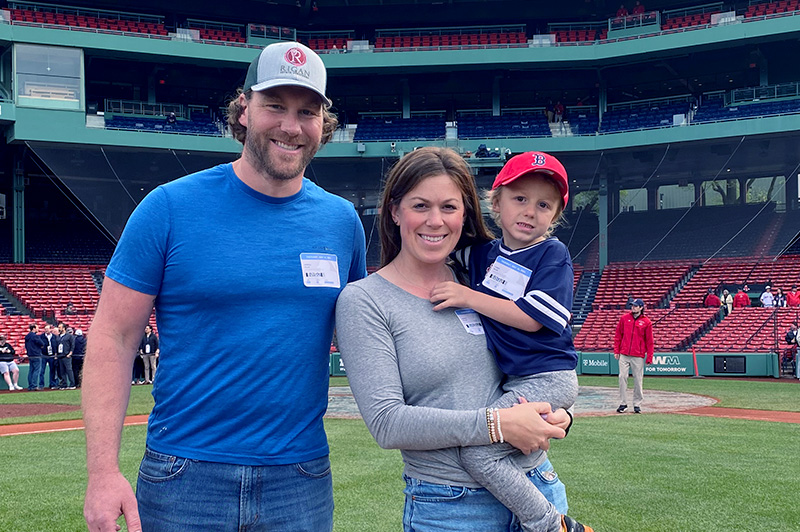
Michigan Boy Thrives After Boston Surgeons Remove ‘Inoperable’ Brain Tumor
Conor, a 7-year-old from Michigan, is riding his bike and negotiating for Legos after Boston surgeons removed recurring...

Svi Mykhailiuk Scores 39 as Jazz Rally Falls Short to Mavericks
Svi Mykhailiuk scored a season-high 39 points, including 23 in the fourth quarter, to rally the Utah Jazz...

Patricia “Patti” Chittenden, Former Omaha Village Clerk, Dies at 63
Patricia C. “Patti” Chittenden, who served as the village clerk in Omaha for more than 20 years, died...

URI Professor Theresa Deeney Uses National Family Literacy Month to Prepare Teachers for Book Challenges
URI literacy professor Theresa Deeney is using National Family Literacy Month this November to prepare future teachers for...