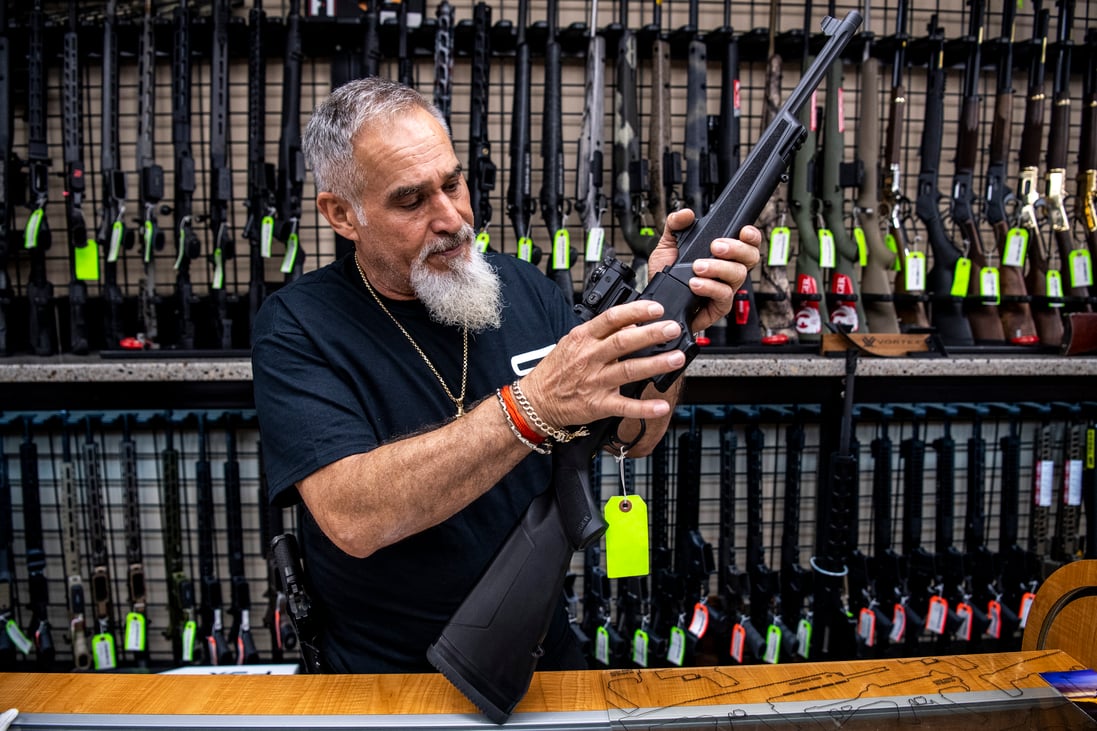
The Supreme Court of Virginia ruled unanimously Wednesday that the state’s felon-in-possession law, as applied to Derek Ginevan, violates the U.S. Constitution under the historical tradition test set by New York State Rifle & Pistol Association v. Bruen.
The decision reverses the Virginia Court of Appeals and voids Ginevan’s three-year sentence for possessing a shotgun, Courthouse News Service reported.
Ginevan, who had prior convictions for drug offenses and larceny, admitted to possessing the firearm when police responded to a domestic dispute in Frederick County. The circuit court had held that felons are not "the people" protected by the Second Amendment. The Court of Appeals affirmed on different grounds, classifying Ginevan’s 2018 ammunition possession as a violent felony and citing a historical tradition of disarming dangerous individuals.
Justice Russell rejected both rationales. He wrote that the phrase "right of the people" carries the same meaning in the First, Fourth, and Second Amendments, so a felony conviction alone cannot expel someone from the political community. The court also found no founding-era statute that permanently disarmed nonincarcerated people based solely on a felony conviction.
He noted the commonwealth could not produce a single historical example supporting the constitutionality of Virginia Code § 18.2-308.2.
The Court of Appeals had pointed to English laws disarming Catholics and colonial laws disarming Native Americans as historical analogues. Russell ruled those laws targeted perceived disloyalty to the state, not criminal punishment, and are not analogous.
The ruling is narrow — an as-applied challenge limited to Ginevan — but criminal defense attorneys expect a wave of follow-on litigation. Elliot Harding, an attorney, said he anticipates a flood of habeas corpus petitions from inmates serving time for felon-in-possession offenses, though he doubts the decision will apply retroactively.
Brad Haywood, executive director of Justice Forward Virginia, said the law disproportionately impacts Black Americans. "If you’re Black in America, you’re much more likely to have a felony conviction," Haywood said. "So I think this has also just a disproportionate positive impact on them."
Weneta said he is watching how the Democratic-led General Assembly responds in the 2027 session. The ruling intersects the interests of criminal justice reform and Second Amendment advocates, he said. The Office of Attorney General Jay Jones did not respond to a request for comment. Attorneys for Ginevan also did not respond.
The Supreme Court of Virginia, as the Commonwealth’s highest court with final authority over state law, issued the unanimous ruling that voided Ginevan’s conviction and reversed the Court of Appeals. Its decision establishes binding precedent for all lower Virginia courts on the historical-tradition standard under Bruen, ensuring the reasoning applies statewide unless overturned by the U.S. Supreme Court or amended by the General Assembly.
Federal law continues to prohibit felons from purchasing firearms, a restriction unaffected by the state court ruling.
Worth a look

Indicted Police Chief-Elect Set to Take Office in Elizabeth, Louisiana Despite Child Sex Charges
The man elected unopposed to lead the Elizabeth, Louisiana, police department has been indicted on four child sex...

Carson City Toyota Distributes 100 Thanksgiving Meals as Ron Wood Center Reports 80,000 Assisted
Carson City Toyota distributed 100 Thanksgiving meals on Monday, a dealership-led effort that arrived as the Ron Wood...

Anchorage Police Shoot Man Who Returned With Shotgun During Domestic Call
Anchorage police shot a 25-year-old man early Sunday at a home on East 76th Avenue after he returned...

Study: Peritoneal Fluid Tumor DNA Predicts Survival in PC Patients
Peritoneal fluid tumor DNA detected in 77% of peritoneal carcinomatosis patients and predicted survival independent of visual staging,...