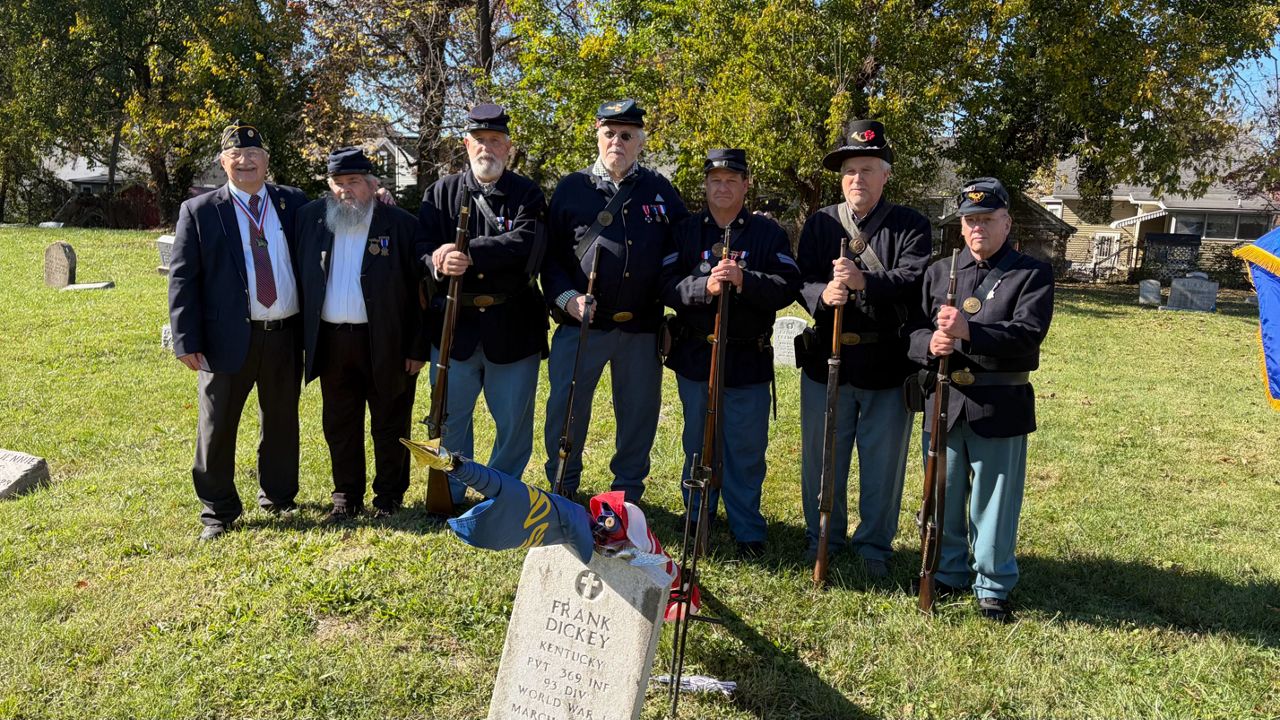
Volunteers and members of the National Association of Black Veterans gathered at Louisville’s Greenwood Cemetery this Saturday to hold a ceremony honoring the Black veterans interred there.
The event marked a poignant chapter in a restoration effort that began more than a decade ago to reclaim the site from years of neglect.
Spectrum News reported that the cemetery serves as the final resting place for hundreds of veterans and thousands of civilians.
Before the cleanup began, the grounds were often treated as a dumping site, according to volunteers working to restore the area.
“There was refrigerators, dryers, washers that had been dumped in here,” said Mike King, a Vietnam veteran with Greenwood Cemetery Community Partners. “People were treated like a dump. Tires. We removed a substantial number of tires and eight or 10 dumpsters full of debris.”
The significance of the site extends beyond the debris removed by the cleanup crews. For many in the Louisville community, Greenwood Cemetery represents a vital link to their own ancestry and history.
“I have a grandfather who’s buried here. He was World War I,” said JoAnn Orr, a representative with the National Association of Black Veterans.
“If you’re from Louisville, you have somebody in this because there used to be a time where this is the only place you could go.”
The cemetery is the resting place of notable figures such as Elijah Marrs, a Civil War veteran who helped found Simmons College. Other historic figures interred at the site include civil rights pioneer Alberta Jones and Henry Fitzbutler, who served as Louisville’s first Black doctor.
When organizers first began the restoration work, they estimated they would find approximately 100 veteran graves. As the work progressed and the brush was cleared, that number grew significantly. Volunteers have now identified more than 800 veteran graves, and they expect that count to rise as further work continues.
“As we were uncovering some dirt and some bushes, we found some tombstones that had fallen over,” King explained. “We carefully cleaned them and lifted them up so we could see who was there.
And it turned out we probably found another 10 veterans that we didn’t know existed.”
King noted that many of these veterans served their country during eras defined by strict segregation and systemic discrimination.
Despite these obstacles, he emphasized that the military experience fostered a unique bond among those who served.
“When you go into the military, you will meet people. You will only know them for a few minutes, but you will still die for them,” King said.
The restoration effort is driven by a central mission to ensure that those buried at the site are treated with the respect they were denied for years. Jeff Shontz, president of Greenwood Cemetery Community Partners, summarized the motivation behind the ongoing labor.
“We believe everyone deserves dignity in life and in death, and that’s what we’re trying to do here, is to restore the dignity for these people,” Shontz said.
As the volunteers continue their work, the site is slowly being transformed from a forgotten plot into a place of remembrance. For the families and veterans involved, the act of clearing away the debris is a necessary step in acknowledging the contributions of those who stood for their country, even when their country did not always stand for them.

No. 1 Nebraska vs. No. 12 Oregon Volleyball: Time, TV and How to Watch
The top-ranked Nebraska Cornhuskers face the No. 12 Oregon Ducks in a Big Ten volleyball showdown at Matthew...

FFP Missouri 5 Seeks 2-Year Extension for Emsworth Hydroelectric Project
The Emsworth Locks and Dam Hydroelectric Project, a long-planned energy installation on the Ohio River, is facing a...

UWS and Minnesota Morris Trade Points in Intense Match
According to the box score provided by uwsyellowjackets.com, the match featured frequent lead changes and strategic substitutions as...

Dan Campbell Says Lions Defensive Backs Are Improving to Cover Reed’s Absence
The Detroit Lions head into their road game against the Miami Dolphins with a depleted roster, officially ruling...