
Voyager 1 crossed one light-day from Earth at 5:16 a.m. Eastern on Wednesday, becoming the first human-made object to reach that distance.
The milestone means a radio command now needs 24 hours to reach the spacecraft and another 24 for the reply to return — a two-day round trip that mission engineers at NASA’s Jet Propulsion Laboratory have learned to manage across 49 years of flight. Since launch in September 1977, the probe has traveled roughly 16 billion miles (26 billion kilometers), surpassing Pioneer 10 as the farthest human-made object in 1998 and entering interstellar space in 2012.
The spacecraft, built for a five-year tour of Jupiter and Saturn, continues to return data from the interstellar medium with only two of its original ten instruments still powered.
“We’re using very old machines to do something they weren’t really designed to do,” Badaruddin added, describing the improvisational engineering that has kept the probe alive as its plutonium power supply fades by about four watts each year.
In Bennington, Nebraska, the milestone became a community-wide event with teachers and students participating. Brenda Skoczelas, an associate professor of physics at a college in Florida and portrayer of Professor Sko, visited Bennington Middle School and the Bennington Public Library on Tuesday.

I would like to see them fall in love with space exploration again.”
Voyager 1 and its twin, Voyager 2, are powered by three thermoelectric generators fueled by plutonium. As the heat output declines, engineers have systematically shut down instruments and heaters.
In a risky maneuver nicknamed the “Big Bang,” several devices were turned off in one coordinated move to buy the spacecraft and their remaining instruments several more years of operation. Today Voyager 1 runs two of its original 10 instruments; Voyager 2, which is about 2 billion miles closer to Earth, runs three.
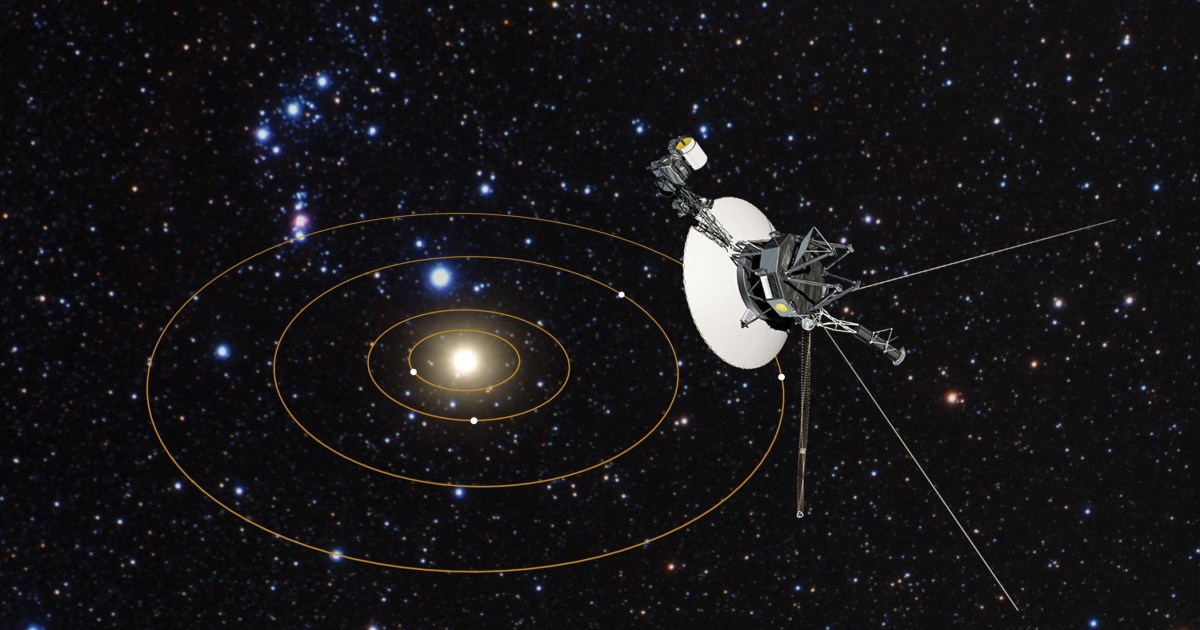
NASA’s Voyager 1 reached a historic milestone of one light-day from Earth, the farthest distance achieved by any human-made object.
NASA invited the public to flash Voyager’s call sign — V-G-R in Morse code — skyward on Tuesday evening using a smartphone app or a simple flashlight. The request turned a technical milestone into a shared moment of looking up. Voyager 2 will not reach the light-day mark until November 2035.
Worth a look

Thunder List Five Out or Questionable vs Injury-Hit Hawks
Oklahoma City snapped a rare three-game skid Sunday, but the Thunder’s injury report for Wednesday’s home date with...

Oregon Economists Forecast Steady Outlook With $245M Surplus, Cite Wealth-Effect Reliance
Oregon's latest quarterly revenue forecast shows the state heading into the 2027 budget cycle with $245 million more...

Jeremiah Smith Reclaims Heisman Favorite Status at Minus Odds as Quarterback Contenders Fade
Ohio State receiver Jeremiah Smith has reclaimed his spot as the odds-on favorite for the 2026 Heisman Trophy,...

North Dakota Ethics Commission Sues AG Wrigley Over Authority to Void Advisory Opinion
North Dakota's Ethics Commission voted unanimously Wednesday to sue Attorney General Drew Wrigley, challenging his authority to declare...