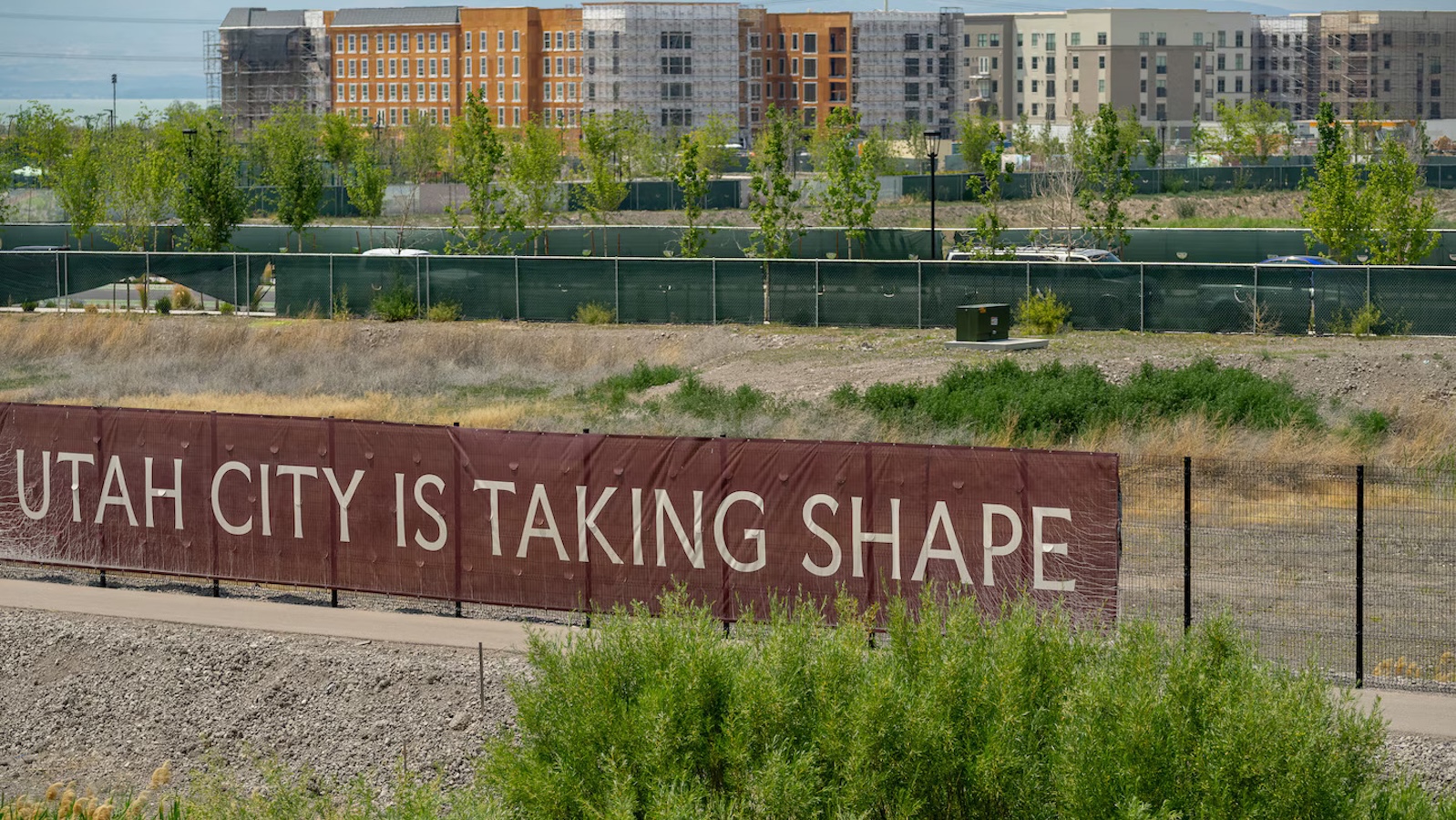
A walkable downtown is rising on the former Geneva Steel site in Vineyard, Utah, as newly elected city leaders challenge the public subsidies and tax incentives that helped launch the 700-acre Utah City development.
Sarah Miller biked with her 5-year-old son on a hot August afternoon to a new park in Utah City, a community envisioned as Vineyard’s new downtown. They rode along the Greenline, a wide promenade flanked by pickleball, tennis and basketball courts that runs from the Vineyard FrontRunner station toward Utah Lake.
“It’s very quiet for now. I imagine as it grows, more people will come in and it will feel a bit more alive,” Miller said. “But I think it’s beautiful.” The development’s first two apartment complexes, 120 and 220 Bend, were finished in February, though only a few balconies held patio furniture, The Salt Lake Tribune reported.
The property was once home to Geneva Steel, a World War II-era industrial complex that went defunct in the 2000s. Former Vineyard officials created tax incentives to clean up the site and agreed to allow thousands of housing units and high-rise buildings to lure developers. The Utah Transit Authority added a FrontRunner stop in 2022. Flagborough LLC, the primary developer, says it is building the state’s most ambitious transit-oriented community — a pedestrian-focused alternative to suburban sprawl and a response to the region’s seasonal smog.
The project currently has 1,400 rental units and expects to finish in 15 to 20 years. “The biggest benefit of this project, the greatest opportunity, is that the project’s so big,” said Nate Hutchinson, a partner in Flagborough and The Flagship Companies, one of Utah’s largest housing developers.
“We’ve been working with a lot of people who’ve done this really well all over the country,” said Pete Evans, a co-managing partner of Utah City and Flagship. “We think we have a pretty good formula on how to make it viable.”

Vineyard City Council members Jacob Wood and David Lauret, both sworn in this January, have sharpened their criticism of Utah City’s reliance on public subsidies. Wood called the project a gamble that should not be financed with city money, while Lauret argued that citizens believe their tax dollars are being used to build a private rental business for the developer.
Lauret emphasized that the development consists almost entirely of rental units, meaning the public is effectively handing the developer a revenue-generating asset.

“Maybe it can work, maybe it can’t,” said Jacob Wood, a Vineyard City Council member. “It’s a gamble, but they shouldn’t be gambling with city money.” Council member David Lauret questioned whether too many public resources have been committed.
“The problem we have is many of the citizens feel they’re trying to use our money … toward building their business,” Lauret said. “It’s all rental facilities. We’re basically helping to hand them a business they’ll make money on.” Council members also target the project’s dense clusters of rental units, partly funded through property tax incentives.
Keep reading

Bears, Lions Meet at 8-2 With NFC North Lead on Line in Thanksgiving Showdown
The Chicago Bears and Detroit Lions meet Thursday at Ford Field with both teams 8-2 and the NFC...

Proposed USDA SNAP Rule Could Cut 3.7M Households, Ohio Coalition Warns
A proposed USDA rule would end broad-based categorical eligibility for SNAP, cutting 3.7 million households from benefits, the...

Greater Baton Rouge Port Commission Chooses 2027 Officers; Schexnayder President Again
The Greater Baton Rouge Port Commission chose its 2027 leadership slate at a regular meeting on Nov. 19,...

Oklahoma City Comets Accepting Applications for 2026 Seasonal Field Operations Intern
The Oklahoma City Comets are accepting applications for a seasonal field operations internship at Chickasaw Bricktown Ballpark, with...