West Virginia faces a nuclear crossroads
West Virginia’s attempt to join the nation’s elite nuclear energy circle ended abruptly this fall, leaving state leaders to weigh whether to press forward or retreat.
After being named a finalist for a federal initiative, the state withdrew its application following scrutiny over how it intended to manage nuclear waste, according to reports from Spilman Law and JDSupra.
The setback involves the Nuclear Lifecycle Innovation Campuses (NLIC) program, a Department of Energy initiative launched in 2025. While the program offers the potential to attract up to $50 billion in capital investment and create nearly 25,000 jobs, West Virginia’s momentum stalled in September 2026.
The Charleston Gazette-Mail obtained a 48-page application through a state open records request, revealing that the state’s plan included starting with fuel recycling and storage, alongside advanced reactor deployment.
Governor Patrick Morrisey had previously touted the state’s inclusion on the shortlist, which featured other states like Utah, Tennessee, Oklahoma, Idaho, and Louisiana. However, the disclosure of the application’s details regarding waste management and the identification of potential host sites—some near popular tourist areas—triggered a political backlash. Governor Morrisey later vowed the state would not serve as a “dump” for nuclear waste, leading to the formal withdrawal.
The push for energy expansion
Despite the recent withdrawal, the underlying drive for nuclear power remains a central pillar of the state’s long-term economic strategy. In February 2022, West Virginia officials repealed a 25-year-old ban on the construction of nuclear power plants. Since then, the legislative focus has shifted toward supporting small modular reactors (SMRs).
Delegate Bob Fehrenbacher, R-Wood, highlighted the necessity of this shift during recent interim meetings, noting a state commitment to triple the state’s energy output by 2050. Fehrenbacher suggested that nuclear energy must be a core part of the state’s portfolio to meet these ambitious targets.

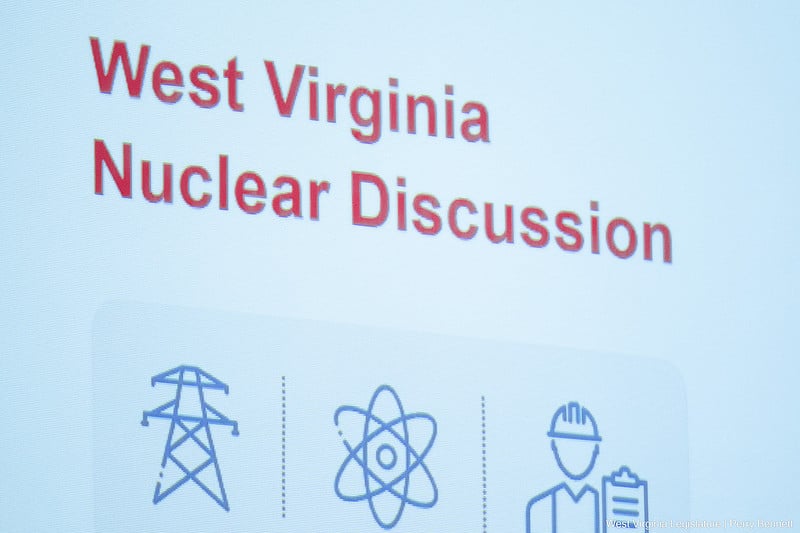
During a panel discussion held for state lawmakers, industry experts discussed how the state might recover from the missed federal opportunity. Glenn Davis of Davis Energy and Infrastructure Strategy Group described the loss of the NLIC finalist status as a “huge missed opportunity,” yet he maintained that the chance to lead in the sector still exists.
“West Virginia is an ideal place, but there’s work to be done in West Virginia to get to that point,” Davis said.
The conversation among experts centered on whether West Virginia is truly “primed and ready” to handle the complexities of a nuclear economy. While the state has a deep history as an energy producer, its sudden withdrawal from the federal program challenges the stability of its energy policy.
Digital growth drives nuclear energy demand
The debate is not merely about electricity generation; it is increasingly tied to the explosive growth of the digital economy. As data centers proliferate, their massive power requirements are creating a direct link between high-tech infrastructure and nuclear energy needs.
Glenn Davis noted that West Virginia currently sits in a spotlight regarding data center development. He argued that increasing these facilities would make the state an attractive location for the production and deployment of small modular reactors (SMRs). This intersection of digital demand and nuclear supply could provide the economic justification for the state to move forward despite the recent controversy.
Emil Abram, vice president of business development for Dominion Energy, suggested that success might not require a singular, massive announcement. Instead, he argued that the state’s true goal should be creating a “responsible, durable option” that allows companies to proceed with long-term projects with confidence.
The stakes for West Virginia involve more than just industrial growth. The state is attempting to balance its identity as a historic energy exporter with the modern requirements of the PJM interconnection region. If the state can successfully position itself for fuel reprocessing and manufacturing, it could transition from a coal-dependent economy to a competitive hub for advanced nuclear development.

However, a tension remains between the desire for rapid industrial expansion and the political necessity of protecting ratepayers and local communities. Panelists suggested that the legislature must work closely with utilities to create laws that enable nuclear projects without destabilizing utility finances or placing undue burdens on residents.
Whether the state can bridge the gap between its ambitious energy goals and the practical, often controversial realities of nuclear waste management remains the defining question for West Virginia’s lawmakers.
Related reading

Four Arrested in Montgomery Narcotics Investigation Following Search Warrant
Montgomery police arrested four people on Tuesday following a narcotics investigation that resulted in the seizure of cocaine,...

October Inflation Rises 0.4% as Food and Housing Costs Drive Hotter-Than-Expected CPI
Inflation rises 0.4 percent in October “It’s just another brick in the wall for people that can’t …...
1840 Karen Ln M4vtkd Property Details in Virginia Beach VA 23454
Specific property details for 1840 Karen Ln #M4vtkd in Virginia Beach, VA 23454 are currently unavailable, Zillow reported....

Former Mexican Soccer Player Charged in Counterfeit Watch Scheme
A $5.4 million counterfeit watch ring A former professional soccer goalkeeper is facing federal charges after authorities allegedly...