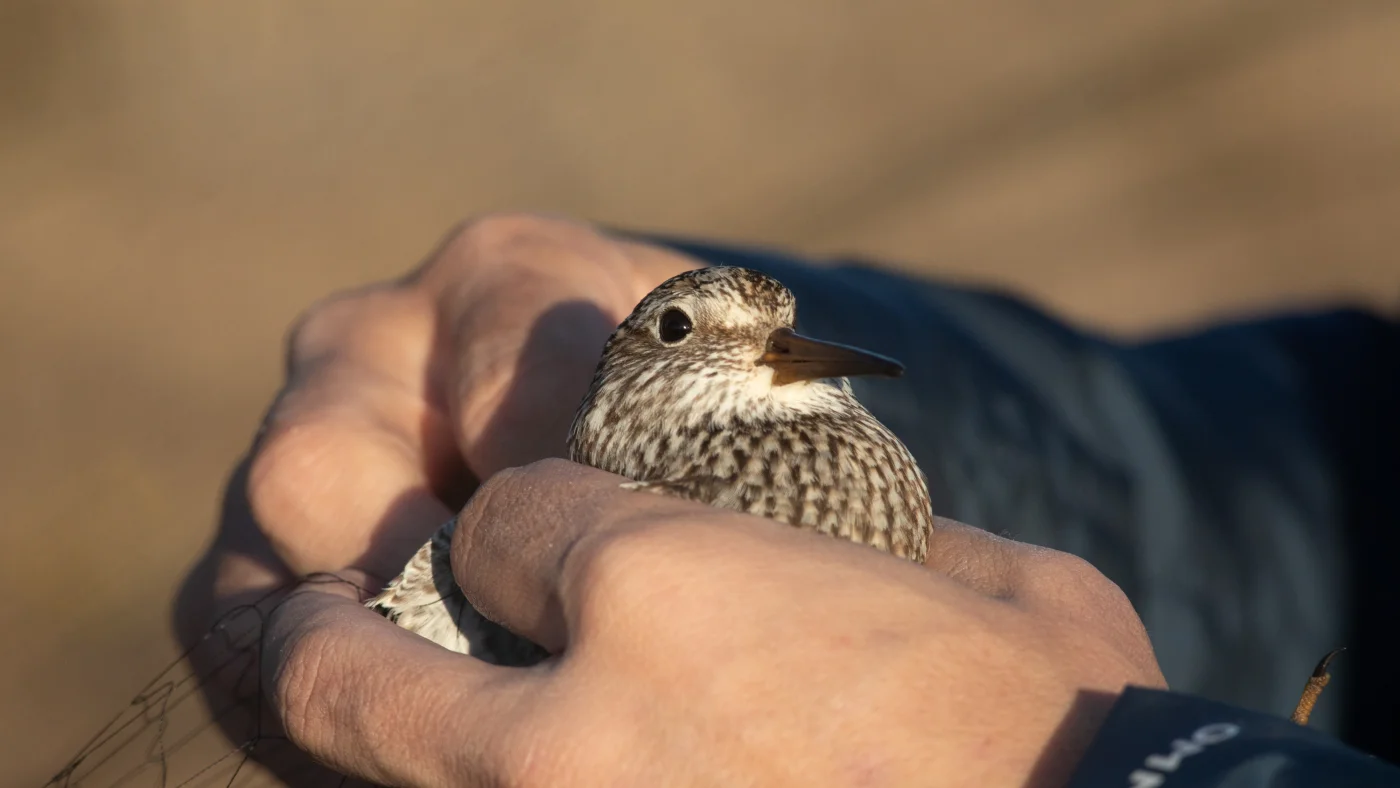
Pectoral sandpipers and other shorebirds are facing severe population declines as warming Arctic temperatures cause their migratory patterns to fall out of sync with seasonal food supplies. Nearly half of the 41 shorebird species that breed in Alaska are currently in decline, with some losing more than half of their populations over the last 30 years, NPR reported.
These birds are biological marvels, performing feats of endurance that defy their tiny frames. A pectoral sandpiper weighs roughly three ounces—about the same as a robin—yet it flies more than 17,000 miles annually. They don’t glide on thermal currents; they flap their wings the entire way from Alaska to Argentina and back.
To survive these ultra-marathon journeys, the birds undergo radical physiological transformations. They can double their body weight by storing fat, and some species even undergo organ shrinkage to reduce weight during flight. Research shows that certain internal organs, such as the digestive system, shrink before a nonstop migration to save energy.
The mismatch between birds and bugs
The survival of these migrants depends on a precise biological schedule. They arrive in the Arctic to breed during a narrow window when food is most abundant. However, the rapid warming of the Arctic, which has risen four times faster than the rest of the planet, is disrupting this timing.
In the tundra, the arrival of spring triggers the emergence of insects like non-biting midges, spiders, and beetles. These insects provide the essential nutrients, such as calcium, that birds need to produce eggs and raise healthy chicks. Because insects are highly sensitive to temperature, they are emerging earlier in the season due to thawing permafrost.

This creates a “mismatch” where the peak insect population occurs before the shorebird chicks have hatched. When chicks hatch late, their survival rates drop significantly. The problem isn’t just timing; it is also the nutritional quality of the available food. Researchers are finding that the specific “menu” of insects changes as the climate shifts, affecting the nutrients available to growing birds.
“Shorebirds truly are sentinels about what is happening to the planet, because they’re touching down in so many of the places across that planet,” Nathan Senner, who studies shorebirds at the University of Massachusetts Amherst, told NPR.
Senner warned that if scientists cannot interpret what these birds are communicating about planetary unpredictability, the ability to respond to broader environmental changes will be compromised.
Technological windows into migration
For decades, the sheer scale of these journeys remained a mystery. While scientists have tracked larger animals for a long time, it was only in the last 15 years that tracking technology became light enough for a three-ounce bird. Using tiny GPS transmitters that look like small backpacks or rice-grain-sized leg tags, researchers are finally seeing the full scope of the journey.
These tags allow biologists to see how birds navigate entire oceans and utilize specific weather patterns to optimize their flight. One recorded instance of this extreme endurance involved a bar-tailed godwit that flew over 8,000 miles from Alaska to Australia over 11 straight days without a single stop.
Rick Lanctot, a wildlife biologist with the U.S. Fish and Wildlife Service, continues to use these tools to study the birds’ incredible adaptations. He said that when birds first arrive in the Arctic after a long flight, they are often strikingly thin, with their breastbones clearly visible because they have exhausted their fat reserves.
Cultural and ecological shifts in Utqiaġvik
The decline of these species is not just a data point for biologists; it is a visible change in the landscape of northern Alaska. In Utqiaġvik, the northernmost city in the U.S., the seasonal rhythms that the Inupiat people have relied on for centuries are shifting.
Robin Mongoyak, a wildlife guide who grew up in the area, has observed these changes firsthand over the last 35 years. He described the arrival of the birds as “quvianaq time”—a wonderful, celebrated period that follows the long Arctic winter. Now, the sea ice that used to last for multiple years is becoming rare, and the ice breaks up much earlier in the spring.
“I don’t see as many birds as I used to like seeing,” Mongoyak told NPR, noting that the environment has changed significantly during his lifetime.
While some shorebirds attempt to adapt by nesting slightly earlier, scientists are still investigating whether they can keep pace with the accelerating rate of warming. There is a fundamental question of whether these birds can rely on stable environmental cues, like day length, when the actual biological reality of their habitat is changing so rapidly.
Whether long-distance migrators, who already push the absolute limits of biological survival, can successfully adapt to a world where the “restaurants” are closed by the time they arrive remains an open question for researchers.
Related reading
- Injured Captain Last to Leave New Orleans Cruise Ship After Tanker Collision | FOX 5 New York
- The Railroad and the Roots of Mexican Immigration in Kansas
- COP31 Climate Summit: Diplomats Divided Over Fossil Fuels and Science Report Timelines (archyde.com)
- Miliband urges closer UK-EU ties, warns of climate risk (newsarchyuk.com)

Injured Captain Last to Leave New Orleans Cruise Ship After Tanker Collision | FOX 5 New York
As authorities stated Saturday, roughly 100 individuals were rescued from the Mississippi River following a Friday incident where...

The Railroad and the Roots of Mexican Immigration in Kansas
Mexican workers in Kansas face fresh threats of arrest more than a century after railroad recruiters first brought...

Bill Fennelly Suspended One Game for ‘Inappropriate Contact’ With Player – Yahoo Sports
Iowa State women's basketball coach Bill Fennelly will serve a one-game suspension after making inappropriate contact with a...

Indiana Defeats Milwaukee Women’s Basketball 85-47
Facing a relentless interior attack and playing its third game in four days, the Milwaukee women's basketball team...