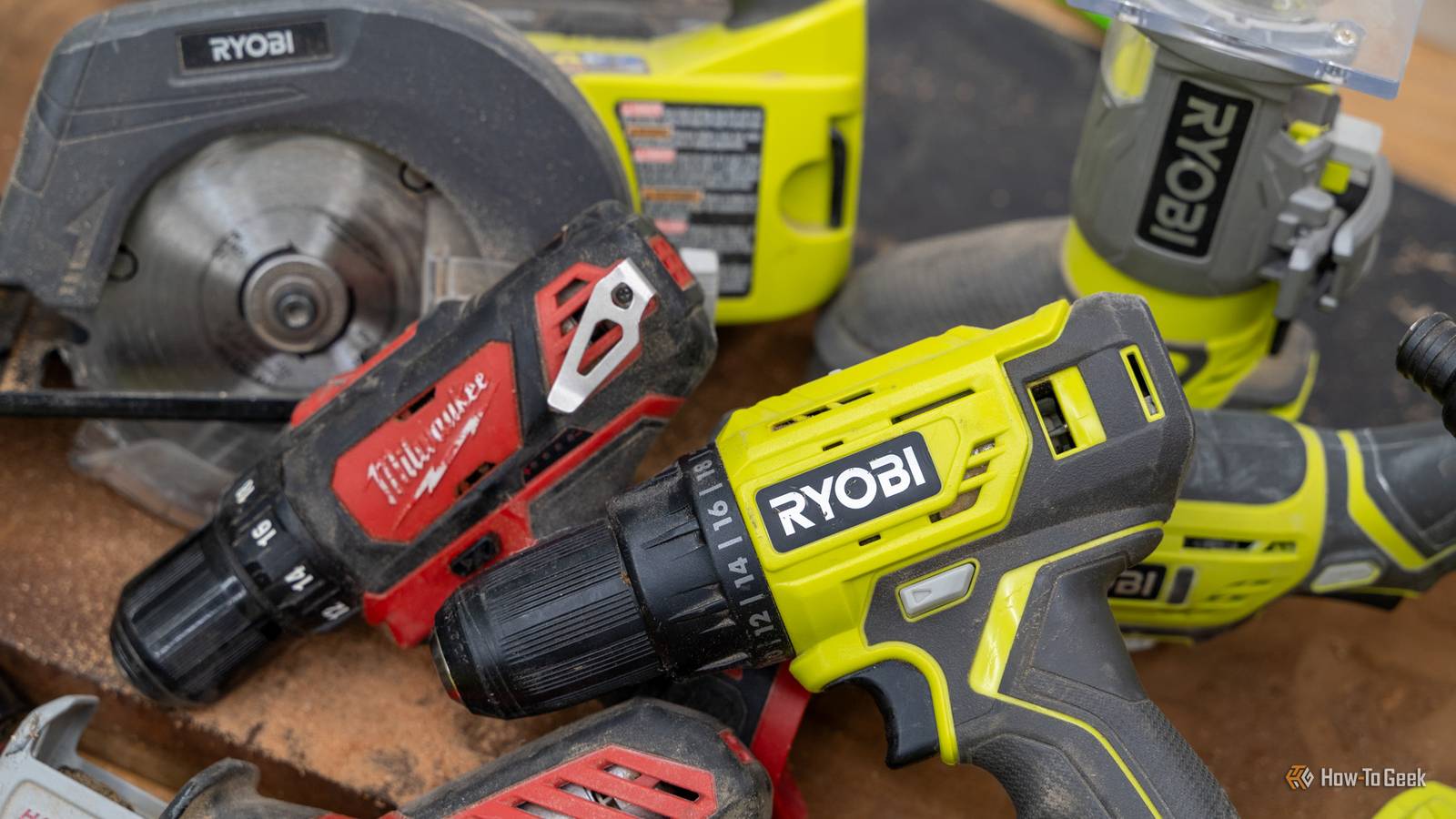
Your Milwaukee and Ryobi Tools Come From the Same Family
If you have ever stood on a job site poking fun at a neon green Ryobi drill while holding your own Milwaukee tool, you should know that both brands come from the same parent company. Both brands—and several others you likely own—trace back to a single parent company called Techtronic Industries, or TTI, according to How-To Geek. That means the rivalry you have been nursing for years is, in corporate terms, a family argument.
This consolidation matters right now because TTI just made a quiet but telling move: in late 2025, the company abandoned its HART Tools brand, a Walmart-exclusive line once positioned as a budget alternative, to focus resources on Milwaukee and Ryobi. The hardware store aisle is more concentrated than it appears, and understanding who actually owns the tools in your garage changes how you think about warranties, battery compatibility, and where your money goes.
The Milwaukee Story Begins in 1924
The timeline starts in Milwaukee, Wisconsin, where Albert F. Siebert founded the Milwaukee Tool Company in 1924. The brand’s breakthrough came when it built the first industrial drill light enough to operate one-handed—the “Hole-Shooter”—which Henry Ford used at automotive assembly plants. Milwaukee also invented the Sawzall and holds the trademark for that name, cementing its place in construction history long before lithium-ion batteries existed.
Ryobi’s clock starts later. Founded in 1943, the brand became known for die-cast products in the 1980s, but the modern power tool version you recognize today only exists because of a 2000 deal. That year, Techtronic Industries acquired the licensing rights to the Ryobi tool name and branding for North America and select other regions, along with all its facilities and operations. The actual trademark still belongs to Ryobi Limited of Japan, a separate industrial printing manufacturer, but TTI operates the power tool brand under a long-term global licensing agreement.
TTI Buys Milwaukee in 2005
Everything shifted again in 2005. Milwaukee was credited with introducing the first major commercial lithium-ion battery system, and in the same year TTI acquired the company outright. With TTI’s funding, Milwaukee continued investing in battery technology and launched the M18 platform in 2008, a unified battery system that now powers hundreds of tools.
RIDGID sits in a murkier legal spot. Founded in 1922 as the Ridge Tool Machinery Company, it was acquired by Emerson Electric in 1966, and Emerson still owns the RIDGID trademark today. However, in 2003 TTI licensed the RIDGID name strictly for manufacturing power tools, which is why you see those orange tools scattered throughout Home Depot. TTI does not own RIDGID, but it builds the power tools sold under that label.
One Umbrella, Many Brands
The full roster under TTI’s control reads like a hardware store inventory. Beyond Milwaukee, Ryobi, and RIDGID, the company owns or licenses AEG, Empire, Kango Tools, Homelite, Hoover Vacuums, Dirt Devil, Oreck, Imperial Blades, Stiletto, and Vax. Some, like HART Tools, have come and gone—HART was discontinued in late 2025 to streamline operations around the two flagship brands.

Ryobi’s 18V ONE+ system deserves special mention because it changed how homeowners buy tools. A single 18V ONE+ battery pack can power over 350 different products, from drills to yard care equipment to camping gear, which is why the brand has become a staple for DIYers who want one battery ecosystem for everything.
Same Parent, Different Standards
So does owning both brands mean Milwaukee and Ryobi tools are identical? Not quite. While TTI operates worldwide with R&D and manufacturing facilities across dozens of regions, it maintains separate research budgets, internal design teams, and distinct production lines for each brand. Some components or manufacturing regions may overlap, but the tools are engineered to different standards. Milwaukee continues to operate somewhat independently for research and development, including a major facility still based in Wisconsin.
The practical stakes for consumers are straightforward: your warranty claims, battery compatibility, and price point still depend on which brand you bought, even if the same corporate parent ultimately profits. When TTI abandoned HART to focus on Milwaukee and Ryobi, it changed what sits on the shelf at your local Home Depot and what your crew carries onto the job site.
With HART gone and the focus narrowing to Milwaukee and Ryobi, the question is whether other licensed brands like RIDGID will see similar shifts or if the company will hold the current lineup steady.

Thrive Academy’s perfume-making STEM event inspires Baton Rouge students
At Thrive Academy in Baton Rouge, the boundary between a beauty aisle and a chemistry lab blurred recently...

Christ Episcopal Church Hosts Free Violin and Piano Recital
NEWTON, N.J. (Sussex County) — According to WRNJ Radio, Christ Episcopal Church at 62 Main St. will host...

Louisville Metro Council balance of power remains unchanged after election
Louisville voters kept the Metro Council's balance of power exactly where it was on Nov. 3, re-electing every...

Iowa Senate election results: Republicans maintain 29 seats, six uncalled
“If there is any kind of, call it whatever you want, a blue wave, a historical trend that...