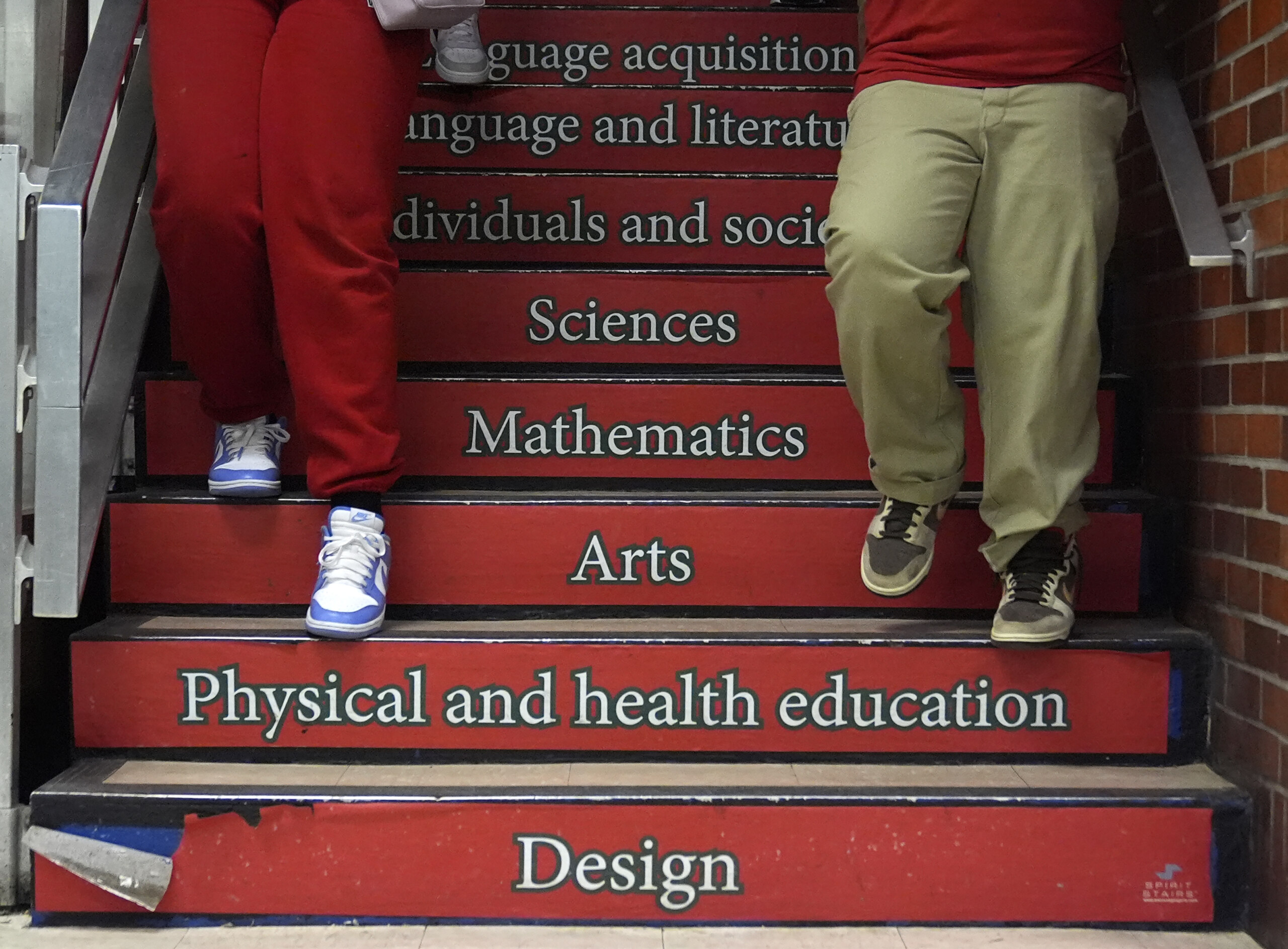
The federal Education Freedom Tax Credit will not reduce Illinois public school funding if the state opts into the program. Because of a state “hold-harmless” provision, school districts are guaranteed to receive at least the same amount of state funding they received the previous year, regardless of student enrollment changes.
Arguments from teachers unions suggest that the federal scholarship program could trigger a “mass exodus” of students to private schools, ultimately draining resources from the public system. However, according to reporting from illinoispolicy.org, this claim contradicts explicit state statutory language and the actual mechanics of how Illinois distributes money to its schools.
The hold-harmless safety net
Illinois uses an Evidence-Based Funding (EBF) formula to distribute state money to local districts. When lawmakers enacted this formula in 2017, they built in a Base Funding Minimum (BFM) to act as a financial floor for schools, illinoispolicy.org reported.
This provision ensures that a district’s state funding remains stable even if its student population drops. Even if many students leave for other schooling options, the district still receives at least the same amount of EBF money it received in the prior school year.
The impact of this stability is visible in Cicero Public School District 99, located just west of Chicago. Between 2021 and 2025, the district lost more than 1,300 students. Despite this decline in enrollment, the district has maintained its $120 million in annual EBF funding because of the hold-harmless rule.

In fact, the math of the EBF formula can lead to higher per-pupil spending during enrollment declines. Because the total funding remains steady while the number of students decreases, the amount of money available for each remaining student actually rises. In Cicero, per-pupil spending increased by nearly $6,500 during its enrollment dip, aided by stable EBF, local property taxes, and COVID relief funds.
Cyndi Oberle-Dahm, Executive Vice President of the Illinois Federation of Teachers, claimed public schools could lose money if the federal program prompts a “mass exodus” of students to private schools.
While such an exodus might occur in states without similar protections, Illinois’s legal framework prevents it from impacting state-level appropriations. Local property taxes—the primary source of school funding in the state—are not tied to student enrollment numbers.
How the federal credit functions
The Education Freedom Tax Credit (FSTC) does not pull money from existing state, federal, or local education budgets. Instead, the program relies on donated money, and the only actual cost to the federal government is foregone income tax revenue.
If Governor J.B. Pritzker opts Illinois into the program, the state could unlock more than $2 billion in donated funds. These dollars are intended for a variety of educational expenses, including:
- Tutoring and college-admissions test preparation
- School fees
- Extended-day programs
- Special education services
Donors have the option to give directly to local public school foundations that qualify as scholarship-granting organizations. These foundations already manage private donations to support their local schools.
The formula for new EBF money also includes a built-in buffer. While enrollment does affect the “Adequacy Target”—the estimate of what a district needs to provide a quality education—the formula does not react instantly to a drop in students. Under state law, the EBF calculation typically uses the greater of a district’s prior-year enrollment or its average enrollment over the previous three years.
This creates a lag that protects shrinking districts. A district can lose students before the full impact is reflected in its Adequacy Target, meaning they may remain eligible for more new EBF funding than they would under a strictly real-time enrollment model.
The decision for Illinois
The stakes for the state involve a choice between maintaining the current status quo or opening a new channel for private donations to reach students. Currently, 32 states have indicated they will opt into the FSTC, including seven states led by Democratic governors.
If Governor Pritzker decides not to opt Illinois into the program, the state’s donors can still claim the federal tax credit by contributing to scholarship-granting organizations in other participating states. However, if that happens, the donated money would benefit students in those other states rather than Illinois students.
The Governor must make his final decision on whether to opt the state into the program by January 1, 2027.
Keep reading

Ray Bourque Presents Patrice Bergeron With Hockey Hall of Fame Blazer
Patrice Bergeron officially entered the Hockey Hall of Fame on Sunday, receiving his induction honors in front of...

Chiefs May Acquire Josh Downs and Pursue Hollywood Brown
The Kansas City Chiefs are positioned to acquire Indianapolis Colts wide receiver Josh Downs before Tuesday's NFL trade...
Iowa Announces 2026 National Disability Employment Awareness Month Employer Award Winners
Iowa recognizes businesses for disability employment support Iowa Workforce Development (IWD) has named the recipients of its 2026...

Indiana State University Wins 2026 Jim Fong Grant for Credential Pathways
Indiana State University has been awarded the 2026 Jim Fong Grant for Advancing Online and Professional Education, UPCEA...