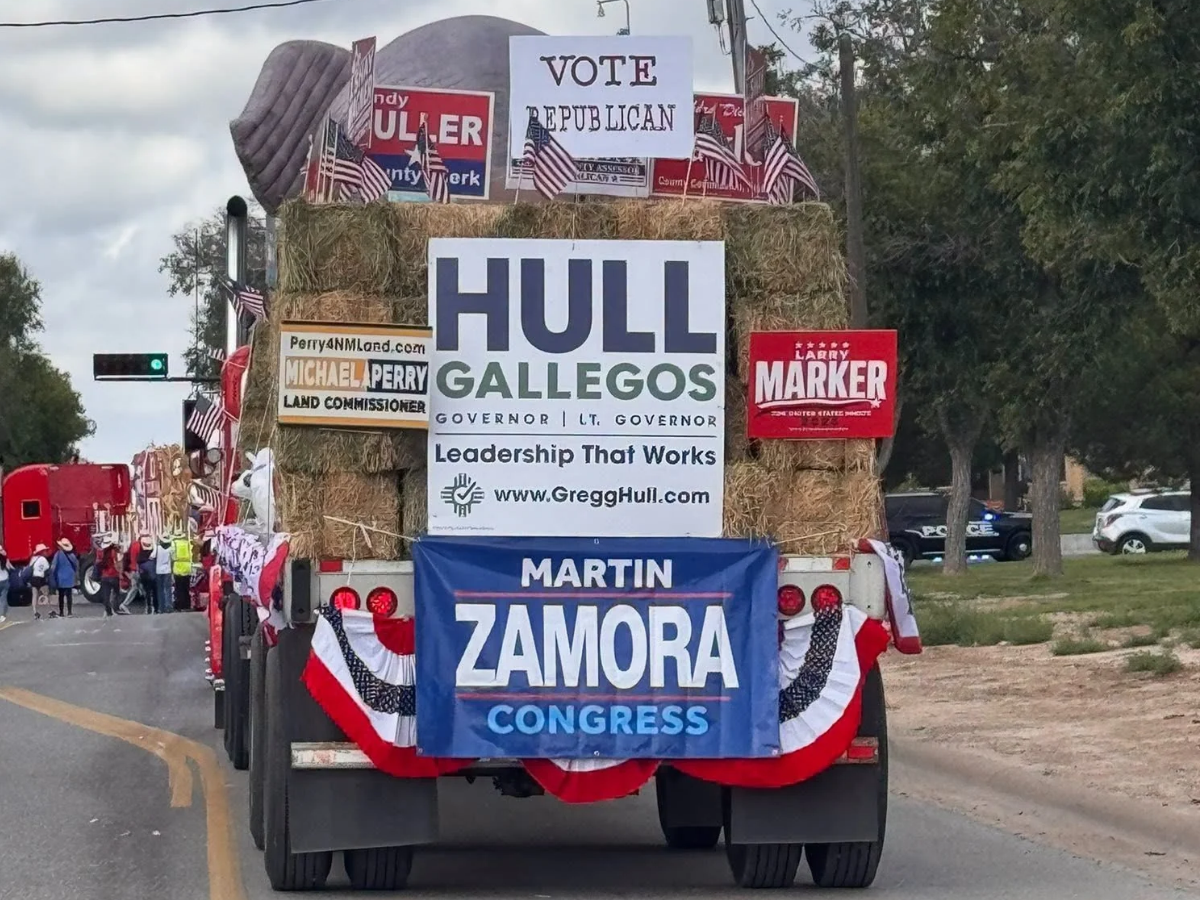
Governor-elect Deb Haaland’s decisive 14-point victory over Republican Gregg Hull alters New Mexico politics, as data shows 79% of the votes required for her win originated from just four urban counties. This concentration of power creates uncertainty about the future influence of rural New Mexico in a state legislature trending toward a Democratic near-supermajority.
The numbers from the recent election, as reported by the New Mexico Political Report, paint a stark picture of a state divided by geography and political appetite. When looking at the 33 counties that make up the Land of Enchantment, the path to the Governor’s office has become remarkably narrow. Three urban hubs—Bernalillo, Doña Ana, and Santa Fe—provided 70% of the raw votes necessary for Haaland to secure her win. Once Sandoval County is included, that figure climbs to 79%. For a state that prides itself on a diverse, vast landscape, the electoral map is increasingly defined by the density of the Rio Grande corridor.
Does rural New Mexico still hold political power?
For years, residents in rural and Republican-leaning counties have voiced frustrations that state policies in Santa Fe prioritize the urban center. The latest election results suggest these concerns are supported by cold, hard data. With the four largest counties accounting for 62% of total votes cast, the electoral weight of the state’s rural areas is shrinking in real-time. With a near-supermajority in both chambers of the legislature, Democratic leaders like Senate Majority Leader Linda Trujillo, Senate President Mimi Stewart, and Speaker Javier Martínez are not mathematically required to court Republican votes to pass their agenda.
Pat Davis, founder and publisher of the New Mexico Political Report, suggests that the path forward for rural communities is not through obstruction, but through integration. As someone who has served as an Albuquerque City Councilor and a progressive organizer, Davis argues that the current political landscape requires a new approach for those outside the urban core.
Democrats, urban and rural alike, will be well rewarded at the next election if they choose to go it alone, and this election shows that they can. Democrats have to be careful to avoid an agenda for Rio Grande-only counties, but the rest of the state also has to come to the table with an understanding of how the solutions they want can be built inside the new Democratic political structure.
The shifting sands of the Republican platform
Since the departure of former Susana Martinez, who left office with a 35% approval rating, the party has struggled to find a foothold in statewide contests. The strategy of warning against “societal collapse” in the lead-up to the election clearly failed to resonate with the broader electorate, as Democrats swept major races with margins of 60% to 40% or better.
Can a new dialogue bridge the gap?
The challenge is whether the Democratic leadership will choose to govern as a coalition representing all New Mexicans or as a party representing the interests of the four urban counties that delivered their victory. For rural Republicans, the choice is equally stark: continue to yell from the sidelines or adapt to the reality of the current legislative environment.
Davis has proposed a unique solution, albeit one delivered with a touch of irony: a class for Republicans in blue cities and states on how to “speak Democrat.” The goal is not to force a change in political ideology, but to ensure that rural interests are not ignored in a political system that has moved past them. As the legislative session approaches, the question remains whether the new Democratic majority will prioritize the broad, diverse needs of the state or lean into the urban mandate that brought them to power.
Worth a look

Manchester, Missouri to Discuss Walmart Drone Delivery Proposal at Public Sessions
Manchester Residents Weigh in on Proposed Walmart Drone Delivery The quiet suburban skies over Manchester, Missouri, may soon...
Officer Cleared in Shooting of Donkey “Heehaw
Legal Clearance for Cedartown Officer in Donkey Shooting The investigation into the death of "Heehaw," a pet donkey...

Out-R-Inn: Preserving the Dive Bar Tradition at Ohio State for Over 50 Years
A Half-Century of Staying Power at Out-R-Inn In the heart of the University District, just a stone’s throw...

Carson City Nursing Home Holds Two-Star CMS Rating and Fines
When families in Carson City look for long-term care, the decision often balances geography against the hard data...