
On Sunday mornings at 10:30 a.m., the sanctuary at 4901 14th Street NW fills with worshippers, while others join the same service remotely via Zoom and Facebook Live, according to the church’s official website, stpaulamedc.org.
In 1859, it purchased a site on 8th Street SW, and by 1863 had erected a new building on that location. Beyond worship, the church hosted a school called the Lincoln Institute, extending its mission into education. By 1890, the congregation had completed a larger sanctuary seating 250, reflecting its growth within the Southwest Washington community. Among its notable members during this period was Republican political leader Perry H. Carson, whose presence signaled the church’s influence in civic and political life.
From E Street Mission to Underground Railroad
Anthony Bowen’s founding vision in October 1856 created more than a place of worship; it established a civic institution that would serve the community through multiple eras. As Wikipedia detailed, the E Street Mission served as an Underground Railroad station during the Civil War, sheltering those escaping bondage while the nation fractured. The congregation’s commitment to education manifested in the Lincoln Institute, which operated alongside its religious functions, embedding the church deeply in the intellectual and moral life of the city.
After purchasing the 8th Street SW site in 1859, the congregation built its first dedicated structure there in 1863. Growth continued with the 1890 completion of a sanctuary seating 250, a significant expansion that accommodated a congregation increasingly central to Southwest Washington’s African American community. Perry H. Carson’s membership in the late 1800s demonstrated how the church served as a gathering place for political leadership as well as spiritual guidance.

Church Relocates After Mergers and Expansions
Mid-twentieth century urban renewal in Southwest Washington fundamentally altered the church’s geography. The building had been completed in 1914 at a cost of $17,000 for the Iowa Avenue Methodist Episcopal Church.
That Methodist congregation had met on the 14th Street site in a temporary building for five years before the 1914 completion. In 1923, the Iowa Avenue congregation merged with the Golden Rule Society to form Hamline Methodist Episcopal Church, and the combined congregation relocated to a larger building on 16th Street NW in 1926, leaving the 14th Street property available. In 1929, the building sold for $25,000 and was rededicated as the home of the four-year-old B’nai Israel Congregation. By 1951, it had become the home of Congregation Talmud Torah, hosting Jewish worship before St. Paul’s arrival seven years later.
The architecture of the current building reflects this layered past: dressed red brick with white stone trim, a sanctuary seating 400—larger than the 250-seat 1890 structure in Southwest—and a lower level containing an auditorium, dining room, commercial kitchen, and classrooms. The building that once served as a Methodist church and a synagogue now houses the African Methodist Episcopal congregation and has a sanctuary seating 400.
Worship and Ministry in 2026
According to stpaulamedc.org, the congregation gathers throughout the week for Bible study, prayer, and ministry meetings and events, with the stated purpose of “Restoring, Rebuilding, Reviving the Community of God!” The 10:30 a.m. Sunday worship remains the anchor of this schedule, offered both onsite at 4901 14th Street NW and online via Zoom and Facebook Live, with services archived on the church website and Facebook page for on-demand viewing.
Keep reading

Gabe Vasquez wins reelection in New Mexico’s 2nd district race
Vasquez Holds New Mexico's 2nd District as National Money Floods the Race Incumbent Democratic U.S. Rep. Gabe Vasquez...
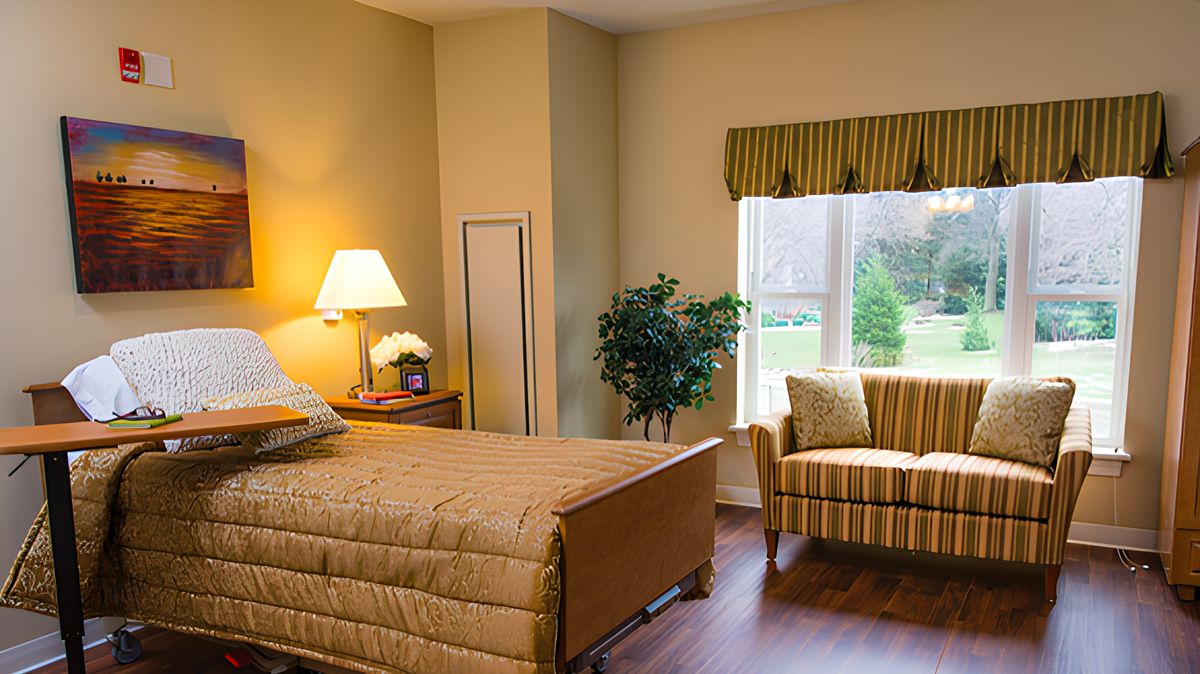
Manchester Commons Offers Comprehensive Senior Care in Erie
Manchester Commons of Presbyterian Senior Care stands as one of Erie, Pennsylvania's large-scale senior living communities, offering residents...

Mikie Sherrill urges port operators to turn away Russian diesel
Diesel at the pump is averaging $6.29 per gallon nationwide as of Tuesday morning, down from $6.50 just...

2 Nevada Ballot Questions Pass on Abortion Rights and Voter ID
Nevada voters have rewritten their state’s foundational legal document, approving two ballot measures on Election Day that simultaneously...