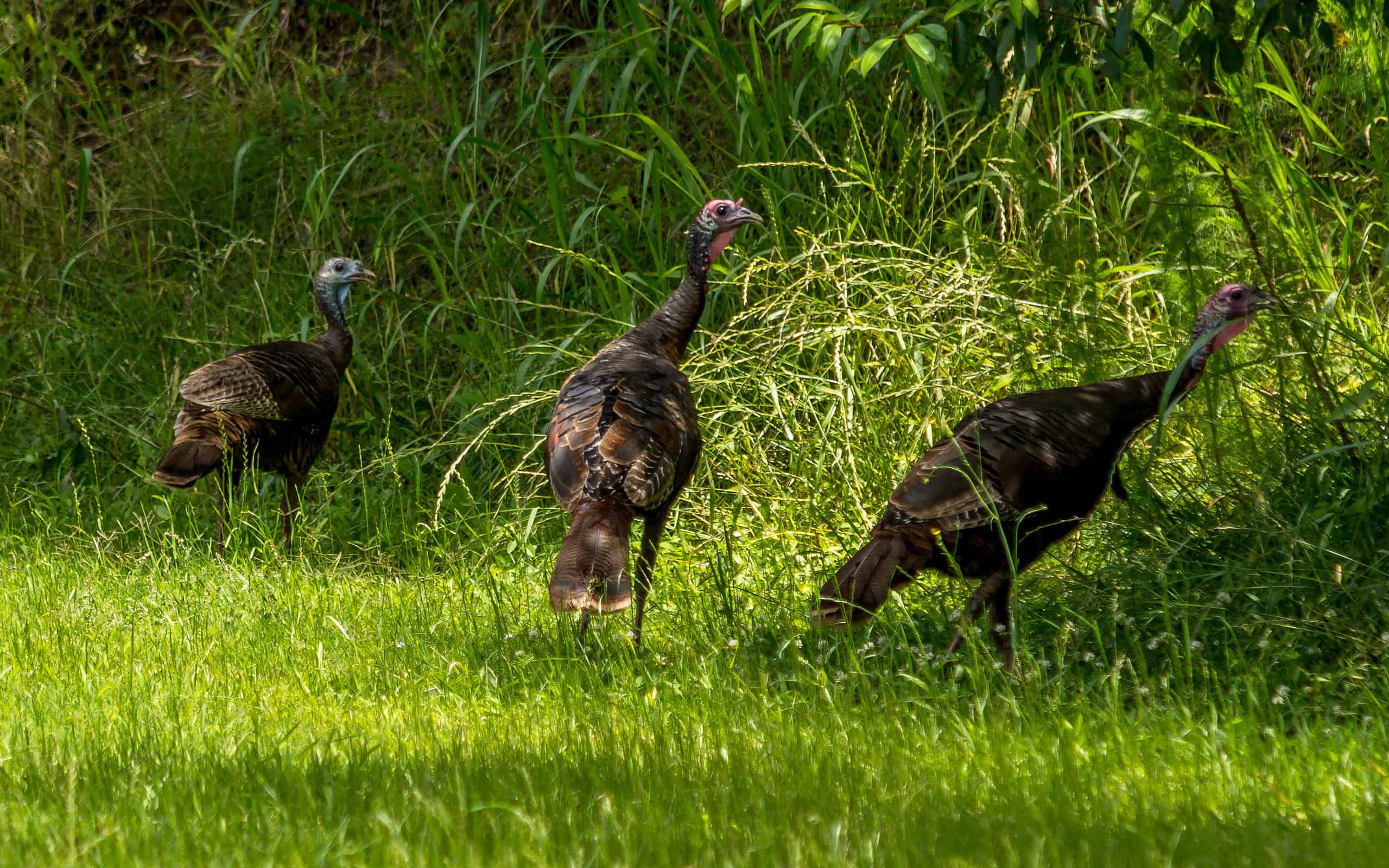
“They won’t leave her,” a bystander shouted as a flock of wild turkeys trailed a woman down Old Farm Road in Newton, Massachusetts, on Saturday until strangers pulled over and let her into their car.
The encounter, captured in bystander video aired by Boston 25 News on Nov. 22 and audio posted by WKYC on Nov. 23, shows the birds gobbling and pecking at the woman as she tries to get away. “He’s gonna bite you,” one voice warns. “Get in the car,” another says. The woman, heard saying “Jeremy, I’m in a stranger’s car,” was not hurt, WHDH reported.
Taryn Laprade and her pastor were driving back from a volleyball game when a wrong turn onto Old Farm Road put them in the middle of the chase. “It was bizarre. I’ve never seen anything like it before,” Laprade told WHDH.
When a third turkey joined, Laprade rolled down the window and asked if the woman had been feeding them; the woman said she had not. Laprade’s passenger got out to chase the birds off so she could climb into the truck. As they drove away, they spotted dozens more turkeys in the area. “She thanked us and kept telling us, ‘you saved my life,’” Laprade said.
MassWildlife says fed turkeys stop roaming for natural food, settle into small neighborhood areas and lose their fear of people. Birds that repeatedly challenge or attack people “may ultimately have to be lethally removed,” the agency says on its turkey conflict page.
Wild turkeys live by a strict pecking order and may try to dominate people they view as subordinates, MassWildlife says. Running or turning away signals submission, which encourages pursuit.
Wild turkeys were once widespread in Massachusetts, but habitat loss wiped them out; the last known native bird was killed in 1851, according to MassWildlife’s turkey profile. The state went more than 120 years without them. MassWildlife released 37 wild-trapped birds from New York in 1972 and 1973, the National Wild Turkey Federation (NWTF) says in its August 2026 state-by-state history.
By fall 1978 the flock was about 1,000. From 1979 to 1996, 561 Berkshire County turkeys were moved to 26 sites in 10 other counties, the NWTF says. Turkeys now range across the state except Nantucket. MassWildlife estimates the population at 30,000 to 35,000 birds. In 1991, Massachusetts named the wild turkey its official game bird.
MassWildlife, the Division of Fisheries and Wildlife under the Executive Office of Energy and Environmental Affairs, holds statutory authority established by the Constitution and General Laws of Massachusetts for the stewardship of all wild birds, including the power to make regulations through its Fisheries and Wildlife Board.
On its turkey conflict page, the agency states that birds which repeatedly challenge or attack people “may ultimately have to be lethally removed,” linking this authority to its management mandate.
To manage conflicts, MassWildlife advises the public to stand their ground, make themselves look larger, use noise or water deterrents, and never feed turkeys, noting that fed birds lose fear of humans and settle in neighborhoods, while aggression peaks during breeding season from March through May.
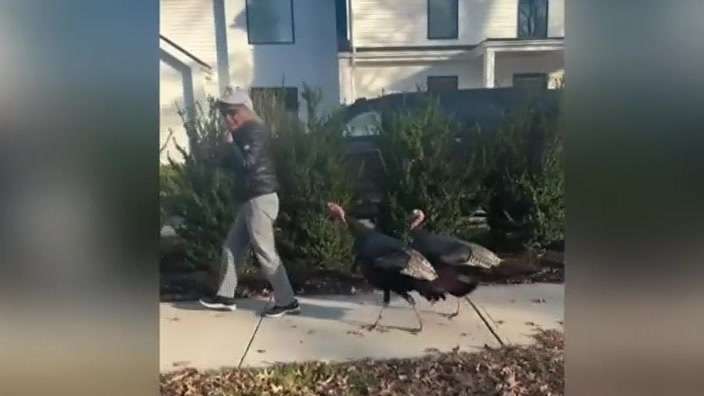
MassWildlife advises standing your ground or moving toward the birds, keeping them in front of you, and never turning your back or running. Look bigger by raising your hands, opening a jacket or an umbrella. Shout, use an air horn, swat a broom, or spray water from a hose.
A dog on a leash also deters them. For neighborhoods, the agency says to take down bird feeders and never feed turkeys on purpose. Gobbling usually starts in March and can last through May, and turkeys try to dominate people most often during breeding season, MassWildlife says.
Worth a look
Pelicans Face Defensive Issues When Fears and Queen Share Floor
The Pelicans have been outscored by 18.1 points per 100 possessions when Jeremiah Fears and Derik Queen share...

Salt Lake Office Market 2027: Pipeline Empty, Vacancy Falls, Rents Rise
Salt Lake City’s office market faces 2027 with no new construction in the pipeline for the first time...
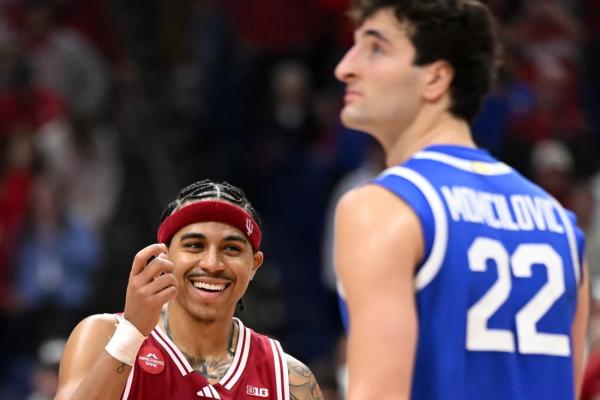
Kentucky Without Malachi Moreno vs. Wichita State Amid Concussion Protocol
Kentucky will play Wichita State on Friday in Lexington without starting center Malachi Moreno, who entered concussion protocol...
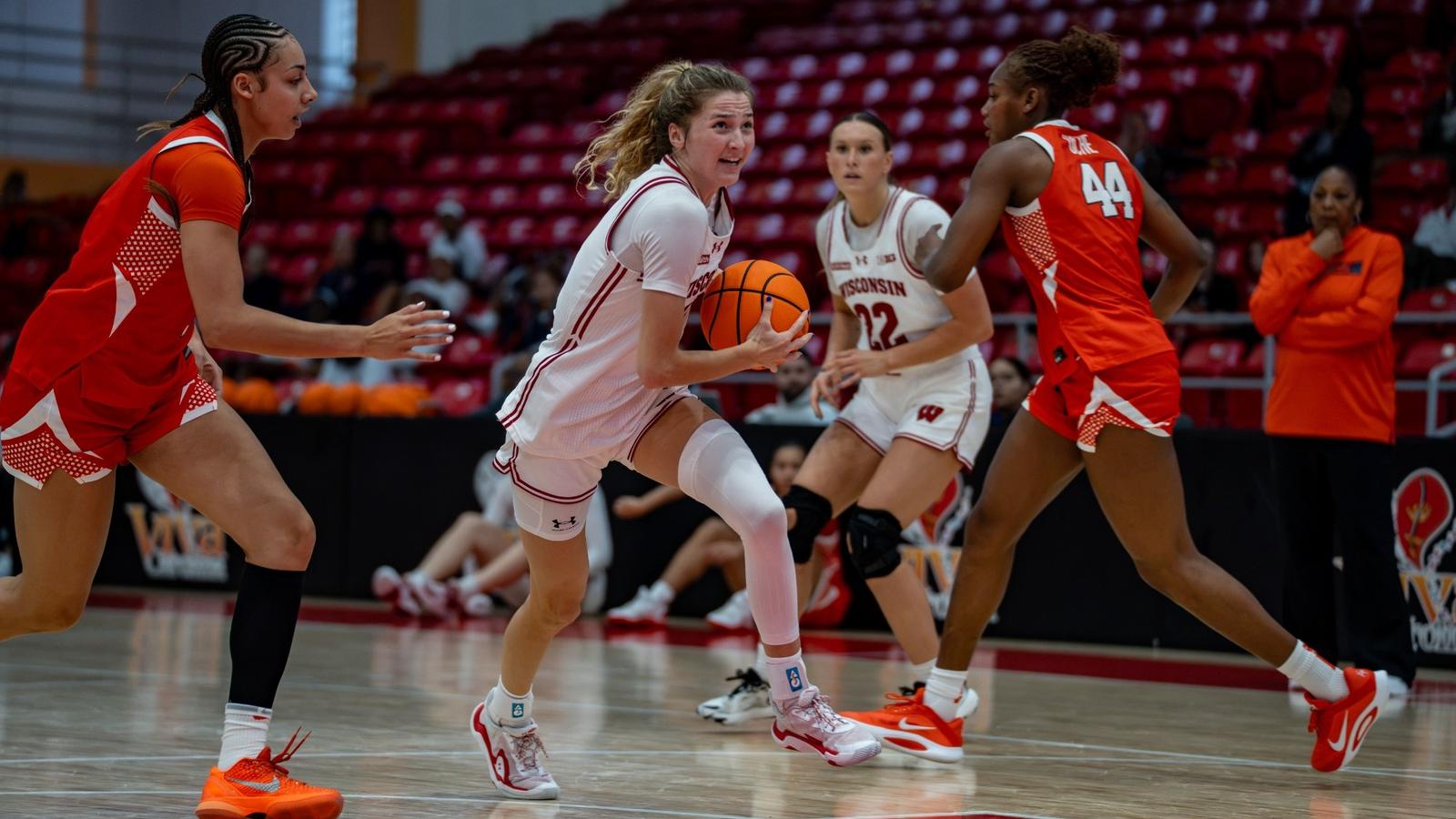
Syracuse Defeats Wisconsin 75-62 in Discover Puerto Rico Shootout
Syracuse beat Wisconsin 75-62 Thursday afternoon at Coliseo Guillermo Angulo in the Discover Puerto Rico Shootout & Classic....