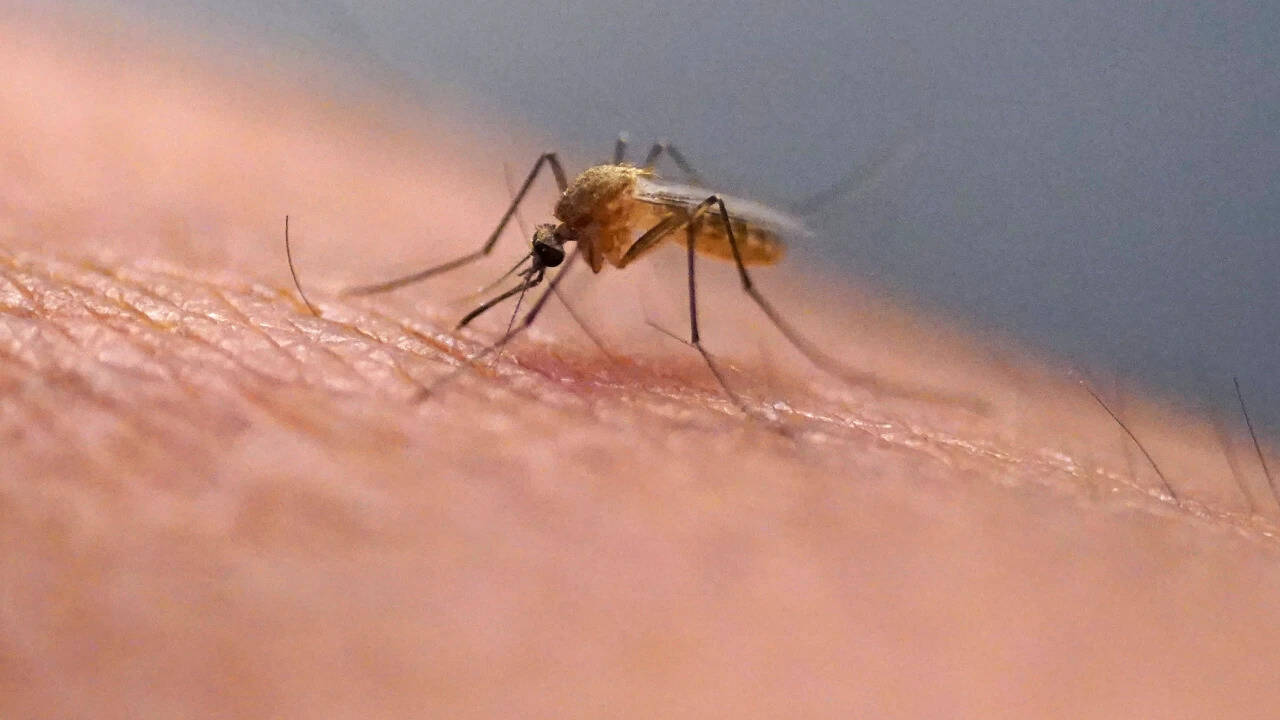
A four-year trial in Belo Horizonte, Brazil, found that releasing mosquitoes infected with the Wolbachia bacterium cut dengue and chikungunya infections among schoolchildren by about 69 percent, even during the country’s largest recorded dengue outbreak in 2024.
The EVITA dengue trial, presented on Saturday at the American Society of Tropical Medicine & Hygiene annual meeting in National Harbor, Md., enrolled 5,757 children aged six to 11 across 58 school-defined geographic clusters. Half the clusters received releases of Aedes aegypti mosquitoes carrying the wMel strain of Wolbachia alongside standard vector control; half received standard control alone, News-Medical reported.
How the intervention works
Wolbachia is a naturally occurring bacterium found in many insects but not usually in Aedes aegypti, the mosquito that transmits dengue, Zika and chikungunya. When scientists breed the bacterium into these mosquitoes and release both males and females, females pass Wolbachia to their offspring. Over time the bacterium spreads through the local mosquito population and reduces the insects’ ability to transmit viruses, The Hindu explained.
Results under intense transmission
Children provided baseline blood samples in 2020 and were tested annually through 2024. The study measured antibodies for dengue, Zika and chikungunya, capturing infections that might go undiagnosed because symptoms are mild. Overall efficacy against arboviral infection was 68.6 percent. For dengue specifically, efficacy was 68.5 percent; for chikungunya, 73.3 percent. There were too few Zika cases to calculate an effect, News-Medical reported.

“Our findings in the EVITA trial show a 68.6% overall efficacy in reducing arboviral infection from this intervention,” said Sri Edupuganti, co-principal investigator and professor of infectious diseases at Emory University School of Medicine. “This means that children living in communities where Wolbachia-infected Aedes aegypti mosquitoes were established had substantially lower arboviral infection.”
Sustained establishment
Mosquito releases ran from January 2021 through May 2022. Researchers said the Wolbachia-infected population remained stably established for more than three years. “We are pleased to have developed this locally adapted strain from Belo Horizonte for the EVITA dengue trial and to achieve successful sustained establishment of the Wolbachia-infected mosquitoes for over three years,” said Luciano Moreira of Fiocruz and the World Mosquito Program in Brazil.
Researchers managed EVITA trial despite pandemic school closures
The EVITA trial randomized 58 school-defined clusters in Belo Horizonte, assigning half to receive wMel Wolbachia mosquito releases plus standard vector control and half to standard control alone.
Enrollment began just as COVID-19 forced school closures, creating what co-principal investigator Mauro Teixeira of the Federal University of Minas Gerais called an extraordinary challenge. He credited the commitment of children, families, schools and the research team for making it possible to follow the large cohort over several years.
Researchers said the Wolbachia-infected population remained stably established for more than three years.

Protection during record 2024 outbreak
Brazil experienced its largest recorded dengue outbreak in 2024, contributing to the highest global dengue burden ever reported. The protective effect held up despite the severe epidemic, researchers reported.
The study measured antibodies for dengue, Zika and chikungunya, capturing infections that might go undiagnosed because symptoms are mild. There were too few Zika cases to calculate an effect on that virus.
Experts predict Wolbachia releases reduce dengue levels
He predicted that pairing Wolbachia mosquito releases with existing control measures could “knock dengue down to much lower levels” in many places. The findings were presented at the American Society of Tropical Medicine and Hygiene annual meeting on Nov. 21, 2026.

Usually in the continental United States, dengue is found mostly in people who travelled internationally. Earlier field trials in Indonesia and other countries have already shown the strategy can noticeably reduce diagnosed dengue cases.
World Mosquito Program expands Wolbachia strategy globally
Outside the United States, the nonprofit World Mosquito Program has pioneered the Wolbachia strategy in Indonesia and other countries.
“This is really exciting,” said David Hamer, a global health expert at Boston University who was not involved in the study. He predicted that pairing Wolbachia mosquito releases with existing control measures could “knock dengue down to much lower levels” in many places.
The EVITA trial was led by an independent, multidisciplinary team from Brazil — Universidade Federal de Minas Gerais, Fiocruz, Faculdade de Medicina de São José do Rio Preto and the World Mosquito Program — and from the United States — Emory University, Yale University, Johns Hopkins University and the University of Florida.
Worth a look

High Court Awards Costs to Donegal Homeowners in Lead Defective Blocks Case; Judge Questions NSAI Motion
“There is a real question over whether NSAI was justified in bringing its motion at all,” Mr Justice...

Marcos Orders April 2027 Finish for Samar Bridge After Girder Collapse
President Ferdinand R. Marcos Jr. has ordered the Department of Public Works and Highways to keep the Gandara...

Adults 50+ Drive $12.5T Economic Activity, Lead Longevity Talks at HLTH
Adults 50 and older are driving longevity conversations in doctors' offices and producing an estimated $12.5 trillion in...

Nepal PM Shah Arrives in Delhi for Two-Day India Visit
Shah arrived in New Delhi on November 22 for a two-day visit at Prime Minister Narendra Modi's invitation....