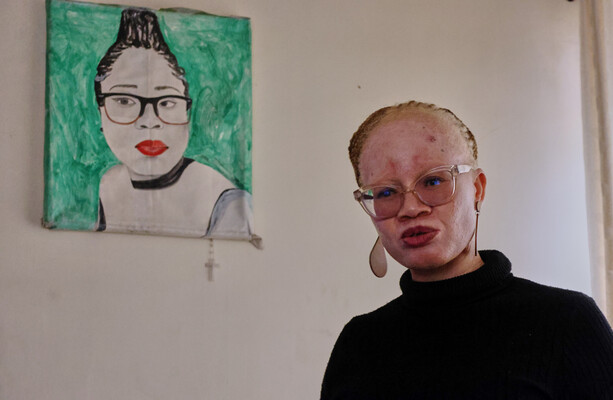
“They see you as not human enough, not normal,” said Ola, describing the daily realities for women with albinism in Nigeria.
Millions of people live with albinism among an estimated population of over 243 million in Nigeria. The inherited genetic condition causes an absence of melanin, resulting in unusually white skin and hair along with visual impairments. Despite this prevalence, a severe lack of knowledge fuels extreme discrimination and inhuman treatment.
“It’s just the skin colour, right? It doesn’t make me less of a human. It doesn’t make me that I’m possessed. It doesn’t make me that I’m cursed,” Esther said.
When babies are born with the condition, family acceptance often falters. Fathers frequently deny paternity and accuse their wives of infidelity. Esther recalled that her mother even used an iron sponge to scrub her skin at birth, believing her white skin could be scratched away.
Discrimination frequently escalates into physical danger. Children with albinism face targeted ritual killings where body parts are harvested for traditional potions believed to bring wealth and good luck. Harmful myths also drive sexual abuse, including the false belief that sleeping with a woman with albinism can cure HIV.
“If we say there is a high rise of gender-based violence in society, especially when it comes to women, then we must affirm that women with albinism face this abuse double,” Ola said. Survivors often encounter severe societal stigma instead of justice when reporting assaults.
Activists travel across communities with the Women and Girls with Albinism Network, an Abuja-based advocacy organization. They run educational outreach programs to build the capacity of women and girls to stand up for their rights.
“I want a society where a woman with albinism is able to speak up, not just speaking up with her head bowed down, but speaking up with her chest raised up,” Esther said.
Related reading

UAE Proposes New Work Programme at Fourth Mangrove Alliance Ministerial Meeting
The United Arab Emirates proposed a new work programme to implement the 2031 Strategy of the Mangrove Alliance...

ASEAN Signs Digital Economy Pact Targeting $2 Trillion by 2030
ASEAN's 11 member states signed the Digital Economy Framework Agreement on Nov. 14 in Manila, targeting a $2...

Simon Harris Warns EU Chief’s Digital Tax Proposal Is Unfair, Irish Independent
European Council president António Costa revived his proposal for an EU-wide tax on digital services as part of...
Lowy Report Finds US-China Power Gap Narrows in Asia
US power shrinks as China gains ground in Asia in 2026. The Lowy Institute's 2026 Asia Power Index...