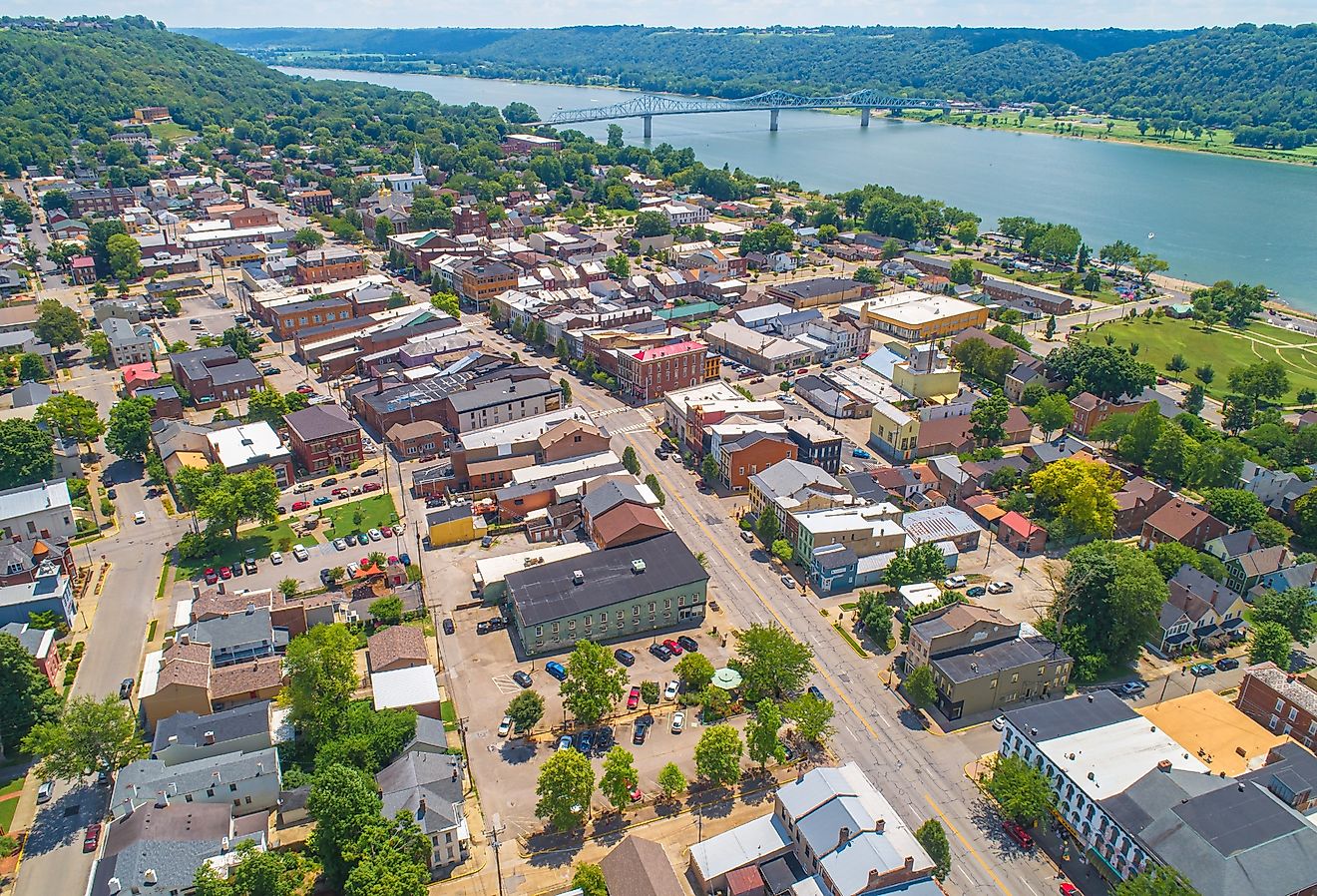
Indiana’s small towns preserve distinct chapters of state history — from utopian experiments to presidential boyhood homes — that remain visible in daily life, World Atlas reported.
New Harmony hosted two separate utopian communities in the 19th century. The Harmonists, German followers seeking a Christian communal society, founded the town in 1814. They later sold it to the Owenites, who sponsored utopian settlements across the United States. Today the town preserves the admission-free Harmonist Labyrinth and the Atheneum Visitors Center, from which visitors reach the Roofless Church, an interdenominational worship space built around sculpture gardens. Harmonie State Park sits along the Wabash River.
Jasper, initially founded by English Protestants, gained a large German Catholic population in the 1830s. Rustic German-style homes and mills, a recreation of the Jasper City Mill on the Patoka River, and the Schaeffer Barn, a chestnut log barn built by German immigrants, remain in the Old Jasper district. In nearby Ferdinand, Monastery Immaculate Conception traces its founding to 1867; its Romanesque Revival church was built between 1915 and 1924. The monastery offers tours and operates St. Benedict’s Brew Works on site. The Providence Home Geode Grotto, designed by an Italian immigrant from native Indiana geodes, serves as a small artistic shrine.
Vevay, in Switzerland County, was settled by Swiss families in 1802 and named after a Swiss town by founder John James Dufour. The Community Art Center of Switzerland County runs workshops and exhibits. The Swiss Wine Festival each August reflects a long local wine history. The Musée de Venoge, a historic French Colonial-style building, serves as a center for cultural preservation and pioneer reenactments. The Racing Performance Museum displays IndyCar and NASCAR vehicles during announced special openings. Across from Schenck Mansion, an annual field of roughly 15,000 near-black tulips planted by a tattoo artist draws photographers during its short spring bloom.
Vincennes, the state’s oldest town dating to 1732, began as a French fur-trading fort. The George Rogers Clark National Historical Park features a granite rotunda described as one of the largest United States memorials outside Washington, D.C. Grouseland, the former home of President William Henry Harrison, and State Historic Sites including the Old Territorial Capitol and the 1809 Old French House, a French Creole-style home, preserve the French heritage.
Madison’s historic district spans more than 133 blocks, the largest in the state.
The Shrewsbury-Windle House and the Lanier Mansion are each designated National Historic Landmarks. Historic Eleutherian College, about 10 miles northwest in Lancaster, was established by antislavery advocates in 1848 and offered education to Black and white students regardless of gender before the Civil War. The Dr. W.D. Hutchings’ Office and Museum holds surgical tools, medical records, books, and other artifacts. Clifty Falls State Park, established in 1920, preserves four waterfalls on Clifty Creek.
Rockville anchors Parke County’s 31 covered bridges, which support the county’s claim as the Covered Bridge Capital of the World. Free covered-bridge maps are available at festival information booths, and guided bus tours run during the Parke County Covered Bridge Festival beginning the second Friday of October each year. Erected in the late 1850s and later rebuilt, the Crooks Covered Bridge stands about five miles southeast of town. The 1895 Billie Creek Covered Bridge sits in Billie Creek Village to the east. The Old Jail Inn welcomes overnight guests in former jail cells; its downstairs Drunk Tank Winery serves wine tastings, wine slushies, and beer.
Santa Claus operates as a year-round holiday destination.
Holiday World and Splashin’ Safari draws roller coaster fans and families. The Lincoln Boyhood National Memorial preserves the farm where Abraham Lincoln lived from ages 7 to 21, described as the formative stretch that shaped the future President. Over two miles of trails connect the Pioneer Cemetery and the Living Historical Farm for visitors to walk. Lincoln State Park, across State Road 162, offers about 10 miles of hiking.
Nashville, often confused with the Tennessee capital, developed as an art town among unglaciated hills. Weed Patch Hill in Brown County State Park reaches 1,058 feet.
The T.C. Steele State Historic Site displays the painter’s work in a forest setting, while the Brown County Art Gallery downtown showcases local artists.
Monticello sits between Lake Shafer and Lake Freeman, two reservoirs formed by hydroelectric dams on the Tippecanoe River. The Lake Shore Drive-In has operated since 1949. The Madam Carroll, at 135 feet long and 300 tons, is the largest registered vessel in Indiana and hosts live shows and dinner excursions. Indiana Beach Amusement Park operates on Lake Shafer, while Bluewater Beach Park offers a calmer stretch on the Tippecanoe River.
Related reading

NDSU Backup Niyonkuru Shines in Win; Bison Head to San Jose State Friday
North Dakota State backup noseguard Obald Niyonkuru recorded seven tackles, two for loss and a sack in a...
Port Washington Mayor Defends Data Center Project as Economic Model
Port Washington, Wis., Mayor Ted Neitzke is publicly backing a data center project the size of 500 football...

Pregnant Inmate Steals Transport Van During Whataburger Stop, Escapes in New Mexico
Rebecca Taylor, a pregnant inmate serving a six-year sentence for vehicle theft, stole a corrections transport vehicle Wednesday...

Nevada hosts Nugget Classic, seeks first DI win under Sopak
NEVADA, Reno — Nevada women's basketball (1-5) hosts the Nugget Classic tournament this weekend at the Lawlor Event...