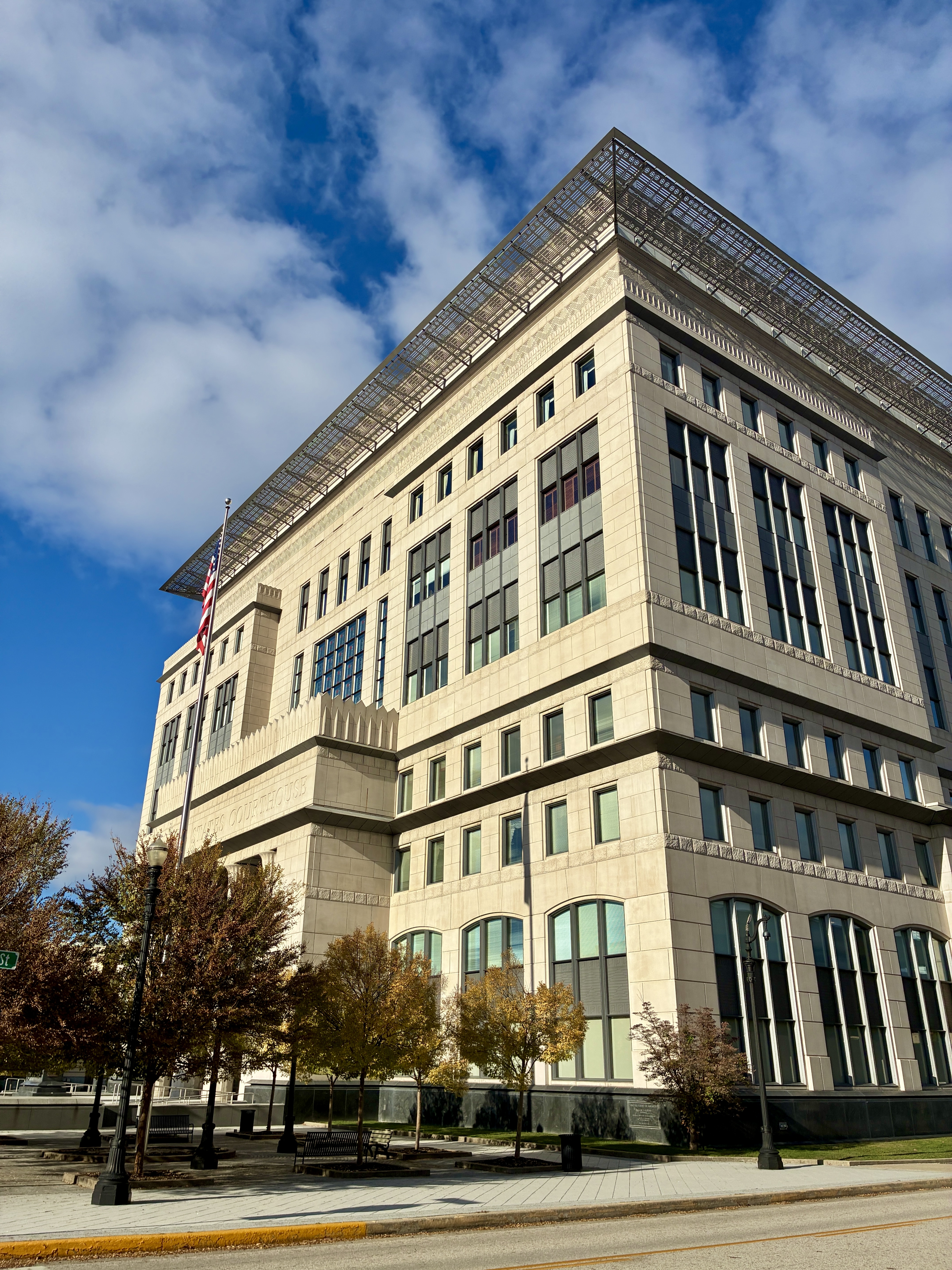
West Virginia Attorney General J.B. McCuskey has permanently withdrawn investigative subpoenas issued to at least six environmental advocacy groups, retreating from a probe that a federal judge ruled violated their First Amendment rights.
U.S. District Judge Joseph R. Goodwin issued a temporary restraining order in late October blocking enforcement of the subpoenas. In a memo and opinion, Goodwin wrote that the nonprofit organizations do not engage in commercial trade, meaning the state Consumer Credit and Protection Act cannot regulate their protected speech.
He characterized the subpoenas as a “fishing expedition” in which McCuskey “abandoned both the fishing pole and the net. Instead, he has brought dynamite to the lake. Tossing a couple in, he hopes to catch something,” according to West Virginia Watch.
On Nov. 20, McCuskey sent letters to the West Virginia Rivers Coalition and 350.org stating he had closed the investigations and directed his staff to take “no further investigative action of any kind in either matter,” The Dominion Post reported.
The West Virginia Citizen Action Education Fund, a sister organization of the West Virginia Citizen Action Group, said Sunday its subpoenas had also been formally withdrawn after negotiations with the Attorney General’s Office.
“Following Judge Goodwin’s ruling, my office has permanently withdrawn all of the investigative subpoenas. We believe in the rule of law, and we respect the Court’s decision,” McCuskey said in a statement issued Monday, West Virginia Watch reported.
McCuskey opened the investigation in September, issuing subpoenas through Zachary A. Viglianco, director of Strategic Litigation for the Attorney General’s Office. The demands sought 10 years of records — including public statements on climate change, internal communications, donor and funding sources, coalition dealings, regulatory submissions, and shared governance with renewable energy entities — under the West Virginia Consumer Credit and Protection Act, a 1974 law aimed at deceptive practices by for-profit companies.
Initially, McCuskey said the probe was based on concerns that the groups’ activities could harm West Virginia’s coal and natural gas industries. In court, his office shifted the argument, contending the groups were raising money using an outdated study. McCuskey said Monday he was “acting on information that certain groups had made false and misleading statements to raise money.”

“We issued investigative subpoenas — a well-established process regularly used when there are potential violations of the state’s consumer protection laws,” McCuskey said. “The subpoenas were an investigative step, and my office did not file suit against anyone.”
During an Oct. 29 hearing, attorneys for West Virginia Rivers Coalition and 350.org argued the subpoenas targeted protected environmental advocacy and political speech under the false pretext of consumer protection law. In his letter closing the investigations, McCuskey acknowledged the law’s limits: “But in a contest between even the most essential statutory protection and the Constitution, the Constitution must always prevail.”
McCuskey also wrote that he would ensure no future investigations into the groups’ work educating the public about climate change and greenhouse gas emissions.
“This commitment is an act of the Office, not a personal undertaking. It binds the Office and all of its current and future officers, employees and agents acting on its behalf. The policy has been entered in the Office’s official records and distributed to relevant attorneys and staff.”
“Nonprofit organizations must be able to educate, engage communities, participate in matters of public concern and speak freely with partners without fear of becoming targets of government investigation for exercising constitutional rights,” said Dani Parent, executive director of the West Virginia Citizen Action Education Fund and Citizen Action Group.
“Free speech and the right to associate with others are fundamental to a healthy democracy. They must be protected, and a diversity of voices in the advocacy space is critical to a functioning democracy.”
Related reading

Alaska Silver Seeks State Easement for 26.8-Mile Road to Illinois Creek Mine
Alaska Silver USA Corp. has asked the state for a private easement to build a 26.8-mile gravel road...

Boise Grocery Store Hours for Thanksgiving 2026: Which Stores Are Open and Closed
Boise shoppers who discover missing Thanksgiving ingredients Thursday morning will find a limited but specific set of grocery...

Atlanta Readers Name The Colonnade Top Comfort Food Spot in Facebook Poll
An informal Facebook poll drew more than 100 comments naming Atlanta comfort food staples, DiningOut - The Voice...

Virginia, Oregon Sue SpaceX Over Grok AI Generating Millions of Sexualized Images, Including Child Abuse Material
Virginia and Oregon sued SpaceX on Monday over Grok, the AI tool that generated millions of sexualized images...