
Jay Jacobs, the former West Virginia University basketball player and longtime Mountaineer Sports Network analyst, died Wednesday at an assisted living facility in Frederick, Maryland, at age 88, West Virginia University Athletics reported.
His son, John, announced the death in a Facebook posting. Jacobs’ broadcast career spanned nearly 50 years, ending with his retirement in 2023 after calling men’s and women’s games alongside play-by-play voices Jack Fleming and Tony Caridi.
“He was small enough that he could fit into it,” Caridi said, recalling a night at LaGuardia Airport when Jacobs climbed into a large plastic bin on the baggage carousel and rode it around waving to travelers.
Jacobs played at WVU from 1957 to 1960 alongside Jerry West, Willie Akers and Bobby Joe Smith. He later joked his primary role was sitting at the end of the bench to block a draft from the back of the old Field House so the stars would not catch cold. On the one occasion coach Fred Schaus ordered him into a game, Jacobs refused — he was not wearing shorts under his warmup pants.
After coaching high school basketball in West Virginia and Frederick County, Maryland, and working as a school administrator, Jacobs joined the Mountaineer television network in the mid-1970s. Paul Miller, then in charge of WVU broadcasting, spotted him calling a local high school game in the Baltimore area and asked for a demo tape. “Well, Paul, I probably have some Scotch tape sitting around the house somewhere,” Jacobs replied.
For two decades he worked television, first with Woody O’Hara and later on split radio-television broadcasts with Fleming. At halftime, Fleming would walk from the radio booth to the television position courtside. At Virginia Tech’s Cassell Coliseum, the radio booth sat at the top of the arena. The night before a game, Fleming practiced the descent and timed it at two minutes. “The only problem was we forgot that there were 10,000 people in the arena the next day,” Jacobs recalled. Fleming got stuck in the crowd, leaving Jacobs alone on the floor with no script and no monitor. “Look here, I believe this is Louise from Winchester, Virginia, who is part of the routine. And this looks like Betty from Richmond. Look at those moves! Isn’t she really something?” he deadpanned into the live camera. “Oh boy, I really caught hell for that one!”
At Penn State’s Rec Hall, Fleming bumped his head on a steel beam at halftime and returned to air with blood streaming down his face. “For God’s sake, don’t just stand there, Jay, wipe him off!” a producer yelled in the truck. A stage manager switched the shot and cleaned Fleming up.
O’Hara once landed the crew in a two-hour meeting after calling Jim Calhoun’s Connecticut Huskies “the best team that money can buy” in the pre-NIL era. Jacobs himself was ordered to write 70 handwritten apologies after a tight monitor shot of a Massachusetts player at the free-throw line prompted him to say, “And here, folks, is your Clearasil player of the game!” The player’s grandmother in Brooklyn was crying, the coach’s wife became physically ill, and the incident spread through the family.
Caridi, who worked with Jacobs for more than 35 years on radio, called him the “Silver Fox.” “Jay was the king of asking questions he already knew the answer to,” Caridi said. “For instance, he would ask on the air, ‘Tony, is this a good free throw shooting team?’ or ‘Tony, can this team handle the ball?’ He knew. But I have to give him a lot of credit, he was always prepared.”
Jacobs read scouting reports and attended practices religiously. Listeners valued his frankness and humor. “There was never a dull moment with Jay,” Caridi said.
He drove the two-and-a-half-hour route on Interstate 68 from Frederick to Morgantown hundreds of times. Once, a loud bang rattled the front of his car. He kept driving and singing along to Smokey Robinson.
When he pulled into his driveway, his wife, Bonnie, asked what was sticking out of the grille. “Oh, honey, that’s looks like part of a black bear that I must have hit outside of Hancock,” he said.
Jacobs returned for one final broadcast in 2024, calling the BYU game alongside Caridi and studio host David Kahn. He rode passenger that trip, letting his grandson Jordan drive, watching for bears and listening to Smokey Robinson.
During his tenure, Jacobs was on the call for eight Sweet 16 appearances, the 2005 Elite Eight run and the 2010 Final Four. He was part of 20 NCAA Tournament teams as a broadcaster, in addition to the 1959 and 1960 teams on which he played.
He earned a bachelor’s degree in physical education in 1961 and a master’s in secondary education in 1962.
“In a word Jay was simply unforgettable,” Caridi said. “A once-in-a-lifetime character that brought smiles to everyone. He loved the Mountaineers and the game of basketball. I’ll never forget our years together and the joy that we experienced. It’s a sad day as we reflect on a life well lived.”
“Jay was a unique broadcaster,” former associate athletic director Mike Parsons said. “He evolved into his role and became an outstanding analyst while still being a fan. He loved the sport. He lo”
Related reading

New Mexico Gov. Lujan Grisham Releases Universal Childcare Blueprint for Other States
New Mexico Gov. Michelle Lujan Grisham released a 32‑page universal childcare blueprint on Tuesday, offering other states a...

CFP Committee Ranks Tennessee Over Alabama for First Time This Season
The College Football Playoff selection committee ranked Tennessee No. 5 and Alabama No. 6 on Tuesday, marking the...
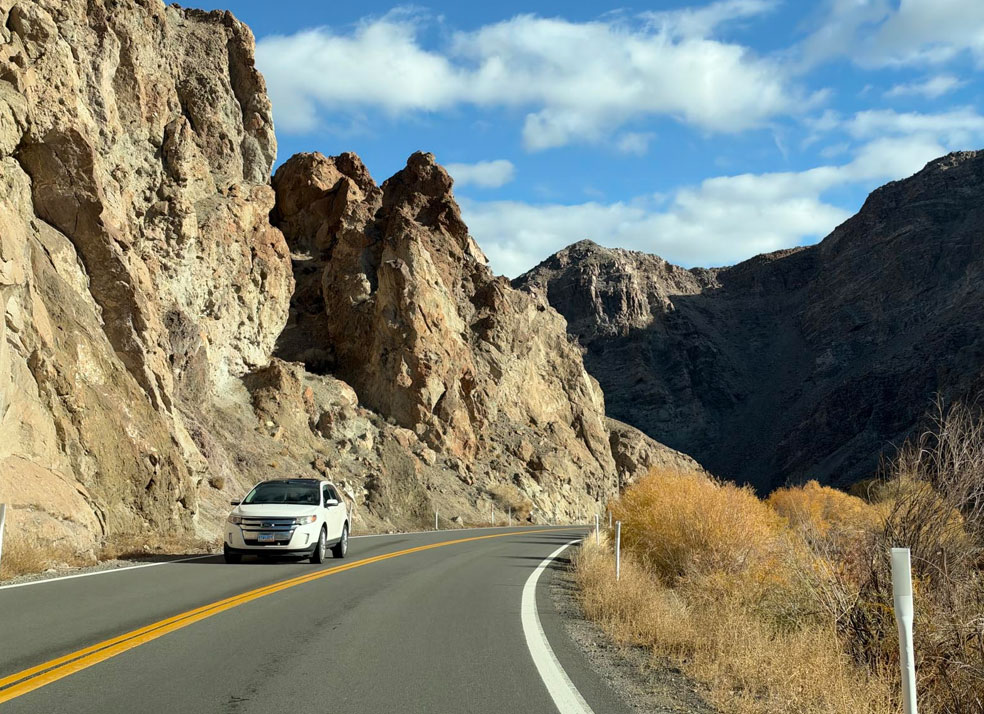
Nevada DOT Warns of Deadly Rural Road Risks Ahead of Holiday Travel
On Tuesday the Nevada Department of Transportation reminded drivers to take extra precautions on rural highways ahead of...

Cheyenne Cup Fills Thanksgiving Orders With Off‑Menu Pies, Kolaches, Casseroles
Cheyenne Cup owner Eloy Martinez is filling advance Thanksgiving orders — apple pie kolaches, peach sweet potato casserole...