
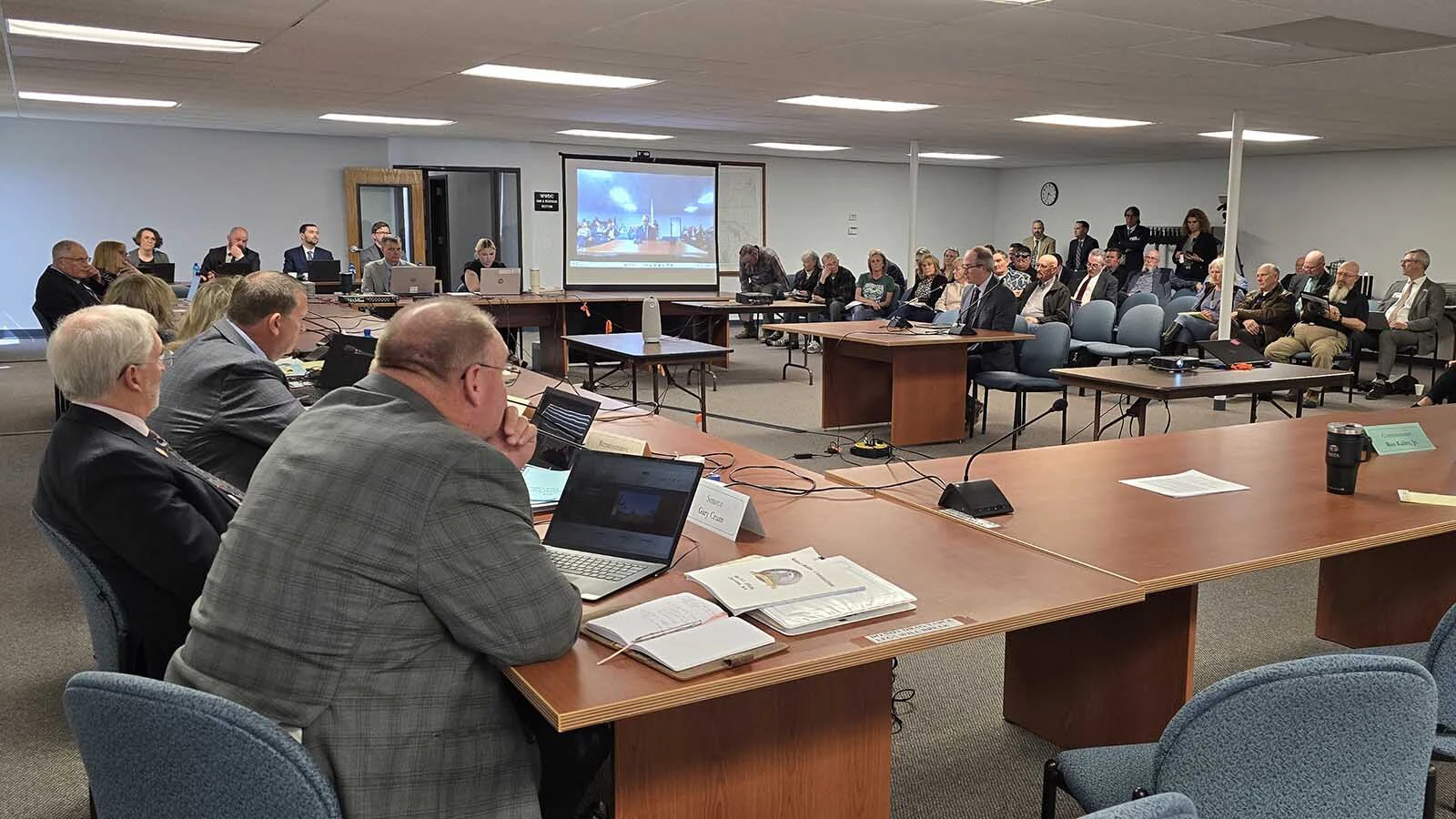
“I want to make sure that we future-proof and continue to iterate on the theme that’s been the theme since statehood, which is being very intentional about controlling our water and protecting existing users,” Sen. Brian Boner (R-Douglas) told the Select Water Committee on Friday.
Wyoming lawmakers are weighing two distinct paths to manage the state's water resources as massive data center development begins to change the local area, Wyoming Public Media reported.
The debate centers on whether the state should impose strict consumption limits on high-capacity data centers or invest in a massive, $2-million study to understand how much groundwater is actually available for use. This decision comes as the industry’s thirst for cooling water grows alongside the demand for artificial intelligence technology.
In Cheyenne, the scale of development is already visible. According to Cheyenne LEADS, a local economic development non-profit, the city currently hosts 10 data centers, with seven under construction and eight more in the planning stages. Two of those facilities began construction within the last three months.

Committee supports $2-million groundwater survey proposal
The Select Water Committee voted unanimously to support a proposal for a $2-million groundwater survey, which will be introduced as part of an omnibus bill during the upcoming legislative session. The move aims to expand an existing study that currently only covers specific “control areas”—regions designated by the Wyoming State Board of Control where water is scarce.
Sen. Boner, who co-authored the proposal with Sen. Taft Love (R-Cheyenne), argued that the current system is too reactive. He noted that the state is proficient at evaluating surface water, but assessing groundwater remains “more of a guessing game.”
While the proposed survey focuses on the quantity of water available, other lawmakers are concerned about the potential for contamination. Sen. Ogden Driskill (R-Devil’s Tower) suggested that statewide water quality sampling should happen at the same time.
“Even if they use it, if we pollute an aquifer, that’s probably more dangerous than anything,” Driskill said.
The push for stricter oversight follows a summer incident where Meta’s Cheyenne data center discharged water containing a rare, potentially hazardous bacteria into the city’s wastewater supply. A report from the National Resource Defense Council raised concerns that the proposed Stratos data center in northern Utah could emit fine particulate matter that impacts air quality across the Wyoming border.
The debate over how to manage these resources also touches on the fundamental philosophy of Wyoming water law. Since the 1890s, the state has tied water rights to actual use, a system designed to foster resilience for ranching and farming during droughts.
“I think we’re starting to get into the perception that we’re actually saving something by not using water,” Driskill said.
“You don’t save anything by not using it. We need to use every drop of water before it leaves the state if it’s in a stream, and if it’s underground, we need to make sure it’s protected and it’s there for the use of Wyoming citizens.”
The legal limits of consumption caps
While the groundwater study gained momentum, a separate attempt to regulate data center water use hit a legal wall. Rep. Ken Chestek (D-Albany) presented a draft bill that would cap “consumptive use”—the net loss of water from a system—at 0.2 liters for every one kilowatt-hour of electricity consumed annually.
“This formula does not require a closed loop system,” Chestek said. “This is not requiring a specific technology. This is requiring an outcome.”
Despite the intent, the committee declined to move the proposal forward for the January session. Lawmakers raised concerns that the bill might violate the 14th Amendment by failing to provide equal protection to all industries. They noted that while data centers can technically function without water, other major Wyoming sectors like mining, agriculture, and carbon capture cannot.
The industry has pushed back against the idea that data centers are a drain on resources. Khara Boender, representing the Data Center Coalition, told lawmakers that the industry is an active partner in building infrastructure resilience and is investing billions into advanced cooling systems and “water positive” goals.
The economic tension between resource preservation and revenue growth remains high. State Treasurer Curt Meier noted that the influx of these facilities could provide a massive boost to the state budget.
“I know a lot of people aren’t really excited about data centers, but if we had another six data centers going in southern Laramie County, we would have the same amount of money in our budget as the general budget in new revenue,” Meier said during a recent canvassing board meeting.
Whether the state prioritizes the immediate revenue of hyperscale projects or the long-term certainty of its aquifers remains the central question for the upcoming legislative session.

Charleston Completes $198 Million Stormwater Project to Reduce Flooding
Charleston has completed a $198 million stormwater infrastructure project intended to mitigate flooding across much of its downtown...

Vermont Homeless Population Sees Nearly 3% Decrease in 2026 Count
Vermont recorded a slight decrease in its homeless population during the January 2026 point-in-time count, WCAX reported. The...

Meat Church Details Method for Brining and Smoking a Turkey
A single 20-ounce bag of Bird Baptism Brine can transform a holiday turkey when mixed with a gallon...

Nashville Bakeries Prepare Seasonal Menus for Thanksgiving Demand
Nashville bakeries are preparing for a surge in seasonal demand as holiday gatherings approach this November. Local pastry...