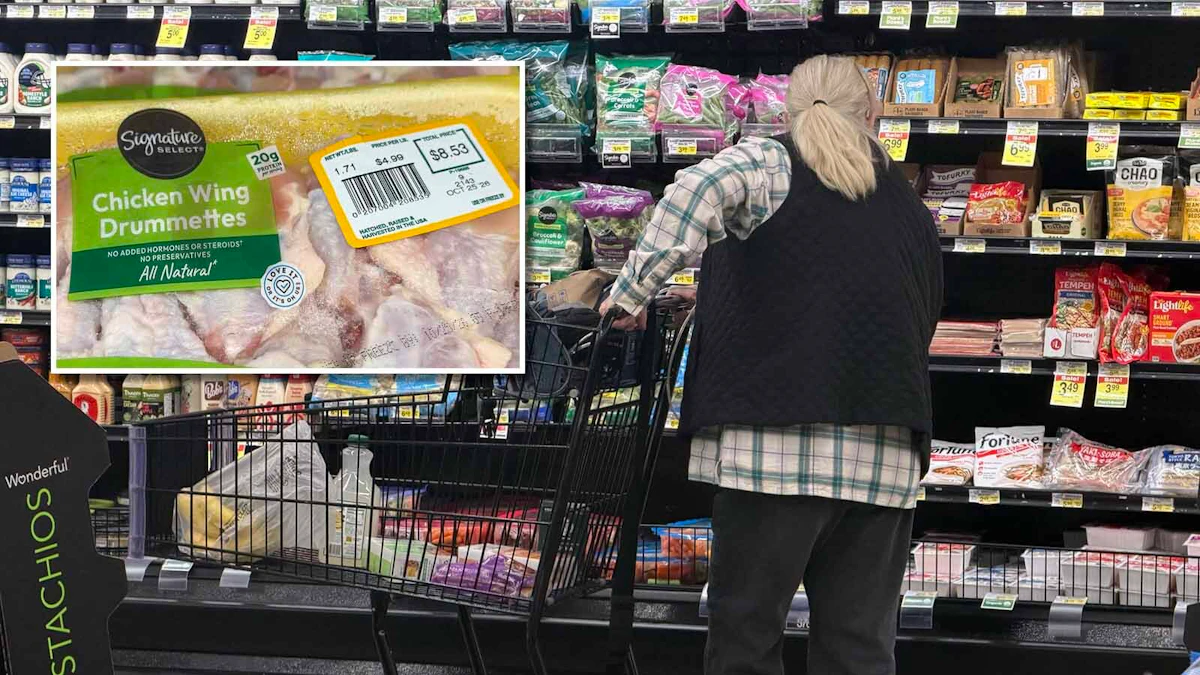
Pushing a grocery cart out of the Walmart on Del Range Boulevard in Cheyenne, Jaime Ramirez does not leave freshness up to chance. He is religious about checking “use by” and “sell by” dates, a habit developed after he experienced a severe bout of food poisoning years ago from cooking bad meat that left him sick for days. If a package is anywhere close to its printed date, or past it, it gets left behind. “That’s a hard pass for me, man,” Ramirez said.
According to reporting by Cowboy State Daily, a sweep of grocery shelves in Cheyenne and Casper reveals products hovering right on the edge of expiration—or sitting past them.
The Shelf-Life Gamble Across Wyoming Aisles
In the refrigerated meat section of the Casper Albertsons store on Tuesday, Oct. 27, shoppers encountered a package of Signature Select chicken wing drummettes stamped with a “use or freeze by” date of Oct. 25. Nearby seasoned chicken and refrigerated pizza dough carried Oct. 27 labels, matching that day’s calendar.
Further down the aisles, the date gap widened significantly. In the pet food section, a perishable container of Sheba cat food bearing a “Best By 03/21/26” mark sat beneath a bright red clearance tag, sitting more than seven months past its date. Other nearby items were completely current, featuring salmon dated for Oct. 28 and chicken salad slated for Oct. 29.
Across town at Smith’s on CY Avenue, stores attempt to clear out aging inventory using bright markdown stickers. An organic kale Caesar salad kit marked “Best If Used By Oct. 29” was discounted to $1.40, while butternut squash noodles bearing an Oct. 29 sell-by date were slashed to $3.45. Even with deep discounts, many shoppers refuse to compromise.

She’s very careful, checks everything. She won’t buy anything that’s less than a week out from the date.
That level of caution is shared by shoppers like Jayshree Patel, whose husband Piyush noted her strict adherence to freshness rules while grocery shopping in Cheyenne. For households like theirs, products nearing their final days remain entirely unappealing.
What the Dates Actually Mean Under Federal Rules
In Wyoming and across most of the United States, selling food that has passed its printed date is not illegal. Federal guidelines treat most package dates as measures of peak quality rather than immediate food safety.
Suzanne Long, Albertsons’ chief sustainability and transformation officer, acknowledged in a previous interview that code dates generally indicate freshness rather than danger. The U.S. Department of Agriculture maintains that phrases like “Best if Used By,” “Sell-By,” and “Use-By” describe food quality, with the sole major exception being infant formula.
The Retailer’s Dilemma Over Surplus Food
For independent retailers, strict consumer habits create a difficult economic balance. LeAnn Miller, who runs Eat Wyoming in Casper, sees the issue from the store side. She notes that customers have little interest in debating technical definitions.
If an item’s date has passed, shoppers routinely hand it directly to staff to remove from the shelf. Even if the food remains completely edible, stores ultimately absorb the financial loss when nervous consumers refuse to buy.
This dynamic fuels a massive amount of retail waste. The Food and Drug Administration estimates that consumer confusion over date labels accounts for roughly 20% of household food waste nationwide. Meanwhile, the national nonprofit ReFED calculates that date label concerns drive nearly 46% of retail surplus food. In Wyoming alone, the retail sector generated an estimated 8,660 tons of surplus food in 2024.
Miller points out that old stock lingers on shelves simply due to inventory management pressures, compounded by the modern expectation that grocery displays must always look abundantly full.
Related reading

Singapore to Raise Retirement Age to 65 and Re-employment Age to 70 by 2029
On October 26, 2026, in Singapore, the Tripartite Workgroup on Senior Employment released a sweeping blueprint to address...

Cheyenne Man on Trial for Murder of 4-Month-Old Son Admits to Covering for Wife
On Tuesday in Laramie County District Court, 24-year-old Joseph Hanson told a jury he felt ashamed for shielding...

Brewers Watch Party Ticket Prices Surge to $270 for Game 4
Resale Prices Explode for American Family Field Watch Party Single resale tickets on StubHub for the watch party...

Four Candidates Vie for West Virginia House District 12 Seat in General Election
Four Candidates Chase West Virginia District 12 Seat in November 3 General Election Four candidates are actively campaigning...