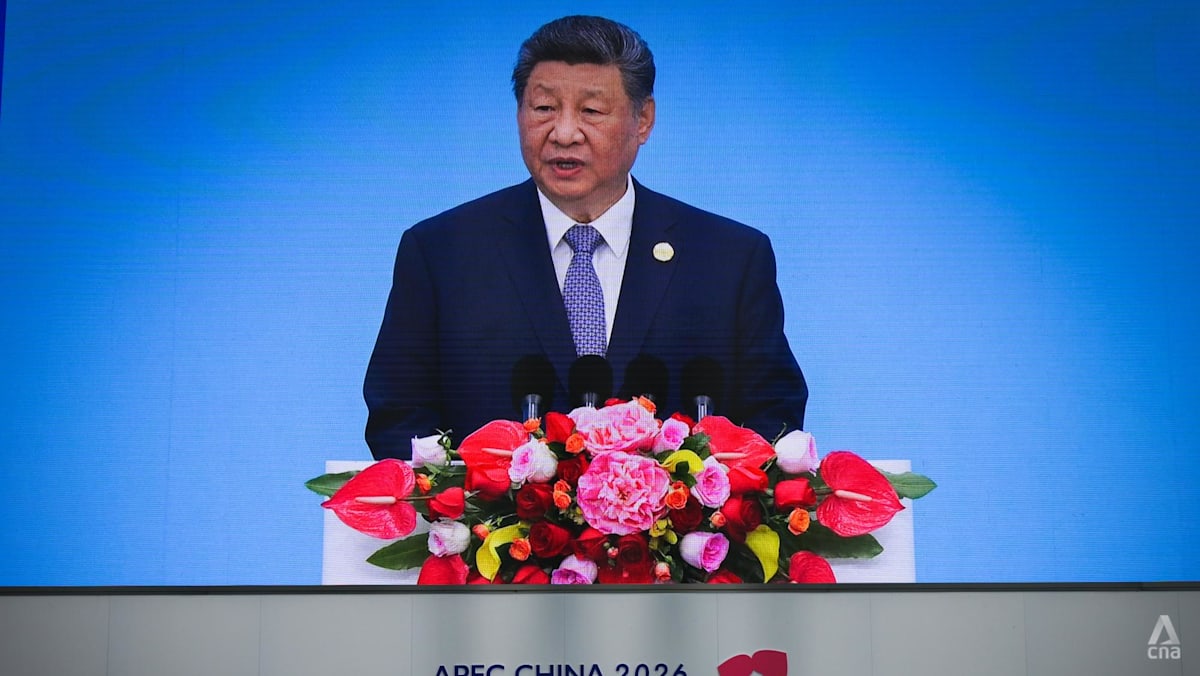
Xi Jinping opened the APEC CEO Summit in Shenzhen on Wednesday with a call to dismantle trade barriers, framing openness as the only path to progress for a region that accounts for roughly 60 percent of global GDP.
“We should remove trade and investment barriers,” Xi said via official translation, casting China as a “promising land for development” and pledging to cut tariffs, expand market access and rewrite regulations to grant foreign firms “full manufacturing access.”
The remarks came hours before the Chinese president was set to host Russian President Vladimir Putin and U.S. President Donald Trump for a historic trilateral sit-down on Thursday — the first such meeting of the three leaders.
Xi linked economic security directly to geopolitical stability. “There can be no stability without security, and no security without stability,” he told the CEO summit, urging deeper coordination on artificial intelligence and the digital economy as new growth engines. He pointed to “unicorn companies and large AI models” emerging in large numbers as proof that innovation thrives when doors stay open.
🌏 The #APEC CEO Summit opens Nov 17-18 at Shenzhen's Qianhai International Convention Center, themed "To Prosper and Win the Future Together." With 115 Fortune Global 500 firms attending, and US companies making up nearly 20% of foreign participants, business leaders gather to… pic.twitter.com/a7oYfupiMO
“China recognised the fact that some countries, the emerging economies, not only require investments and increased trade, but also access to market.”
Malaysian Prime Minister Anwar Ibrahim said shortly after Xi’s address, welcoming Beijing’s market-opening signals as vital for trading nations like Malaysia.
The Shenzhen stage
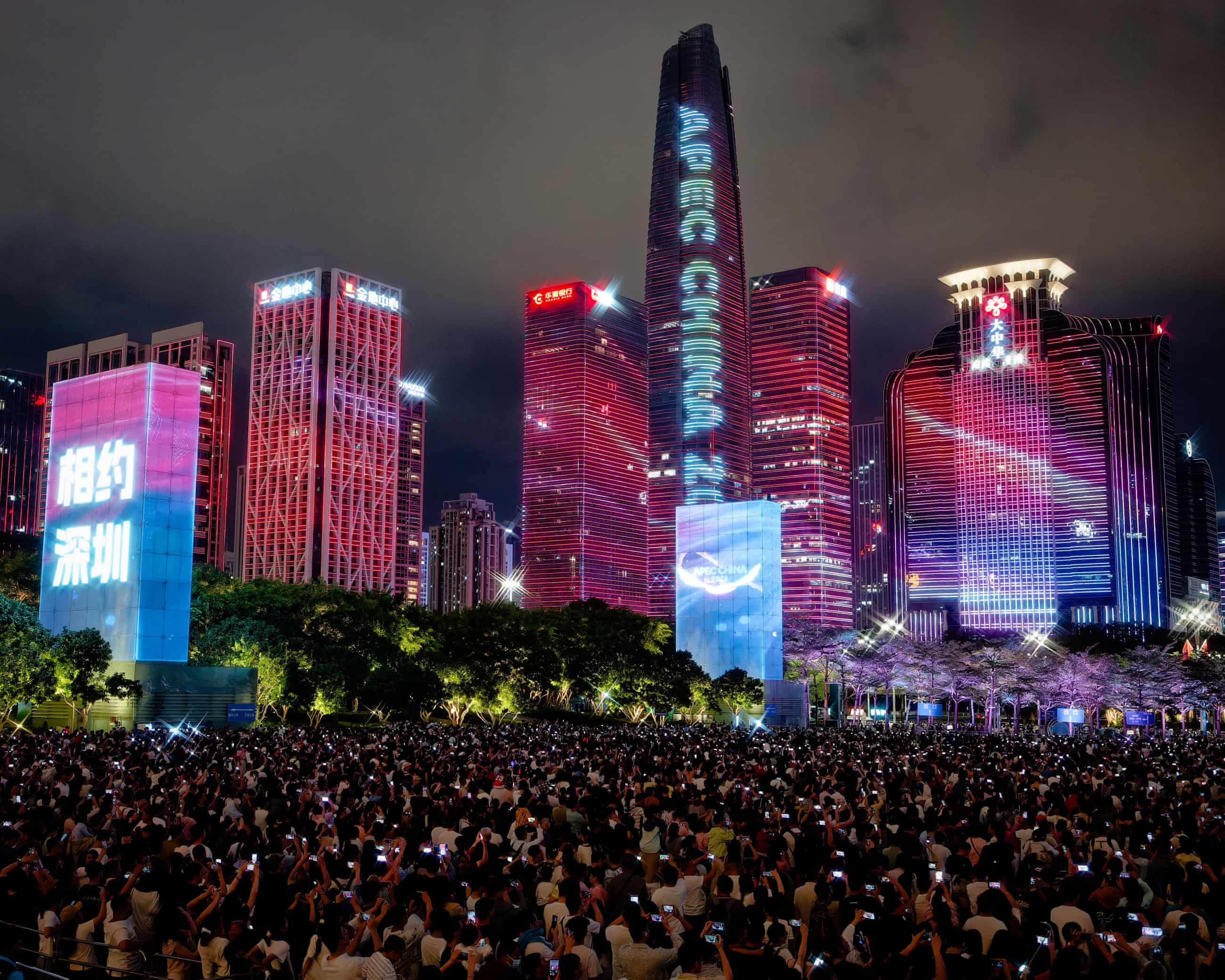
The venue itself carried the message. Shenzhen — transformed from marshland to a tech hub hosting Huawei, Tencent and DJI — lit its skyline with “APEC 2026” in cyan, violet and scarlet.
“Shenzhen is itself part of the message,” said Prof Astrid Nordin of King’s College London, speaking to The Guardian. “It’s a showcase of Chinese technological and economic achievements, and of China’s claim that it offers opportunities for prosperity in a world increasingly characterised by uncertainty and conflict.”
President Xi Jinping attended in Shenzhen the opening ceremony of the 2026 APEC CEO Summit and delivered the keynote speech. President Xi pointed out that born amid the waves of economic globalization, APEC has enabled the Asia-Pacific to steer the course of our times. China is… pic.twitter.com/cB27huQMsx
Xi tied the summit to China’s newly unveiled 15th Five-Year Plan (2026–2030), describing the blueprint as an “invitation for cooperation extended to the global business community.” Hong Kong Chief Executive John Lee called the speech a “strategic blueprint for Asia-Pacific cooperation” that reinforces the postwar international order.
Tariff truce unfinished
The rhetoric of openness runs into a concrete gap. The U.S. and China agreed last year to keep tariffs lower and implement a $30 billion mutual duty cut, but that reduction has yet to materialize. Meanwhile, Chinese exports have expanded their share of global manufactured goods, drawing overcapacity complaints from the European Union and others.
Diplomats have privately grumbled that this year’s APEC format “seems designed to reduce the free-flowing discussion characteristic of prior editions,” The Guardian reported. China’s foreign ministry said it expects “practical results in key areas such as trade, connectivity, digital economy, AI and so on,” and Xi has already announced trade remission extensions with Canada.
Chips on the table
Technology restrictions shadow the diplomacy. On November 16, Washington announced fresh curbs on AI chip exports to China, Bloomberg reported. Xi responded by presenting China as a “large innovation testing ground where advanced technologies can be applied and refined in real industrial settings,” framing tech cooperation as a counterweight to unilateral controls.
President Xi Jinping met in Shenzhen with Mark Carney @MarkJCarney, who is in China for the 33rd APEC Economic Leaders’ Meeting. President Xi noted that China will work with Canada to steadily advance their new strategic partnership by becoming partners… pic.twitter.com/Ptg7QoM5lO
The trilateral meeting with Putin and Trump on Thursday will test whether rhetorical openness translates into measurable de-escalation. Xi and Trump are also slated for bilateral talks — their third meeting this year — with U.S.-China trade and technology tensions expected to dominate the agenda.
APEC operates by consensus; its commitments are voluntary and legally non-binding. The leaders’ declaration due Thursday will show whether the 21 member economies can agree on language for a Free Trade Area of the Asia-Pacific, digital trade rules and AI governance — or whether Shenzhen’s light show illuminates a consensus that exists only in slogans.
🌆 Shenzhen is ready to welcome APEC visitors! Services include fast-track channels at nine ports, 7,000+ AI translation devices, bilingual taxis, contactless overseas card payments on the metro, 3,000+ ATMs for foreign cards, plus currency exchange and tax refunds at thousands… pic.twitter.com/rYIAoxOio3
More on Xi Jinping
Twelve leaders of Asia-Pacific Economic Cooperation (APEC) economies will attend the APEC CEO Summit 2026, which is scheduled to be held from Nov. 17 to 18 in Shenzhen, south China's Guangdong Province, the China Council for the Promotion of International Trade (CCPIT) said… pic.twitter.com/cFdxGXkUWF
- Sydney Doctor Leaves Hospital Role After Antisemitism Investigation
- The Village Barber 2 Team Edits Ko Kyung-pyo Out After DUI
- Raising Cane’s Opens Sioux Falls Restaurant With Long Lines (world-today-news.com)
- Andy Burnham delays long-term UK-EU relationship options until after summit (newsarchyuk.com)

Sydney Doctor Leaves Hospital Role After Antisemitism Investigation
Jennifer Martinez has departed as head of sexual assault services at Royal Prince Alfred Hospital, ending a 15-month...
The Village Barber 2 Team Edits Ko Kyung-pyo Out After DUI
TVING and tvN are re-editing four upcoming variety shows to cut Ko Kyung-pyo from the screen after the...

Pakistani Man Sentenced to 27 and a Half Years for Iran-Backed Plot to Kill Trump
A Pakistani national described by U.S. prosecutors as a trained Iranian intelligence operative was sentenced Tuesday to 27...
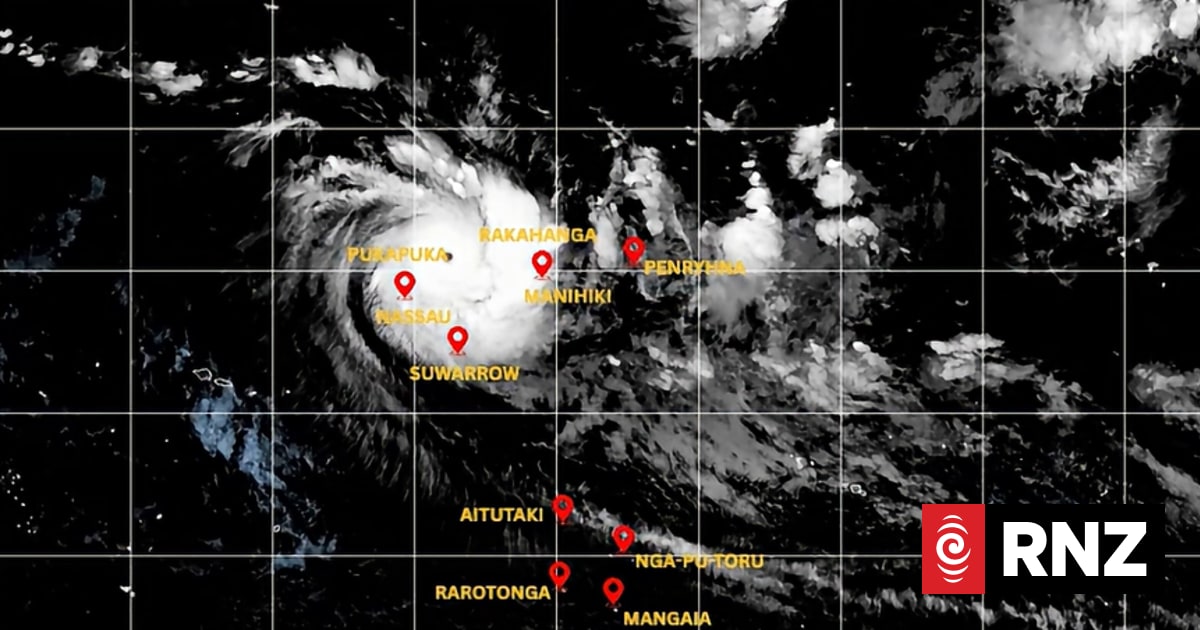
Category 5 Cyclone Xavier Hits Northern Cook Islands With 315 km/h Gusts
Severe Tropical Cyclone Xavier exploded into a Category 5 monster over the Northern Cook Islands on Tuesday, packing...