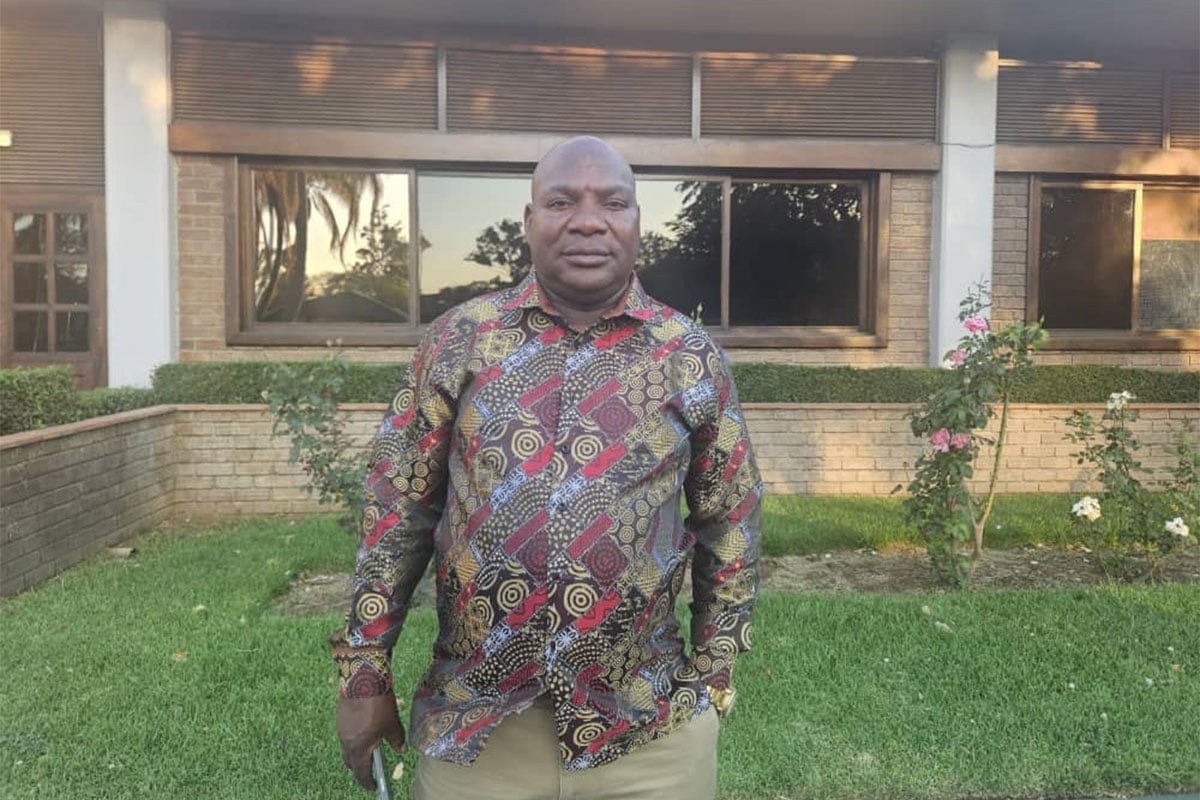
“Exemptions should apply in cases of drought, genuine financial hardship, and other legitimate circumstances,” said Felix Maburutse, chairperson of Parliament’s Committee on Lands, Agriculture, Fisheries, Water and Rural Development.
During Parliament’s 2027 pre-budget seminar held in Bulawayo from 28 to 31 October, the Parliamentary Portfolio Committee on Lands, Agriculture, Water, Fisheries and Rural Development proposed an annual per-hectare levy of US$50/ha, roughly equivalent to R825/ha, on large-scale farms remaining idle or underutilised without valid justification, Farmer’s Weekly SA reported.
Maburutse told delegates that the proposed levy would increase for every successive year the land stayed idle. Revenue generated from the fee would be ring-fenced to support land development, irrigation, agricultural extension, and rural infrastructure.
The committee also emphasized that cost recovery should improve through stricter collection of surveying, registration, and land administration fees alongside modernized digital payment systems. However, progress on the ground tells a complicated story of lagging targets.
Economist Eddie Cross argued that the proposed levy fails to address the root causes of underutilised land. He told Farmer’s Weekly SA that the government should prioritize issuing title deeds and compensating displaced commercial farmers.

“Attempts to charge US$50/ha of underutilised land, which is a totally exorbitant sum of money, would be impossible. It simply would not be paid,” Cross said.
He questioned how the state would enforce non-payment. Repossessing and reallocating the land would prove highly controversial and politically difficult.
Secure tenure remains the actual solution, according to Cross. Providing titles allows farmers to borrow money against their property to redevelop dormant plots.
“And if this was done, then large- and small-scale farmers would receive titles to their land, which they could then subsequently borrow money against and use for redeveloping the farms and turning them into productive assets,” Cross added.
The levy proposal arrives alongside existing joint venture initiatives designed to revive dormant operations. In 2020, the government launched a program linking land reform beneficiaries lacking resources or agricultural know-how with investors.
Farmer Dan Burger, involved in 13 joint venture farms in Zimbabwe’s Midlands Province, previously said that funding shortfalls, limited knowledge, and a lack of interest contribute to underutilization.
Cross suggested that farmers wishing to relinquish control should be allowed to sell to productive operators.
“I think that would have a better long-term impact on the industry than the route that the parliamentary committee wants to take,” he said.
Keep reading

Nasser’s Long Road to Suez – Engelsberg Ideas
Suez erupted on July 26, 1956, when Egyptian President Gamal Abdel Nasser stepped to the podium in Alexandria’s...

Global Microsoft Outage Disrupts Outlook, Teams, and Copilot Services Worldwide
A massive, ongoing failure of Microsoft 365 services has crippled digital operations for tens of thousands of users,...
US Ambassador Matthew G. Whitaker on NATO 3.0, Transatlantic Defence Production, and Poland as a Model Ally
The United States is advocating for expanded transatlantic weapons production and increased European defense spending under a framework...

One Dead, Four Wounded in Washington DC Shooting Linked to Condo Dispute
A violent confrontation in a residential building in northwest Washington, D.C., ended in tragedy Thursday morning after a...