
A medical student’s call to a suicide lifeline became the evidence that got her suspended, and the University of Oklahoma is now asking a federal appeals court to dismiss her lawsuit over it.
The 10th U.S. Circuit Court of Appeals heard oral arguments this week in Denver, where university attorneys argued Megan Hsieh’s statements on the 988 Suicide and Crisis Lifeline constituted a “true threat” that justified her one-year suspension, Courthouse News Service reported.
Hsieh, who was a medical student in spring 2024, called the line twice and told counselors she wished a school administrator would die and that she wanted “to end it all at the school.”
The case sits at a volatile intersection: a university’s duty to protect its campus versus a student’s expectation that a federally backed crisis line is confidential, and whether speech made in the throes of a mental health emergency can be punished as a disciplinary violation. The panel — Judges Veronica Rossman, Timothy Tymkovich and Scott Matheson — did not indicate when it would rule.
“This context is so unusual with the speech,” Rossman, a Joe Biden appointee, said during the hearing. “This is a student who was enrolled in the medical school, but her speech occurred off campus and it was in the context of a confidential call for mental health assistance.”

University attorney Daniel Weitman agreed the circumstances were unusual but pushed back on the confidentiality premise. “It was a call for mental health assistance, yes,” Weitman told the court. He maintained the content of the calls rose to the level of a true threat, triggering the school’s obligation to act.
The university’s response was swift and visible. After counselors escalated the calls, the named administrator received a police escort, nonessential staff were sent home, a senior graduation event was rescheduled and access to the student union was restricted. Hsieh was charged with violating the student code and suspended for a year. Her appeal was denied, prompting a federal lawsuit filed in October 2025 alleging First Amendment and due process violations.
U.S. District Judge Bernard Jones, a Donald Trump appointee, denied Hsieh’s request for a preliminary injunction in March and dismissed several claims, though he allowed her First Amendment claims against individual administrators to proceed. Those administrators then appealed, asserting qualified immunity.
Hsieh’s attorney, William Winters, argued the statements were not true threats and did not substantially disrupt the educational environment.
“The disruption that occurred was really the fault of the university misinterpreting Ms. Hsieh’s statements,” Winters told the panel, responding to Tymkovich, a George W. Bush appointee, who questioned whether rescheduling a graduation counted as a substantial disruption. Winters appeared remotely while the court sat at the Byron White U.S. Courthouse.
The stakes stretch beyond one student’s transcript. The 988 Lifeline, which launched nationwide in July 2022, is marketed as a confidential safety net for anyone in crisis.
The Bazelon Center for Mental Health Law, which has tracked similar disputes, said in a statement that if a student in crisis cannot trust that a suicide hotline is confidential, they simply won’t call, and that punishing the content of that call doesn’t just violate privacy; it discourages help-seeking at the moment of highest risk.
Oklahoma’s position reflects a broader tension in campus safety law. Since the Virginia Tech shooting in 2007, universities have expanded threat-assessment teams and mandatory reporting protocols, often erring on the side of intervention.
But the legal standard for a “true threat” — speech that a reasonable person would interpret as a serious expression of intent to harm — typically requires contextual analysis. Hsieh’s calls were made to a crisis counselor, not the administrator she mentioned, and included expressions of self-harm (“I want to rip my head off”) alongside the statements about the administrator.
The panel’s composition — appointees of three different presidents — suggests the decision could hinge on how each judge weighs the “off-campus” nature of the speech against the foreseeable campus disruption the university described. Tymkovich’s focus on the graduation rescheduling signaled skepticism about the disruption threshold; Rossman’s emphasis on the confidential setting signaled concern for the chilling effect on crisis-line use.
No timeline for a decision was announced.
Keep reading
- Fears Jr. Among Five Oscar Robertson Weekly Honorees
- Williston Fifth Grader Oli Agoos Elected Vermont’s Kid Governor on Climate Platform
- NHS crisis leaves elderly waiting for ambulances and hospital cupboards (newsarchyuk.com)
- Columbus City Schools Superintendent Angela Chapman Takes Medical Leave Through End of Year (world-today-news.com)
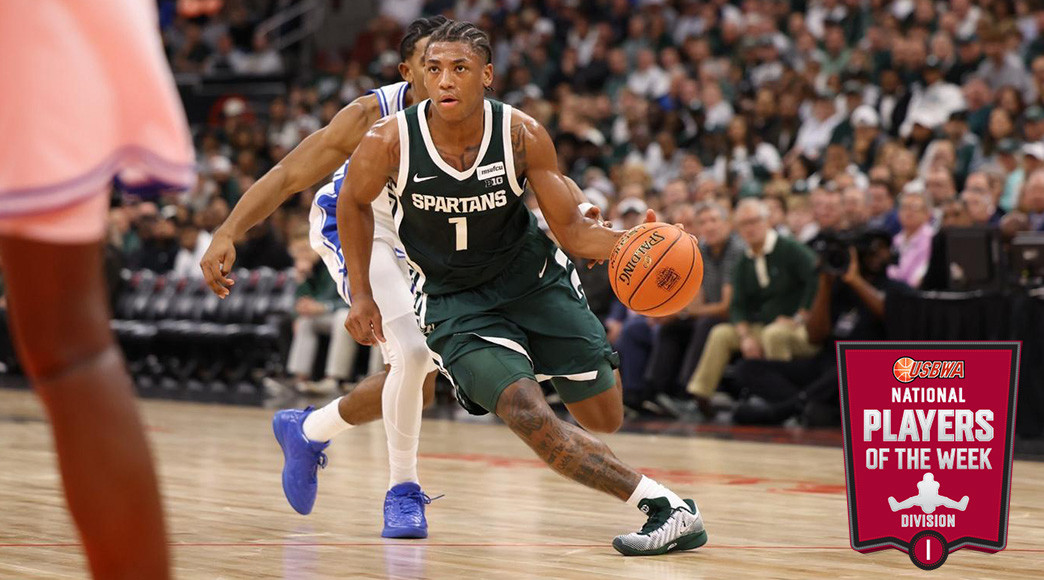
Fears Jr. Among Five Oscar Robertson Weekly Honorees
Michigan State guard Jeremy Fears Jr. earned a share of the season’s first Oscar Robertson National Player of...

Williston Fifth Grader Oli Agoos Elected Vermont’s Kid Governor on Climate Platform
Williston Central School fifth grader Oli Agoos won Vermont's second Kid Governor election Tuesday, earning a one-year term...
High Pointe Offers Golf Assessment, Highlights Pediatric OT Tips
Clarksville golfers staring at cooler temperatures and dwindling daylight have a narrow window to address the back pain...

Norway Beat Denmark 3-2 to Top Nations League Group, Denmark Face Relegation Playoff
Norway completed a Nations League double over Denmark with a 3-2 win in Copenhagen on Tuesday, a result...