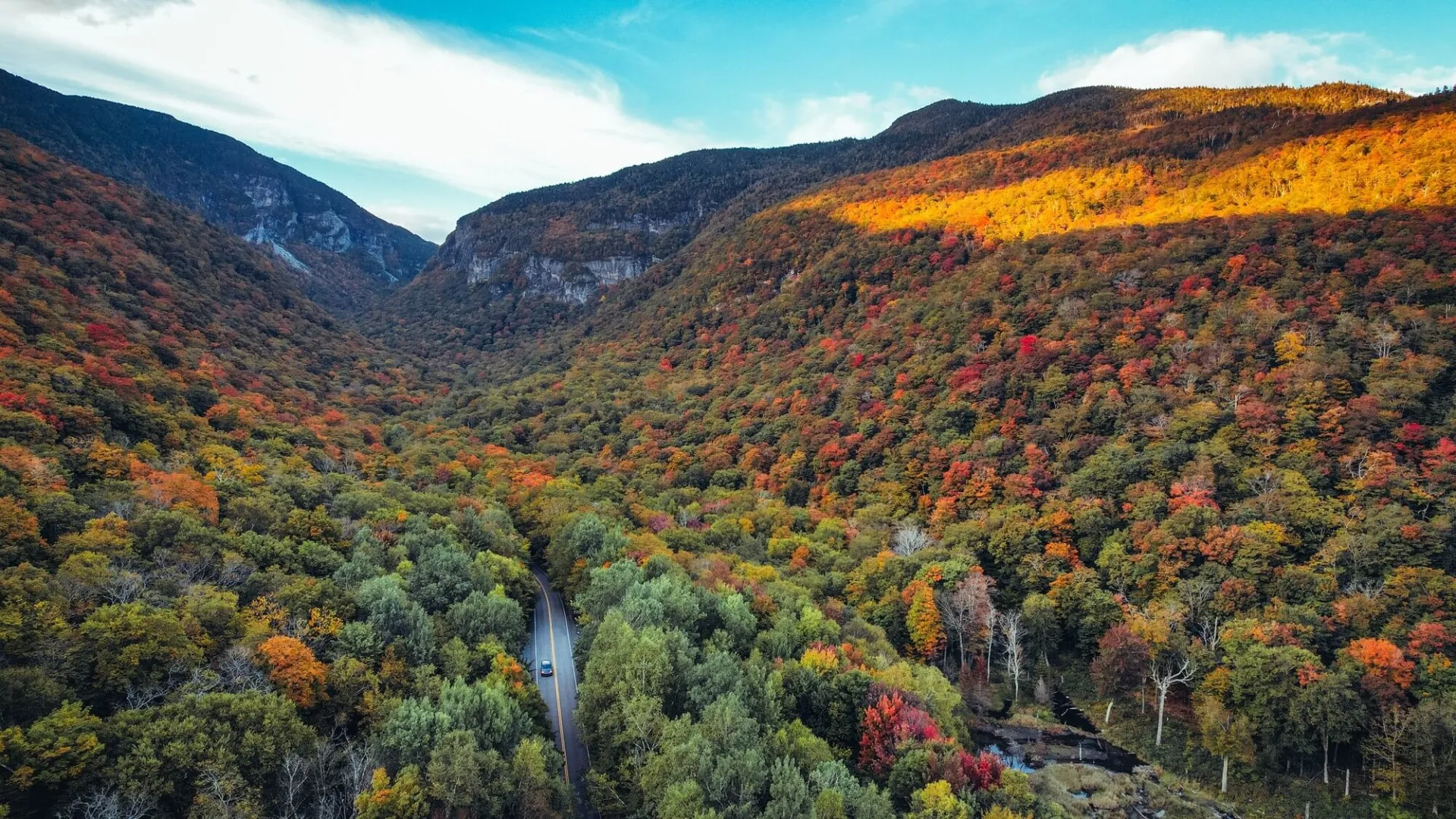
The University of Vermont’s Gund Institute for Environment published the 2025 Vermont Climate Assessment in October, warning that the state is not a climate refuge and detailing accelerating flood risks.
The assessment, the third since 2014, involved dozens of researchers over nine months. It finds that Vermont’s rural, mountainous geography, aging infrastructure and aging population make it more vulnerable to interconnected and compounding climate impacts.
Unprecedented weather extremes, increasing average temperature and total precipitation, and shifting seasons present risks to the state’s population, industries and infrastructure, according to the report.
VTDigger reported that the state has contributed millions of dollars to flood recovery but has no plan for helping people who currently face threats from river erosion.
Nature-based solutions limit flood damage
When rivers are confined to their channels, erosion increases along with the risk of flooding downstream. The report highlights nature-based approaches already in use. The authors describe such approaches as cost-effective ways to improve river health and address pollution.
Economic and health impacts
Tourism, including foliage season bringing roughly $500 million annually, faces unpredictable seasonal shifts. Outdoor recreation adds $2.2 billion annually to Vermont’s GDP and provides 5% of jobs. Lyme disease rates have increased fourfold since 2008 as ticks survive warmer winters.
Twice as many Vermonters are experiencing homelessness as before COVID and are highly exposed to extreme weather hazards. Extreme heat endangers outdoor workers and vulnerable populations, as does poor air quality from increasingly frequent wildfire smoke.
Seasonal shifts accelerate across Vermont
Winter is warming faster than any other season, with Southern Vermont experiencing the most drastic change, according to the 2025 assessment. Since 1900, the state has gained almost four winter days above 50 degrees and lost nearly 16 days below zero, trends the authors say will continue. Summers are heating up at a faster rate than reported in the 2020 assessment, and the freeze-free period has lengthened by almost 24 days since 1900.
These shifts affect streamflow, maple runs, and the quality and length of the winter recreation season.
Clinic proposed to help towns use assessment
Sen. Peter Welch said the work will help shape climate policy in Vermont and in Washington. “Climate action is needed, and it’s needed now,” Welch said.
The Gund Institute for Environment is a transdisciplinary research institute based at the University of Vermont that brings together diverse faculty, students, and global collaborators to address environmental challenges at the intersection of ecological, social, and economic systems.
Since moving to UVM’s Rubenstein School of Environment and Natural Resources in 2002, the institute has operated as a cross-campus hub where faculty members affiliate from various university departments rather than holding direct appointments, while Director Taylor Ricketts leads a community of Gund Fellows, Affiliates, and graduate students since 2011.
The institute provides graduate-level training through a Certificate of Graduate Study in Ecological Economics, weekly seminars, and problem-solving workshops called “Ateliers,” organizing its work around three themes: Nature’s Benefits, Ecological Economies, and Healthy Landscapes and Seascapes.
Monitoring gaps hinder climate planning
The authors said a lack of long-term monitoring data limited their analysis. Vermont lacks a complete long-term record of water drawn from groundwater and surface water, making it harder to track changes and predict future use. They called for more resources for monitoring and data collection.
The clinic, made up of UVM graduate students and faculty advisers, would produce reports and recommendations for local decision-makers. “We have increasingly seen both too much water and too little,” said Gillian Galford, research professor at the Rubenstein School of Environment and Natural Resources and editor of the assessment. “Heat and other weather-related conditions put us at risk, particularly our most vulnerable people.”
Worth a look

Auburn Ends 16-Year Bryant-Denny Drought, Beats No. 6 Alabama 30-23
Auburn ended a 16-year winless streak at Bryant-Denny Stadium with a 30-23 victory over No. 6 Alabama on...

Archbishop Rummel Opens Season With Win Over H.L. Bourgeois
Archbishop Rummel opened its basketball season Saturday with a 45-41 home victory over H.L. Bourgeois, but the Raiders...

Bismarck Small Business Owners Say Local Holiday Shopping Is Making a Comeback
Bismarck small business owners said Friday that local holiday shopping is making a comeback, with increased foot traffic...
New England Native Names Stonington, Connecticut, Essential Holiday Destination for Lobster-Trap Tree
In a column for Business Insider, New England native Morgan Rizzo argues that Stonington, Connecticut, is the region's...