
China and ASEAN announced on November 16 in Manila that their upgraded free-trade agreement will take effect on December 1, deepening cooperation in digital and green economies, ANTARA News reported.
The China-ASEAN Free Trade Area 3.0 Upgrade Protocol was unveiled at the China-ASEAN Leaders’ Meeting in the Philippines. The accord arrives as bilateral trade surpassed $1 trillion in 2025, with China remaining ASEAN’s largest trading partner for a 17th consecutive year and ASEAN holding the same position for China for six straight years, according to ANTARA News.
ASEAN adopts AI strategies but faces talent shortage
ASEAN members including Singapore, Malaysia, Thailand, Indonesia and Vietnam have adopted national AI strategies and endorsed shared governance guidance. Yet the region faces three structural deficits: a shortage of AI engineers and researchers, concentrated high-performance computing capacity, and under-representation of ASEAN languages in major models, Global Times reported.
China’s AI-related industries were valued at over 1.2 trillion yuan ($179 billion) in 2025 with more than 6,200 enterprises, official figures showed. The report argues that joint laboratories, scholarships, vocational training and co-investment in data centers can help ASEAN build domestic capabilities. Open-source models adapted for regional languages would lower adoption costs.
Green energy projects expand local production
Rising electricity demand and continued reliance on coal drive ASEAN’s push for solar, wind, hydro, storage and cross-border grid links. Chinese manufacturers have reduced solar module and battery costs while establishing production facilities in Vietnam, Thailand, Malaysia and Indonesia, Global Times reported.
The Cirata floating solar project in Indonesia, built with Chinese engineering participation, illustrates the scale of renewable cooperation. BYD’s operations in Thailand and a planned Indonesian facility point to local electric-vehicle assembly and supply-chain development, the report added.
The China-ASEAN #FTA 3.0 Upgrade Protocol offers firms new opportunities beyond #tariffs: digital economy, green economy, standards & conformity assessment, supply-chain connectivity and smarter customs. It aims to cut costs, boost certainty and deepen regional rules alignment.… pic.twitter.com/YBz2NoEBMG
Supply chains tighten under RCEP framework
Since the Regional Comprehensive Economic Partnership took effect in 2022, lower tariffs and harmonized rules of origin have drawn supply chains closer. ASEAN supplies components, resources and assembly while China provides capital goods, inputs and investment, driving industrialization in Vietnam, Malaysia, Thailand and Indonesia, Global Times reported.
Competition persists in sectors such as steel, textiles and certain consumer goods. The report cites support for upgrading, worker retraining and closer industrial-policy coordination as the constructive response.
ASEAN’s export mix to China has shifted toward more electronics, machinery, processed goods and agricultural products alongside traditional commodities.
The FTA 3.0 protocol will widen market access for ASEAN’s higher-value goods and attract more Chinese investment into local value chains, ANTARA News reported. The year 2026 marks the fifth anniversary of the China-ASEAN Comprehensive Strategic Partnership and the first year of the Plan of Action to Implement the ASEAN-China Strategic Partnership.
Worth a look

Maureen Dowd: Brother Kevin’s ‘Holiday Miracle’ and Relief Over Trump Disappointment Mark Thanksgiving
In a Thanksgiving column for The Irish Times, New York Times columnist Maureen Dowd writes that her family...

NYT Investigation: Brazilian Recruiters Lured Men to Russia, Seized Pay
Two Brazilian intermediaries promised recruits annual pay of up to $100,000 and rear-echelon jobs, then seized their military...

Eisenkot Downplays Unity Govt Option After Tel Aviv Talks
"I'm committed to my partners in the bloc. You're welcome to join after the government is formed," Gadi...
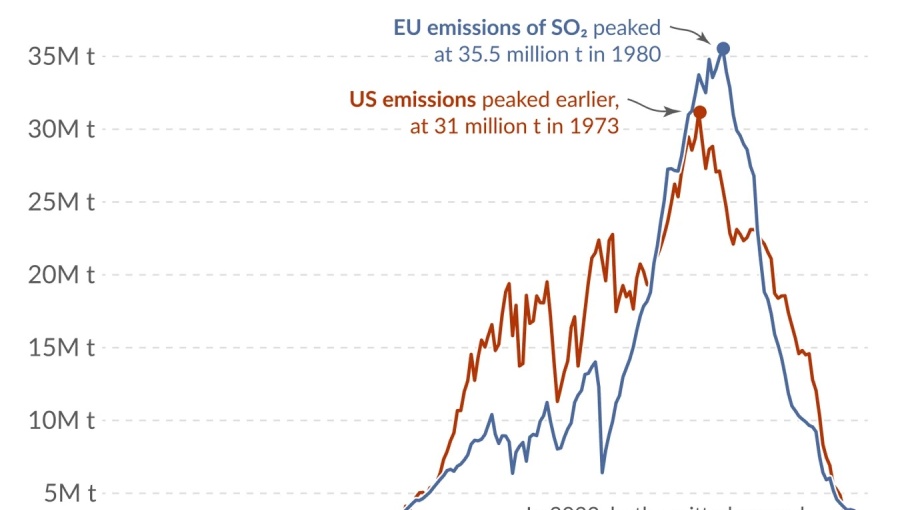
India Overtakes China as Top Sulphur Dioxide Emitter as US, EU Cut Emissions 94%
India has overtaken China as the world's largest sulphur dioxide emitter while the US and EU have cut...