
The Michigan Wolverines entered their non-conference clash with the UConn Huskies in Boston with hopes of mirroring the success the women’s team found just days earlier at the Crisler Center. Instead, the rematch of April’s National Championship Game served as a reality check for a program in transition. As reported by Maize n Brew, the Wolverines fell 85-77, suffering their first loss of the 2026-27 campaign in a game that highlighted exactly how far the team has to go to rejoin the upper echelon of college basketball.
Perimeter Struggles Define the Deficit
Basketball is increasingly a game decided at the arc, and on this night, the math was unkind to Michigan. The Wolverines’ inability to contain UConn’s perimeter shooters, combined with a stagnant outside attack of their own, put them in a hole from which they never fully recovered. By halftime, the Huskies had built a 43-30 lead, largely because they were hitting from distance while Michigan could not find the mark.
We have some elite ball movement, a Braylon Mullins three and a loud as hell UConn chant in Storrs North pic.twitter.com/8QQrYSguWR
The discrepancy was stark. At the midpoint of the first half, UConn had converted only nine shots, but five of them were three-pointers. By the halftime whistle, the Huskies had connected on 6-of-14 from deep, while Michigan managed just one successful triple. For the game, UConn finished 9-of-22 from three-point range, compared to Michigan’s 7-of-28. This mirrors a recurring issue from last season, where the Wolverines’ defensive lapses on the perimeter and inconsistent shooting often proved to be the deciding factor in close contests.
Guard Play Under the Microscope
With the departure of last year’s interior giants—Yaxel Lendeborg, Morez Johnson Jr., and Aday Mara—the identity of this Michigan squad has shifted squarely onto the shoulders of its backcourt. The tandem of point guard Elliot Cadeau and shooting guard Trey McKenney is expected to be the engine of this team. Against UConn, however, that engine sputtered early.
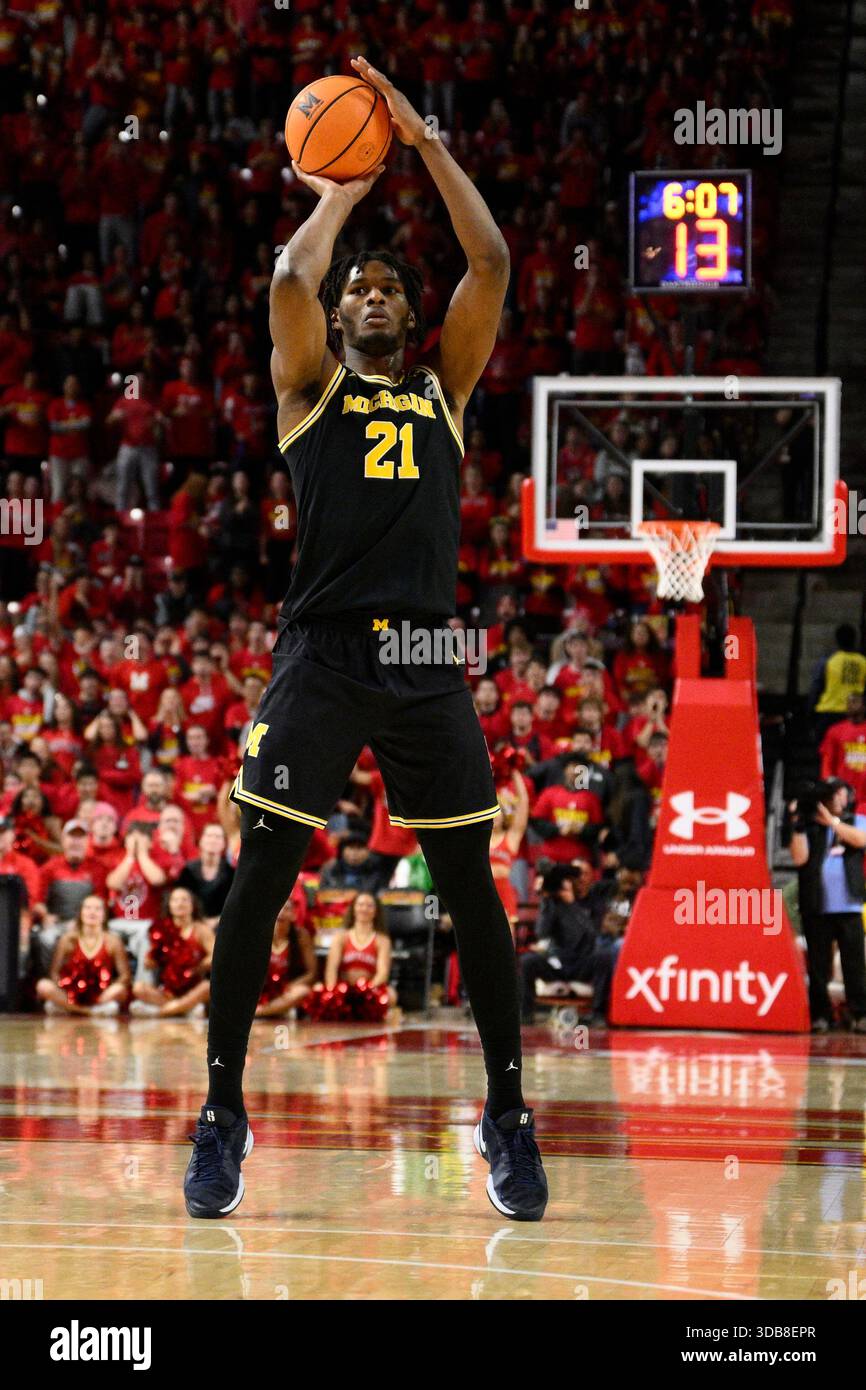
Cadeau, who earned Most Outstanding Player honors at the Final Four last season, struggled to find his rhythm, finishing with just eight points. McKenney had an even tougher start, going 0-of-7 from the field in the first half. While McKenney eventually found his footing to tally 22 points in the second half, the early deficit was already too significant to overcome. The reality of the modern NCAA Tournament is that deep runs are almost always predicated on elite, consistent guard play. For head coach Mike Boynton Jr., the challenge now is ensuring these two can perform in tandem from the opening tip rather than relying on second-half surges.
The Value of a Brutal Schedule
While a loss is never the desired outcome, there is a strategic argument for this early-season gauntlet. Boynton Jr. has inherited a schedule designed to test the team’s resolve immediately. By facing high-caliber programs like UConn, Marquette, and Villanova, the coaching staff is effectively fast-tracking the identification of the team’s weaknesses.
This philosophy of aggressive scheduling was a hallmark of the previous regime. As former head coach Dusty May noted in October 2024, teams that play tough non-conference slates are often forced to confront their flaws early, allowing them to iterate and improve before the pressure of conference play and the NCAA Tournament begins. The Wolverines are currently enduring that process. With upcoming games against Marquette on November 11 and William & Mary on November 15, the team has little time to dwell on the Boston loss.
For the Michigan faithful, the loss to UConn is not necessarily a harbinger of a lost season, but rather a diagnostic tool. The “warts,” as May once put it, are out in the open. Whether the team can address their perimeter defense and backcourt consistency in time for their next high-stakes test will determine if this early-season adversity ultimately strengthens their tournament resume or becomes a recurring theme.
Related reading

Woman Killed in Fatal Newark Pedestrian Accident on Lyons Avenue
Fatal Pedestrian Collision on Lyons Avenue Marks Second Traffic Death in Newark Today A somber atmosphere settled over...

Manchester City faces selection decisions before Nottingham Forest game
Manchester City Faces Selection Crossroads at The City Ground Manchester City heads to The City Ground this afternoon...

Smith Pauley LLP Expands focus on Nebraska business legal services
Business owners in Omaha are increasingly looking for ways to streamline their legal operations as the local economy...

Leo Longcake Leads East Helena Past Whitefish 41-20 in Quarterfinals
East Helena Advances to Semifinals After Dominant Win Over Whitefish The East Helena Vigilantes punched their ticket to...