
British startup CuspAI has raised $450 million in a series B funding round led by Kleiner Perkins and NEA, with participation from Jeff Bezos’ Bezos Expeditions. The Cambridge-based firm, valued at $2.6 billion, is building an AI-powered search engine for rare materials
to accelerate industrial breakthroughs in semiconductors, clean energy, and manufacturing.
Funding and Valuation Surge
This investment round follows a series A injection from the previous year. The funding was led by venture capital firm Kleiner Perkins and NEA, with significant backing from Jeff Bezos’ Bezos Expeditions and the UK government’s Sovereign AI Venture Fund.
The company confirmed it intends to use the capital to fuel international expansion, including the opening of a new office in Singapore and the scaling of operations across the UK, the Netherlands, Germany, Japan, and the US.
“Most big leaps in technology come down to a material, and the next set, from cheaper carbon capture to semiconductors and cleaner water, is stuck waiting on materials nobody has discovered yet. CuspAI built a search engine that changes that.”
Josh Coyne, partner at Kleiner Perkins
The AI Materials Foundry Coalition
Coinciding with the funding news, CuspAI launched the AI Materials Foundry
, a collaborative network of more than 48 technology giants, industrial firms, and research facilities. The initiative aims to leverage frontier AI models to simulate the performance of novel materials, effectively narrowing the vast search space that traditionally requires slow, expensive laboratory testing.
The startup’s co-founders, Dr. Chad Edwards and Prof. Max Welling, emphasize that the project is a response to the physical constraints currently facing industrial innovation.
“As AI transforms the physical world, new materials will open up new frontiers across semiconductors, energy and advanced manufacturing. The AI Materials Foundry brings NVIDIA accelerated computing infrastructure together with world-class chemistry and materials expertise to help power the next generation of materials discovery.”
Chad Edwards, CEO and co-founder of CuspAI
Strategic Goals for Semiconductors and Energy
The practical application of CuspAI’s technology focuses on reducing or eliminating reliance on rare metals, specifically iridium and ruthenium, which are essential to current chipmaking supply chains but are increasingly difficult to source. By automating the discovery of alternatives, the company hopes to shorten research cycles significantly.
The UK government’s involvement is part of a broader push to scale domestic AI firms capable of competing globally. Liz Kendall, the science and technology secretary, noted that the investment aligns with national priorities regarding energy and climate change. CuspAI is the fourth company to receive backing from the government’s sovereign AI fund, which typically targets equity investments of a certain scale for UK-headquartered startups with British founders.
Leadership and Industry Connections
CuspAI has bolstered its leadership and advisory ranks to support its rapid growth. The startup has brought on John Giannandrea, a former executive at Apple and Google, to assist in establishing its US operations. Additionally, the company is working with Abhi Talwalkar, a board member at AMD and chair of Lam Research, to further integrate its platform into the semiconductor industry ecosystem.

The sector is seeing a wave of interest in applying advanced AI to physical engineering. For comparison, Jeff Bezos’ own firm, Prometheus, which was founded in 2025, has already raised $12 billion at a $41 billion valuation, signaling a massive influx of capital into companies aiming to use AI for invention and physical infrastructure.
Unresolved Questions in Material Discovery
As the founders noted, the next 50 years of industrial progress depend on creating materials that don’t yet exist
.
Sources: The Guardian, Bloomberg.com.

Google Has Made A Special Edition Of The Pixel Watch 5
Google released the Pixel Watch 5 Stephen Curry Special Edition for $579.99, featuring a 45mm Satin Pyrite Aluminum...
Apple May Omit Base iPhone 18 From September Event Lineup
Apple has scheduled its upcoming hardware showcase for Wednesday, September 9, 2026, with the keynote event titled Surprise...
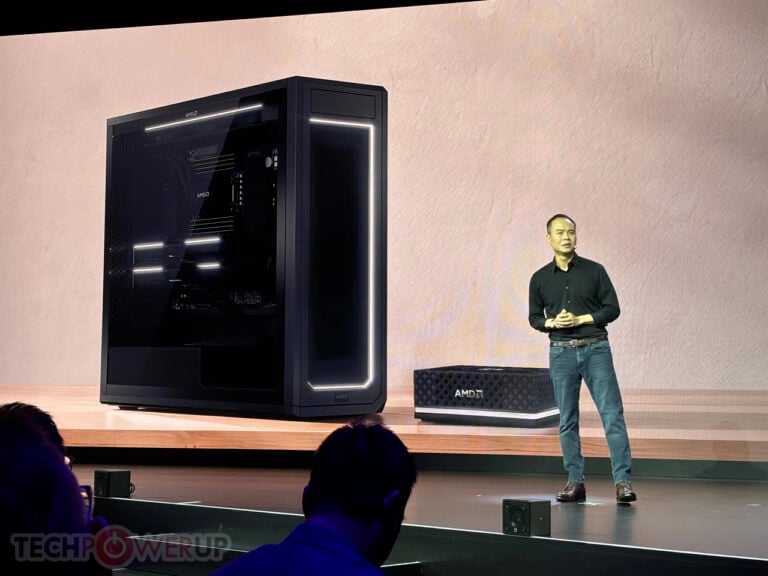
AMD Unveils Threadripper Halo Station with 96 Cores for Local AI Development
AMD unveiled the Threadripper Halo Station at the IFA 2026 opening keynote in Berlin.

Researchers Map Male Fruit Fly Brain to Compare Sex-Specific Behaviors
Researchers have completed a comprehensive map of the entire male fruit fly central nervous system, charting over 166,000...