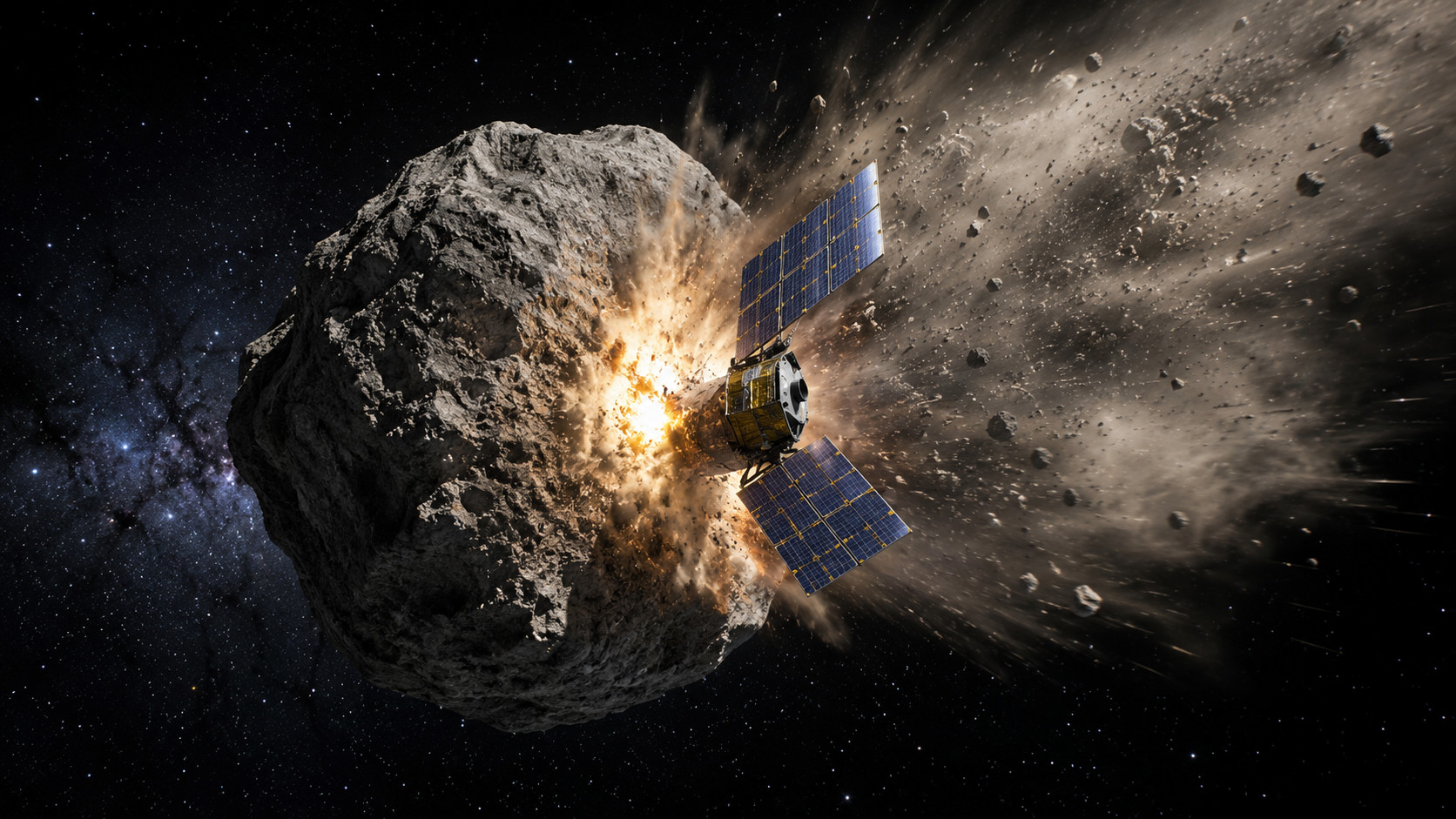
Mission Objectives and Speed
The spacecraft would strike its target at speeds exceeding 9 kilometers per second (about 26 times the speed of sound), surpassing NASA’s 2022 Double Asteroid Redirection Test (DART) mission, which impacted a target at 6.1 km/s. The goal is to directly alter the asteroid’s orbit relative to Earth, potentially breaking its structure, according to researchers led by Li Mingtao, chief scientist for planetary defense at the China National Space Administration (CNSA).
The mission’s high-velocity approach is designed to maximize the kinetic impact, though the effectiveness depends on factors like the spacecraft’s mass, collision angle, and the asteroid’s internal composition. The study notes that debris from the collision could amplify the deflection effect, similar to NASA’s DART mission, which displaced 160-meter-wide Dimorphos by 32 minutes in its orbit.
Target Asteroid and Timeline
The proposed target is asteroid 2015 XF261, a 30-meter-wide object first identified in 2015. It is set to pass within approximately 7 million kilometers (4.3 million miles) of Earth in 2029 or 2030, making it an ideal candidate for testing. Scientists estimate the asteroid’s exact dimensions remain uncertain, but its orbit is similar to Earth’s, increasing its potential threat level.
The mission would involve two spacecraft: one to impact the asteroid and another to observe the collision and its aftermath. The second probe would monitor changes in the asteroid’s orbit, shape, and internal structure, as well as its surface composition, using cameras, spectrometers, and dust detectors. Unlike NASA’s DART and the European Space Agency’s Hera mission, which were separate, China’s plan integrates both the impactor and observation platform into a single campaign.
Differences from NASA’s DART Mission
While DART demonstrated the feasibility of asteroid deflection by altering the orbit of a moonlet around a larger asteroid, China’s mission aims to simulate a more realistic planetary defense scenario by directly changing an asteroid’s trajectory relative to Earth. The study emphasizes that DART did not alter an asteroid’s orbit around the Sun, whereas China’s approach seeks to address real-world threats posed by near-Earth objects.
China’s target differs from DART’s, which struck a “rubble pile” asteroid. 2015 XF261 is believed to be a stronger, more solid body, presenting unique challenges. The spacecraft would rely on autonomous systems to execute the impact, as real-time Earth-based guidance would be impractical due to communication delays.
Challenges and Scientific Goals
Key challenges include accurately identifying and tracking 2015 XF261, which has been observed only 74 times in the past decade. Researchers also face the task of precisely hitting the asteroid without real-time adjustments. Post-impact analysis would focus on measuring orbital changes and assessing the asteroid’s structural integrity.
The mission’s four primary objectives, as outlined in the study, are: (1) accurately hitting the target, (2) successfully altering its orbit, (3) precisely measuring the impact results, and (4) confirming Earth’s safety. The data collected would advance understanding of asteroid composition and improve future planetary defense technologies.
Despite the ambitious scope, the plan remains a proposal. The study is still under peer review, and CNSA has not finalized a target or launch date. However, researchers have targeted the 2029–2030 timeframe for the asteroid’s close approach, aligning with the mission’s goals.
Sources: Zmescience.
Sources: SCMP.
Related reading

Researchers Propose Light-Based Method to Detect Hypothetical ‘Mirror Life
Researchers at the University of Strathclyde and Durham University have proposed the first light-based method to detect hypothetical...

Researchers in southwestern China discovered a nearly 5-pound fungus so unique it required a new family
Researchers in southwestern China have discovered a towering new fungus species, Dianjunus rex, that grows up to 50...
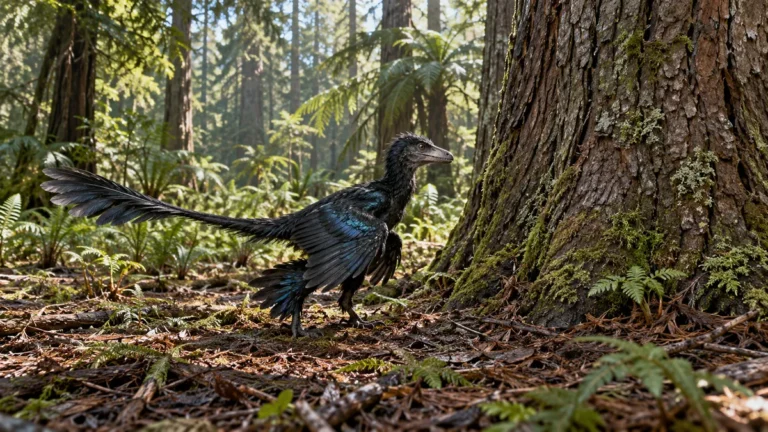
Microraptor was a very small, feathered dinosaur with wings on its legs as well as its arms
Discovered in northeastern China, Microraptor is a diminutive, feathered dinosaur renowned for its four wings and shimmering plumage,...
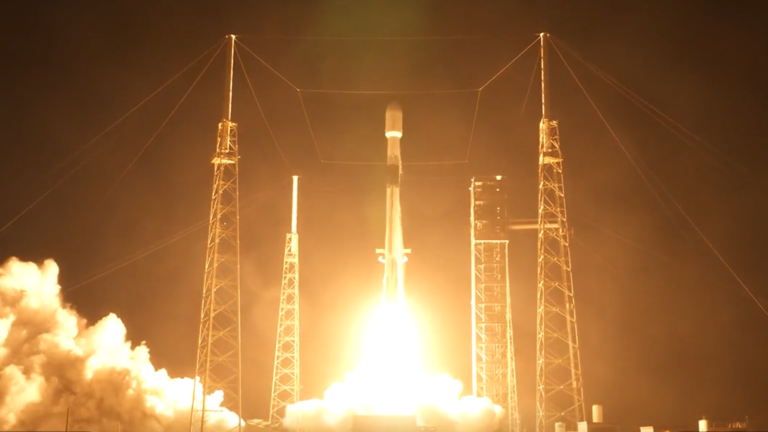
SpaceX Launches Starfall Return Capsule for Second Time
SpaceX launched the uncrewed Starfall reentry capsule for the second time on October 20, 2026, from Cape Canaveral...