
The federal government has halted plans to extend Billy Bishop Toronto City Airport’s runway for jet aircraft, following public consultations that drew more than 87,000 responses.
Ottawa’s decision brings an abrupt halt to a polarizing expansion push championed by Ontario Premier Doug Ford, who had sought to rebrand the downtown waterfront hub and significantly boost passenger traffic. Federal Transport Minister Steven MacKinnon announced in a statement that the federal government’s priorities for the island facility lie entirely with mandatory safety measures currently underway.
The intervention follows a robust public engagement period managed by Transport Canada.
Federal Officials Draw a Hard Line on Waterfront Protection
The federal rejection centers on safeguarding treasured community assets and preserving housing development capacity along the Toronto waterfront. MacKinnon made it clear that Ottawa will not pursue any plans that infringe on public spaces such as Little Norway Park or Hanlan’s Point Beach. Officials also noted that a larger runway capable of handling commercial jets would introduce elevated noise, create significant environmental disruptions, and hinder the city’s ongoing efforts to build much-needed housing in the Port Lands.
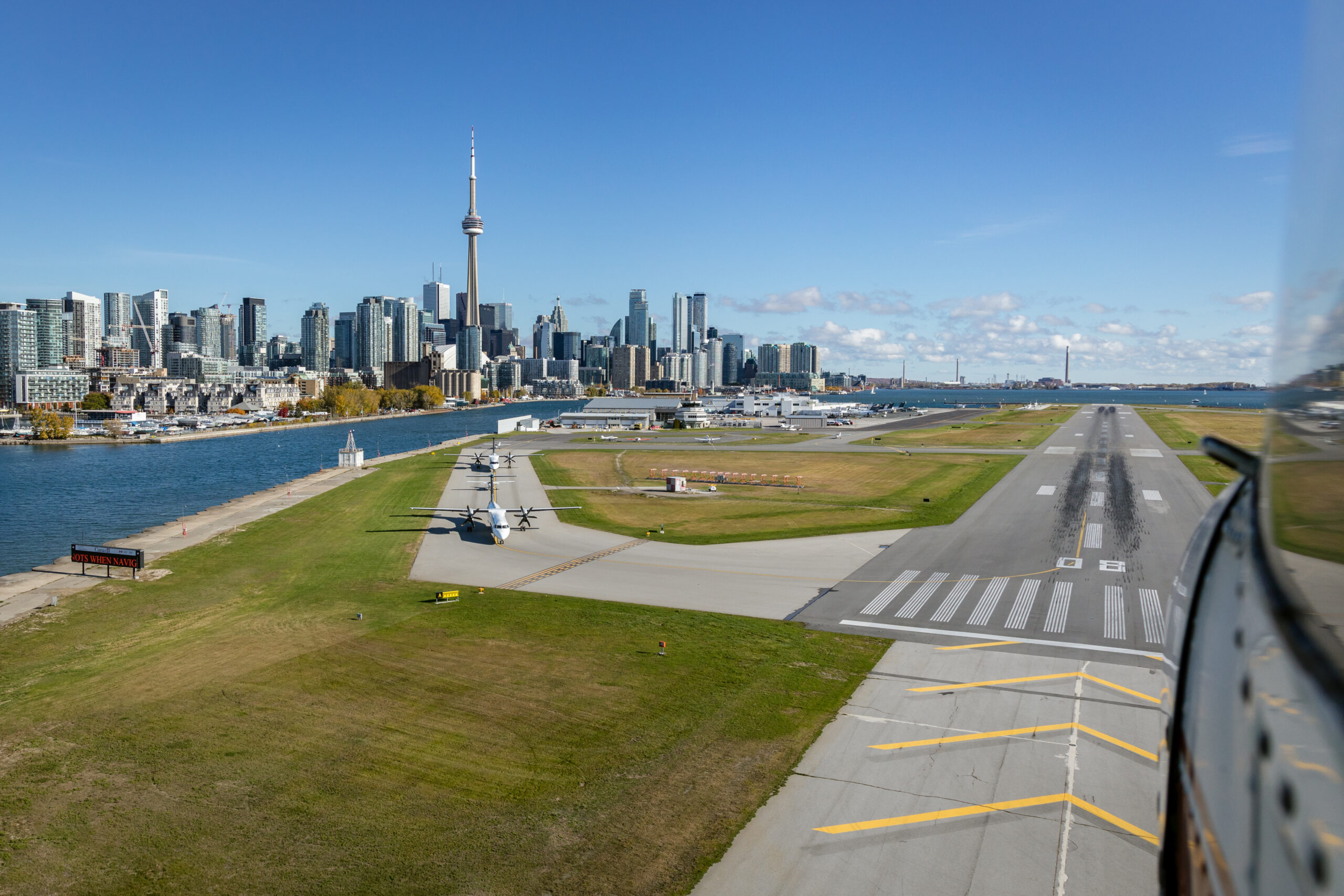
Environmental advocates welcomed the decision, warning that the proposed runway extension would have undone decades of rehabilitation work. Tim Gray, executive director of Environmental Defence, pointed out that the buildout would have caused massive destruction to the Toronto Islands following billions of dollars invested in local ecosystem restoration.
“At this stage, I can confirm that our focus lies exclusively on the approved safety enhancements, which are currently taking place and are required to maintain safe operations at the airport.”
Steven Mackinnon, Minister of Transport
The Toronto Port Authority, which owns and operates the airport under a decades-old tripartite governance structure alongside Ottawa and the City of Toronto, confirmed it received notice of the federal stance.
Provincial Ambitions and Municipal Pushback
The federal halt sets up a sharp political clash with the Ontario government. Premier Doug Ford’s administration had previously argued that expanding the island airport could contribute up to $8.5 billion annually to Canada’s economy, create thousands of jobs, and increase passenger capacity from two million to 10 million travellers per year.

To clear the path for the project, the provincial legislature passed a law allowing Queen’s Park to take over the City of Toronto’s land holdings at the airport and along the waterfront, bypassing local powers under the tripartite agreement. The move triggered intense local resistance. Ausma Malik condemning the provincial strategy as a pure power grab that ignored local voices.
“The province is telling us they don’t care what we have to say, they don’t care about collaboration, negotiation or the best outcomes, they don’t care what Torontonians have to say.”
Ausma Malik, Toronto City Councillor
Despite the federal roadblock, Ontario Transportation Minister Prabmeet Singh Sarkaria signaled that the province plans to continue its efforts, stating that officials anticipate a future plan that protects public spaces, improves Little Norway Park, and supports regional connectivity.
Relief at City Hall and Calls to Return Land
Toronto Mayor Olivia Chow praised the federal intervention, thanking Prime Minister Mark Carney and Minister MacKinnon for protecting the community from unwanted development.
With the expansion officially shelved by Ottawa, Chow directed her attention back to Queen’s Park. The mayor formally called on the provincial government to return the city’s land holdings that were seized under the recent provincial legislation, closing a contentious chapter on downtown aviation expansion.
Keep reading
Worker Dies After Being Struck by Compressed Air Hose at Jurong Port Road
A 35-year-old worker died at a Jurong Port Road construction site on September 11, 2026, after being struck...
Singapore Police Investigate Three Traffic Officers Over Unsafe Riding Footage
The clip, which surfaced online, shows the outriders cutting across lanes and forcing sudden braking near the Traffic...
Justice Department Deports Legal Resident to Afghanistan in First ATRC Case
The Justice Department deported a 47-year-old legal U.S.

Mahnoor Safdar Marries Azan Jabbar Today at Jati Umra Estate
The private family gathering brings together close family and invited guests for the celebration.