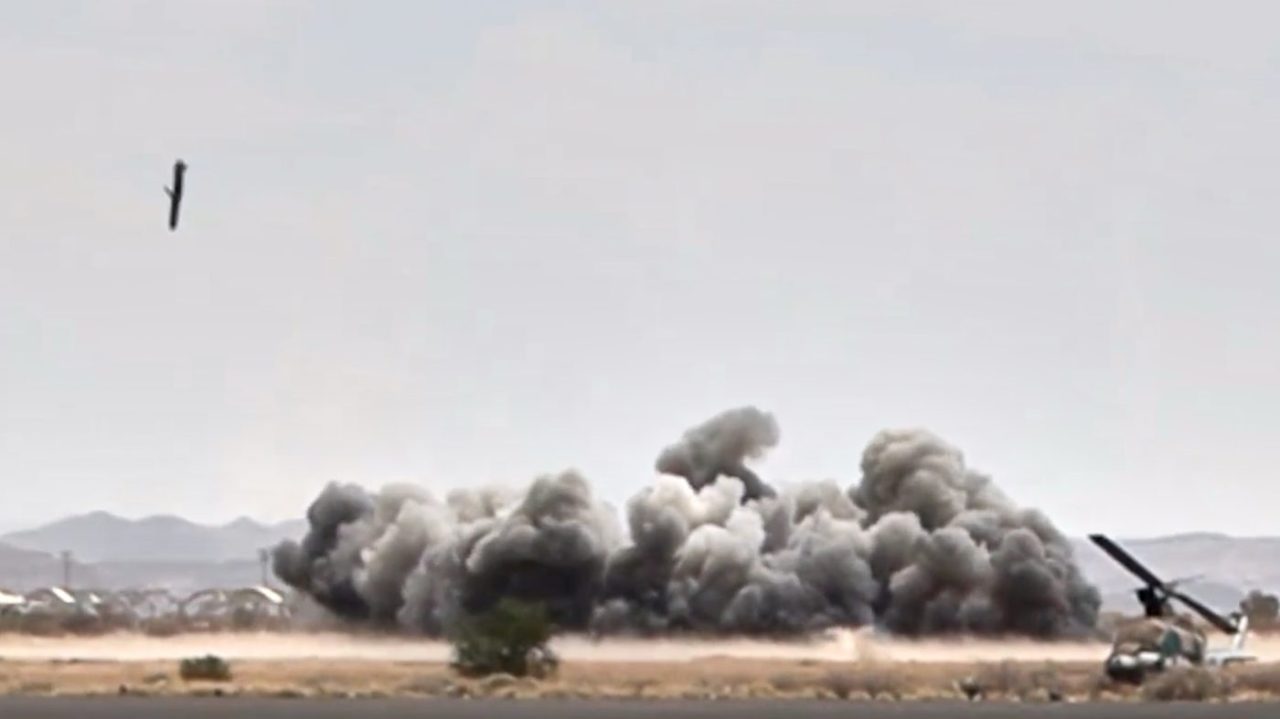
Yemen’s Houthi rebels launched ballistic missiles and drones at Saudi oil facilities in Yanbu and Jizan on Saturday, opening a widening regional front in the Iran conflict. The strikes followed coalition air attacks on Hodeida, as global shipping and oil markets faced immediate strain from the escalating maritime crossfire.
The weekend strikes mark a significant escalation along the vital shipping chokepoint connecting the Red Sea to the Gulf of Aden, where international trade and energy transit intersect with military confrontation. While the United States and Iran trade blows across the region, the Yemen-based militant group targeted infrastructure belonging to state-run oil giant Aramco in two Red Sea coastal cities, according to regional reporting.
Ballistic Strikes Hit Aramco Facilities in Yanbu and Jizan
Yemen’s Iran-backed Houthi rebels claimed responsibility for attacks on Saudi oil facilities Saturday, in the first such strikes since 2022. In a video statement, Houthi military spokesperson Yahya Saree said the group fired ballistic missiles and drones at facilities belonging to the state oil company, Aramco, in the Red Sea towns of Yanbu and Jizan.
Brig. Gen. Yahya Saree, the militant group’s spokesperson, said in a social media post that the Houthis executed two military operations in response to what he termed blatant and criminal aggression from Saudi Arabia. He stated that the first operation targeted sensitive Aramco-affiliated facilities in Jizan with dozens of ballistic missiles and drones, while the second operation targeted sensitive Aramco-affiliated facilities in Yanbu with a number of ballistic and cruise missiles and drones. Saree added that both operations successfully achieved their objectives thanks to Allah Almighty, with accurate and direct strikes.
Saudi Arabia’s civil defence said alerts sounded multiple times early Saturday in both cities, but the kingdom didn’t comment further. The assault followed a Thursday maritime incident in which the Houthis targeted two Saudi oil tankers in the Red Sea, prompting an immediate counter-response from the Saudi-led coalition.
In response to the tanker attacks, Saudi Arabia struck Hodeida, the Saudi-led coalition opposing the rebels said Saturday. The strikes late Friday hit the port and the state-run telecommunications corporation, injuring two people, said Anees al-Asbahi, a spokesperson for the Houthi-run health ministry. The Saudi-led coalition said it didn’t hit the port but struck legitimate military targets in Hodeida province that were linked to threats to commercial vessels in the Red Sea.
Global Oil Markets React to Bab el-Mandeb Chokepoint Pressures
The widening conflict threatens international supply chains that rely on the narrow maritime corridor. The Bab el-Mandeb, at the southern tip of the Arabian Peninsula, is a vital shipping chokepoint connecting the Red Sea to the Gulf of Aden. Around 12 per cent of the world’s trade, including a quarter of its container traffic, passes through the narrows.

The Houthis have said they would close the Bab el-Mandeb Strait to Saudi-linked shipping in retaliation for the kingdom’s blockade on Yemen and a recent attack on the international airport in Yemen’s rebel-held capital, Sanaa. Mahdi al-Mashat, head of the Houthi-led Supreme Political Council governing rebel-controlled territories in Yemen, said of what it would take for the Houthis to not blockade the Bab-El-Mandeb: Nothing short of ending the aggression and lifting the blockade, otherwise, it’s all illusion and mirage.
Energy markets have already absorbed immediate shockwaves from the maritime tension. After the Houthis attacked two Saudi tankers in the Red Sea on Thursday, international benchmark Brent crude oil jumped up to a future trading price of around $101 a barrel, spiking fears of a wider regional war alongside the effective closure of the Strait of Hormuz during crossfire between the U.S. and Iran.
Washington Issues Direct Warnings to Tehran Over Proxy Operations
On Thursday, President Trump warned that his administration would hold Iran responsible for any attacks from the Houthis on ships. In a Truth Social post, Trump wrote: “Please let this TRUTH serve to represent that if they do this again, the U.S. will hold Iran responsible, in that the Houthis are a Surrogate and/or Proxy of Iran, and major military punishment will be inflicted upon Iran and, of course, the Houthis, themselves, who I am very disappointed with in that they have, until now, acted very professionally and smart.”

Iran’s foreign minister, Abbas Araghchi, called for diplomacy and dialogue to solve the Yemen conflict without military confrontations in an interview published Saturday by the state-run newspaper called Iran. Meanwhile, Hossein Kermanpour, a spokesperson for Iran’s Health Ministry, posted on X that Iran had a peaceful night amidst a lack of reported overnight strikes in the country, breaking nearly two weeks of consecutive nights of U.S. attacks.
- Canada Seeks Unique EU Alliance Amid US Trade War
- Israeli Attacks in Gaza Kill Pregnant Woman and 10 Others
- Trump calls on Ukraine to halt strikes on diesel, saying attacks are causing a shortage (newsarchyuk.com)
- Houthis Claim Attack on Saudi Base Amid Intensifying Yemen Fighting (world-today-news.com)
Canada Seeks Unique EU Alliance Amid US Trade War
Canadian Prime Minister Mark Carney addressed reporters in Toronto on Sunday, outlining a new diplomatic and economic direction...

Israeli Attacks in Gaza Kill Pregnant Woman and 10 Others
A pregnant Palestinian woman was shot and killed by Israeli forces in southern Gaza as artillery shelling and...
Iran and Gulf Nations Postpone Oman Talks Over Regional Consensus
The delay comes as oil prices fluctuate, U.S. economic sanctions expand, and military tensions in the region escalate...
After Louvre Heist, Robberies Continue at French Museums
Following a dramatic daytime heist at the Louvre, a string of break-ins has struck museums and churches across...