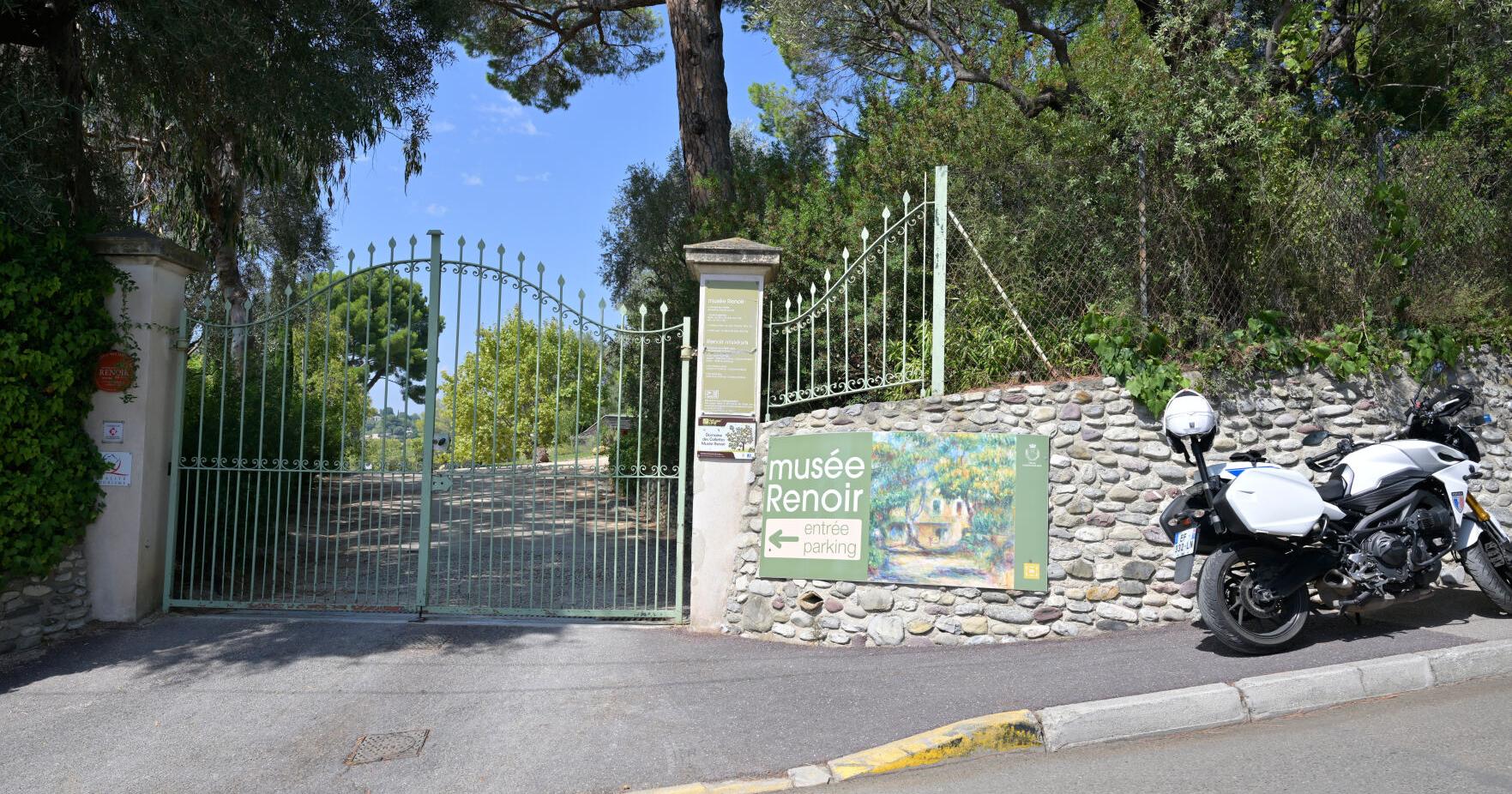
Following a dramatic daytime heist at the Louvre, a string of break-ins has struck museums and churches across France. Thieves recently stole two Pierre-Auguste Renoir paintings from the French Riviera and thousands of coins from a Diderot museum, raising urgent security concerns about safeguarding the nation’s cultural heritage.
The French Riviera Renoir Theft and Wider Spate of Museum Burglaries
Thieves recently targeted the Renoir Museum on the French Riviera, making off with four valuable works by the French impressionist master before dropping two of them in the garden while fleeing, according to the mayor of Cagnes-sur-Mer. The missing works include Portrait of Madame Colonna Romano
and Young Woman at the Well
out of a total of 12 Renoir pieces housed in the museum. The incident follows a dramatic daylight robbery at the Louvre in October, where a four-person crew used a basket lift to scale the facade, smashed display cases, and stole eight Napoleon-era jewelry pieces worth roughly $102 million, including a sapphire diadem, a necklace, and a reliquary brooch.
The wave of thefts extends well beyond major national institutions. Just a day after the Louvre heist, thieves broke into a museum in Langres dedicated to the French philosopher Denis Diderot and stole a collection of gold and silver coins. Reports indicate that nearly 2,000 gold and silver coins were taken during that nighttime break-in. Local authorities noted that the burglars selected their loot with great expertise and precision.
Investigators are examining potential connections to other recent museum burglaries, including hits at the Jacques Chirac Museum in Sarran, the National Adrien Dubouché Museum in Limoges, and the Natural History Museum in Paris.
Vulnerability and Security Challenges at Historic Institutions
The persistent security breaches have rattled museum workers, police, and government officials across France. Thievery has even reached into local churches, where individuals have stolen chalices, communion plates, and other holy relics for safekeeping concerns.
Experts point out that many historic cultural sites were built with architectural grandeur in mind rather than modern defense. James Ratcliffe, director of recoveries at the Art Loss Register, noted that it’s not necessarily difficult to get into historic institutions like the Louvre,
adding that they were built for grandeur, not defense.
The House of Enlightenment in Landres fits a similar vulnerable profile, housed in a 16th- and 18th-century mansion known as a Du Breuil de Saint-Germain hôtel particulier. Robert Wittman, founder of the FBI’s Art Crime Team, observed that the financial challenge of art crime lies in monetization rather than acquisition, noting that the real art in art theft is selling, not stealing,
and that the Louvre perpetrators left behind substantial forensic evidence.
International Art Heists and High-Profile Precedents
France’s recent security challenges mirror a broader international vulnerability among cultural repositories. In Italy, thieves absconded in March with three minor yet valuable paintings by Auguste Renoir, Paul Cézanne, and Henri Matisse from the Magnani Rocca Foundation near Parma. The Italian Carabinieri’s art recovery squad successfully recovered those works in August and detained five individuals connected to an organized crime group. In Dresden’s Green Vault, thieves smashed vitrines to steal 18th-century diamond-studded royal jewels. Years earlier, burglars stole a solid gold coin valued at about 3.75 million euros ($4.33 million) from a German museum by lifting it out of a window and fleeing along a railway track in a wheelbarrow.
Other legendary thefts remain entirely unsolved. The Boston Isabella Stewart Gardner Museum heist saw two thieves disguised as police officers bind guards with duct tape and remove 13 masterpieces, including works by Rembrandt and Vermeer, estimated to be worth up to half a billion dollars. Meanwhile, the Louvre itself carries a long history of vulnerabilities, most famously the theft of the Mona Lisa in 1911 by former museum worker Vincenzo Peruggia, which inadvertently cemented the portrait’s global fame after its recovery two years later in Florence.
Investigation Focus and Unresolved Questions
French police continue to investigate whether the spate of burglaries targeting small, high-value objects is part of a coordinated criminal ring or a series of independent opportunists taking advantage of dated infrastructure. While the four-person crew behind the louvre Napoleon jewelry heist was eventually captured, the bulk of the imperial jewels valued at 88 million euros remain unrecovered, save for Empress Eugénie’s diamond- and emerald-studded crown found dropped and damaged outside the building. Officials have already replaced the Louvre’s director and stepped up security, but municipal leaders and investigators working across France’s regional museums and churches face mounting pressure to determine how to protect cultural patrimony from increasingly brazen daylight and nighttime criminals.

Related reading
- Supermarkets Replace Atlantic Mackerel With Jack Mackerel Amid Skimpflation Warnings
- King Oyo Buried in Uganda as Family Battles Over Tooro Kingdom Successor
- Supreme Court Allows Construction of Trump’s $400M White House Ballroom to Continue (archyde.com)
- French officials investigate if malicious act caused train derailment (newsarchyuk.com)
Supermarkets Replace Atlantic Mackerel With Jack Mackerel Amid Skimpflation Warnings
Tinned mackerel on UK supermarket shelves is increasingly being swapped for Chilean jack mackerel due to severe Atlantic...

King Oyo Buried in Uganda as Family Battles Over Tooro Kingdom Successor
Thousands gathered in western Uganda on September 12, 2026, to bury King Oyo Nyimba Kabamba Iguru Rukidi IV...

Somaliland Offers Gaza Troops to Leverage US and Israel Recognition
Somaliland President Abdirahman Mohamed Abdullahi announced that the self-declared republic is willing to contribute up to 2,000 soldiers...

Kaja Kallas Backs EU Trade Ban on Illegal Israeli Settlements
EU foreign policy chief Kaja Kallas backed a bloc-wide trade ban on illegal Israeli settlements on September 11,...