Jurisdictions including Australia, France, the United Kingdom, Malaysia, and Indonesia have moved to raise minimum access ages or restrict social media use outright for young people. Singapore has chosen a different path. An eight-member expert panel formed by the Ministry of Health (MOH) in September has advised against an age-based blanket ban, warning that such measures risk proving counterproductive if teenagers simply find ways to circumvent the restrictions.
Why Singapore’s Expert Panel Rejects Total Social Media Bans
Rather than cutting off access entirely, the group called for making digital platforms safer by design.
The panel brings together specialists from the Institute of Mental Health (IMH), the National University of Singapore (NUS), Nanyang Technological University (NTU), MOH, TOUCH Community Services, and KK Women’s and Children’s Hospital (KKH).
Four Problematic Platform Features Put Youth Well-Being at Risk
The panel’s report groups platform features of concern into three operational categories: those exposing users to safety risks, those encouraging prolonged use, and those worsening mental health. Researchers highlighted direct messaging functions as a major safety hazard. Private one-to-one or group chats expose young users to unknown adults, creating avenues for cyberbullying, harassment, and sexual grooming. Anonymous or pseudonymous accounts worsen the issue by lowering accountability.
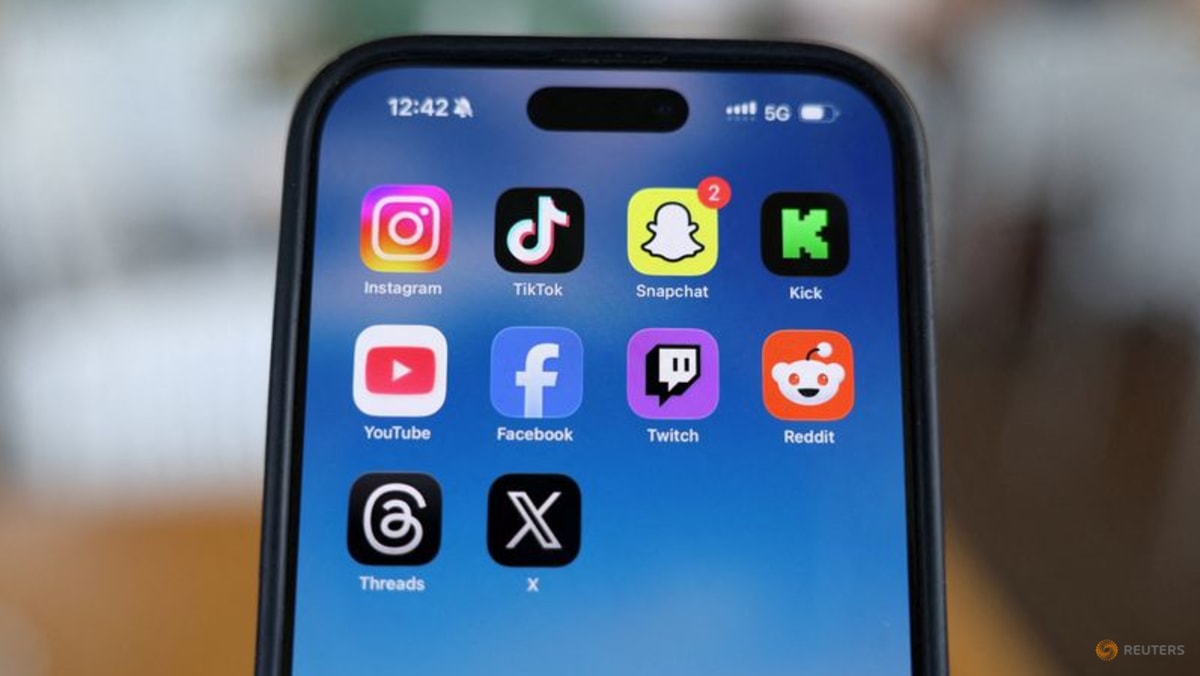
Engagement-maximizing features also came under scrutiny. Infinite scroll and autoplay create boundless content streams that remove natural stopping points, encouraging users to stay online longer than intended at the expense of sleep, exercise, and physical interactions. Meanwhile, algorithmically curated feeds amplify exposure to distressing or harmful content, and visible validation metrics like “like” counts and follower numbers drive social comparison and emotional distress.
Distinguishing Excessive Use From Problematic Addiction
Co-chaired by IMH Department of Developmental Psychiatry Chief and Senior Consultant Lim Choon Guan and NUS Social Service Research Centre Co-Director Jungup Lee, the panel drew a firm line between spending hours online and clinical addiction. Spending three to six hours daily on social media is excessive, but compulsive engagement is what researchers classify as problematic.
Global Perspectives: International Debates Over Age Limits and Safety
While Singapore looks toward feature-level regulations, other nations grapple with divergent strategies. In the United Kingdom, a government consultation on children’s online safety ahead of a submission deadline drew intense debate among prominent campaigners. Ian Russell, chair of the Molly Rose Foundation whose 14-year-old daughter Molly died after viewing harmful material online, told The Guardian that a blanket under-16 ban creates a dangerous cliff edge. Russell advocates instead for blocking platforms that fail strict safety standards while permitting access to safe apps, paired with curbs on aggressive algorithms and infinite scrolling.
Conversely, Esther Ghey—founder of the Brianna Ghey Legacy Project whose daughter Brianna was murdered in 2023—supported raising the age limit, arguing that current platforms present severe risks to under-16s while acknowledging the need for robust digital literacy education. Younger voices have also pushed back against rigid solutions; Fin, a 17-year-old sixth-form student interviewed by Theguardian, criticized blanket bans as overly harsh for teens relying on apps to connect with peers and follow news, though he agreed that addictive designs like autoplay require strict regulation.
Age Assurance and the Path Forward for Regulators
Back in Singapore, the expert panel emphasized that regulating features effectively requires robust verification. According to the panel’s report, robust age assurance measures are a necessary foundation for regulating social media access for young users
because platforms cannot enforce safeguards without reliably determining user age. Ministers including Minister for Digital Development and Information Josephine Teo and Minister for Health Ong Ye Kung have previously voiced support for targeted adjustments—such as disabling private messaging between unknown adults and minors or turning off autoplay by default—over blunt bans.
Related reading

Webb Telescope Finds Chariklo’s Rings Are Changing Over Years
Astronomers using the James Webb Space Telescope (JWST) have discovered that the two narrow rings surrounding the distant...

SpaceX Launches Final Three O3b mPOWER Satellites for SES
SpaceX successfully launched the final three O3b mPOWER satellites for SES on September 13, 2026, from Cape Canaveral...

Japan Launches Kaguya Spacecraft to Map Moon in 2007
On September 13, 2007, Japan launched its advanced Kaguya spacecraft from the Tanegashima Space Centre aboard an H-IIA...

Astronomers Identify Eos, a Massive Molecular-Hydrogen Cloud Near the Sun
Astronomers have identified Eos, a massive molecular-hydrogen cloud located roughly 300 light-years away and spanning 40 full-Moon widths...