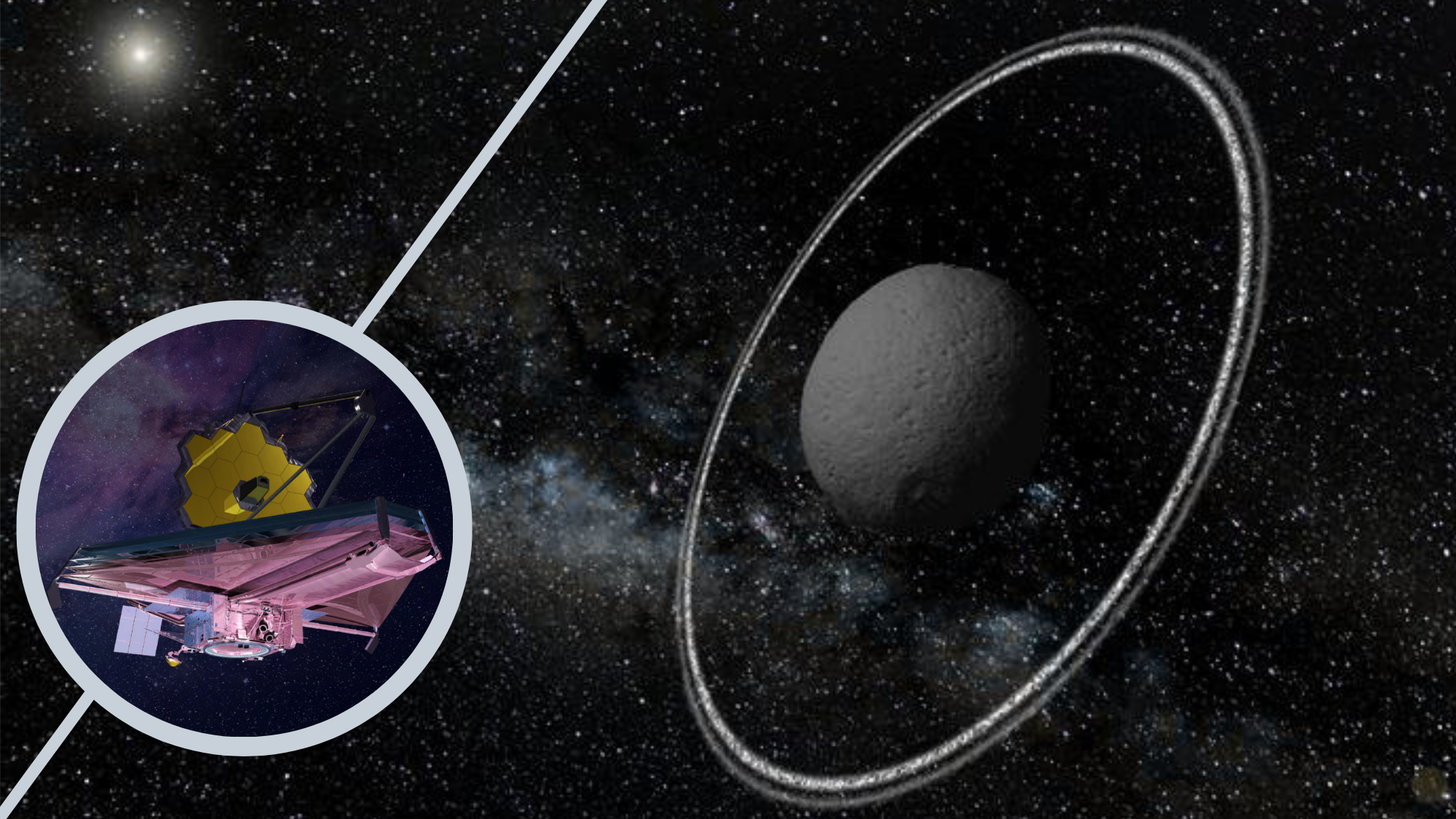
Astronomers using the James Webb Space Telescope (JWST) have discovered that the two narrow rings surrounding the distant solar system body Chariklo are changing over timescales measured in years. The findings challenge previous assumptions that ring systems around small bodies remain stable.
Webb Telescope Reveals Changes in Chariklo’s Rings
Chariklo is an icy Centaur measuring approximately 250 kilometers (155 miles) across, orbiting the sun between Saturn and Uranus at roughly 17 times the distance between Earth and the sun. When its rings were discovered during a 2013 stellar occultation and reported in 2014, Chariklo became the smallest known object in the solar system to host a confirmed ring system, overturning the long-held belief that rings belonged exclusively to giant planets.
Stellar Occultation Observations and Ring Dimensions
The system consists of two narrow rings designated as the inner ring, C1R, and the outer ring, C2R. The dense inner ring is approximately six to seven kilometers wide, while the outer ring is about two to four kilometers wide. They orbit roughly 390 and 405 kilometers from Chariklo’s center, separated by a gap of about nine kilometers.
Because Chariklo and its rings are extremely small and distant, they cannot be directly photographed, even by advanced instruments. Instead, scientists rely on stellar occultation, a technique that measures the decrease in light from a background star when an object passes in front of it.
On October 18, 2022, an observation campaign led by researchers from the Institute of Astrophysics of Andalusia (IAA-CSIC) utilized the JWST’s Near-Infrared Camera to monitor the star Gaia DR3 6873519665992128512. From the telescope’s viewpoint, Chariklo’s body missed the star by only about 7.4 kilometers above its surface, but the rings crossed the line of sight. The event was observed simultaneously using filters centered near 1.5 and 3.2 micrometers.
Opposite Changes Detected in Inner and Outer Rings
The newly published research, released on September 9 in Science Advances, compared the 2022 JWST data with stellar occultation records from 2013, 2014, and 2017. The analysis revealed that the two rings are evolving in opposite directions.

According to team leader Pablo Santos-Sanz of the IAA-CSIC, the inner ring showed significantly higher opacity, while the outer ring showed lower opacity. Accounts summarized by the Paris Observatory noted an increase of about 50 percent in the inner ring’s opacity and a decrease of about 60 percent in the outer ring’s opacity compared with 2017 measurements. Opacity measures how strongly ring material blocks background starlight rather than providing a direct weighing of the rings.
Implications for Small-Body Ring Evolution
The observed changes suggest that Chariklo experiences more complex physics than previously understood. Scientists are now investigating whether the shifts stem from natural evolution within the rings, grain optics, real material loss, or differences caused by observation filters. The inner ring may have received new material, or collisions among larger particles may have generated a cloud of smaller grains with a greater total cross-section.
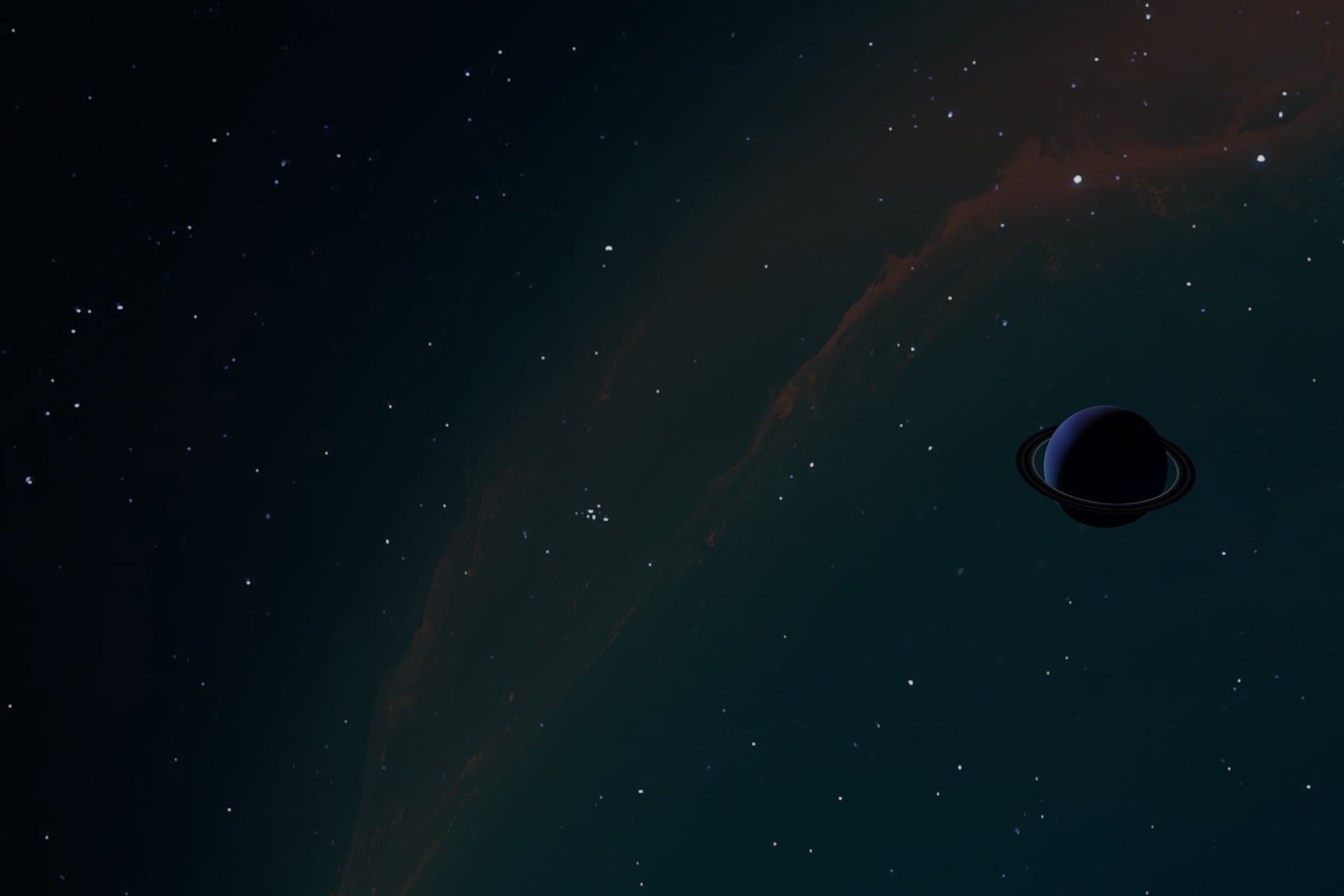
Achieving these precise measurements required extraordinary precision regarding Chariklo’s orbit, the star’s position—aided by the European Space Agency’s Gaia mission—and the trajectory of the JWST around the L2 Lagrange point located about 1 million miles beyond Earth. During the occultation, Chariklo traveled at approximately 5,600 miles per hour relative to the telescope. Researchers state that these findings force a reevaluation of how small-body ring systems form, evolve, and maintain their stability over time.
Related reading

SpaceX Launches Final Three O3b mPOWER Satellites for SES
SpaceX successfully launched the final three O3b mPOWER satellites for SES on September 13, 2026, from Cape Canaveral...

Japan Launches Kaguya Spacecraft to Map Moon in 2007
On September 13, 2007, Japan launched its advanced Kaguya spacecraft from the Tanegashima Space Centre aboard an H-IIA...

Astronomers Identify Eos, a Massive Molecular-Hydrogen Cloud Near the Sun
Astronomers have identified Eos, a massive molecular-hydrogen cloud located roughly 300 light-years away and spanning 40 full-Moon widths...
Researchers Find Diamond Melting Point Is Lower Than Previously Measured
Researchers zapping synthetic diamond plates with a powerful ultraviolet laser discovered the mineral's melting point is more than...