
In July, 97.6% of every new car sold in Norway was fully electric, cementing the country’s status as a global leader in electric vehicle adoption. This milestone is the result of three decades of consistent government tax policies, generous financial incentives, and a campaign that originally began with a converted Fiat Panda and a major pop band.
How an A-ha Pop Star and a Stolen Fiat Sparked Norway’s EV Revolution
The transformation of Norway’s automobile market did not start inside a government ministry. In 1989, environmental campaigners Harald N. Røstvik and Frederic Hauge faced widespread apathy toward electric vehicles and enlisted the pop band A-ha—fresh off worldwide success with Take On Me
and the James Bond theme The Living Daylights
—to force the issue. The group imported a Fiat Panda converted from petrol to electric power, complete with a 28-mile range, a 48-hour recharge time, and its back seats removed to accommodate the heavy batteries.
For seven years, the campaigners used the vehicle to stage deliberate civil disobedience across Norway. They drove through toll booths without paying, parked illegally, refused vehicle taxes, and watched the car get impounded and bought back more than a dozen times. Their core argument was simple: if drivers were expected to switch to cleaner technology, waiving tolls and taxes had to be part of the package. As A-ha member Morten Harket reflected decades later, it was what we needed to do… it just made every sense.
“our hands are black from the oil that we got rich off… I think we carry a certain responsibility of being in front, leading the way, for that reason.”
Magne Furuholmen, A-ha
By the mid-1990s, the civil disobedience campaign successfully pressured the Norwegian government into adopting the demanded incentives, including bus lane access, free parking, free ferry travel, and zero tax. A second irony underpinned the green transition: the nation that became the world’s electric car capital accumulated its immense wealth from North Sea oil reserves discovered in the 1960s. That revenue filled a sovereign wealth fund now worth well over a trillion euro, providing the fiscal headroom to maintain generous green subsidies for decades without needing them to pay for themselves immediately.
Tax Exemptions, Strict Penalties, and Infrastructure Buildout
In 2001, the Norwegian government implemented the single policy shift that mattered most by exempting electric vehicles entirely from the country’s 25% VAT. Combined with the elimination of purchase taxes, this exemption meant an electric car could cost meaningfully less than an equivalent petrol or diesel model, creating a sales pitch that was just plain cheaper rather than greener but pricier.
Norway did not rely solely on financial carrots. The state simultaneously made combustion-engine vehicles expensive and inconvenient through steep registration taxes tied directly to vehicle weight and emissions. Alongside these financial disincentives, the government financed the construction of a dense public charging network featuring more than 25,000 points blanketing the country. Crucially, the entire strategy relied on policy stability, maintaining the same basic framework for 25 years without letting it lapse during budget squeezes or changes in government.
Across Europe, preliminary data shows that electric cars accounted for 23.6% of total new car registrations in 2023, with full electric vehicles making up 15.5% of that share, according to preliminary data. New electric van sales in Europe also climbed to 8% in 2023, up from 6% in 2022. When examining individual national markets, the highest shares of electric vehicle uptake in new registrations were found in Norway at 89%, Sweden at 58%, and Iceland at 56%.
Life-Cycle Emissions and Broader Mobility Challenges
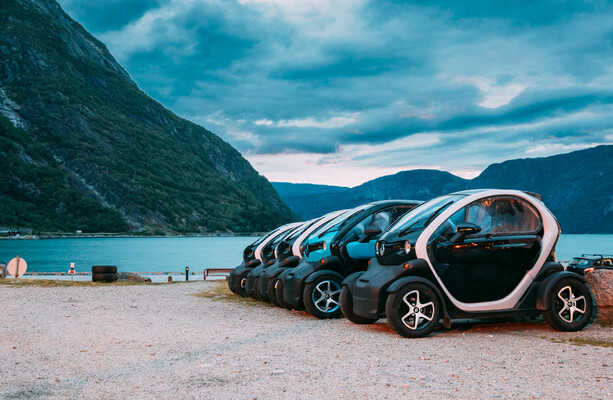
While electric vehicles face hurdles regarding upfront resource extraction and manufacturing emissions, their long-term environmental benefits are clear. Production phases generate higher initial greenhouse gas emissions and air pollutants than conventional vehicles, but those impacts are offset by lower emissions during the use phase over time. EEA reports indicate that greenhouse gas emissions from electric vehicles run about 17-30% lower than those of petrol and diesel cars. Furthermore, as production methods become more efficient and electricity grids transition to cleaner sources, the life-cycle emissions of a typical electric vehicle could drop by at least 73% by 2050.
European Union policy continues to push toward these benchmarks through the European Green Deal and the Sustainable and Smart Mobility strategy. Recently proposed legislation under the Fit for 55
package sets targets to slash CO2 emissions from new cars by 55% and vans by 50% by 2030, culminating in a mandate to completely cut emissions from new passenger cars and vans by 2035. Achieving those mandates will require a significant acceleration in EV adoption, alongside solutions for systemic bottlenecks such as high electricity prices, charging infrastructure shortages, and broader systemic transport demands.
Worth a look

Donald Trump Made Over 1,100 Stock and Bond Trades Worth Up to $270 Million in July
President Donald Trump executed over 1,100 stock and bond transactions in July, totaling between $79 million and $270...

Kenya to Pioneer Masterkey Digital Platform for Portable Skills
President William Ruto announced that Kenya will lead the first national implementation of Masterkey, a digital platform designed...

Israel Football Association Condemns Heimir Hallgrímsson’s Genocide Remarks
The Israel Football Association has condemned Republic of Ireland manager Heimir Hallgrímsson’s remarks connecting their upcoming Nations League...

Somalia Confirms Uranium and Lithium Deposits to Attract Investment
President Hassan Sheikh Mohamud announced that deposits of uranium, lithium, and cobalt have been confirmed in Somalia, adding...