Researchers at the Max Planck Institute for Marine Microbiology in Bremen, Germany, have discovered that a wide variety of animals possess enzymes capable of degrading microbial bioplastics, challenging the long-held scientific assumption that only microorganisms could break down these natural compounds.
New Max Planck Study Challenges Longstanding Assumptions on Microbial Bioplastics
The findings, detailed in a study published in Nature Ecology & Evolution, reveal that aquatic and terrestrial creatures ranging from marine worms and starfish to earthworms and sponges carry enzymes that break down polyhydroxyalkanoates, commonly known as PHAs. According to Mirage News, microorganisms developed these biodegradable compounds long before human manufacturing began, using them as internal reserves of carbon and energy.
From a Unique Marine Worm to a Widespread Animal Trait
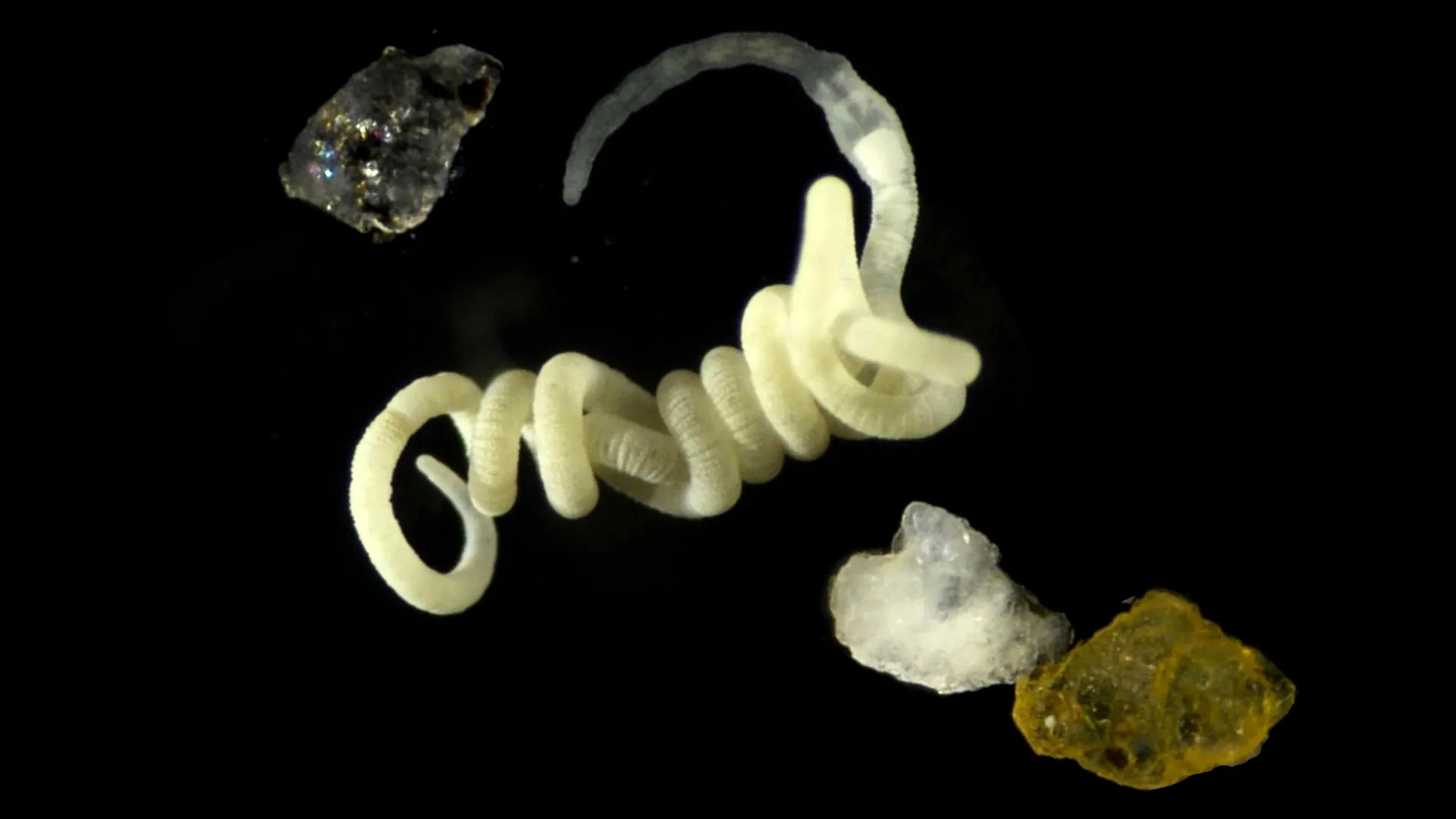
The scientific investigation began with Olavius algarvensis, an unusual marine worm measuring only about two centimeters long. Collected by divers from seafloor sediments beneath Mediterranean seagrass meadows off Elba, Italy, the worm lacks both a mouth and a gut, having lost its digestive and excretory systems because of its heavy reliance on bacterial symbionts.
Its distinctive white appearance comes from a dense layer of bacterial symbionts living beneath its skin. One of these bacterial partners stores enormous quantities of carbon as PHA. Researchers wondered if the worm had evolved a mechanism to access this rich energy reserve, leading them to discover an enzyme that breaks down the microbial plastic into small molecules the animal can use.
High-resolution imaging confirmed that this enzyme is produced in the exact location where the worm digests its bacterial partners. One of the worm's bacterial symbionts stores enormous amounts of carbon as PHA,
said corresponding author Nicole Dubilier, Director at the Max Planck Institute for Marine Microbiology. We wondered whether the worm had evolved a way to access this rich energy reserve.
Broad Genomic Analysis Reveals Enzymes Across Multiple Phyla
The discovery extended far beyond a single species of marine worm. When the research team examined animal genomes more broadly, they identified related enzymes in more than 66 species spanning nine different phyla. Subsequent laboratory tests confirmed that enzymes from distantly related organisms—including a sponge, an earthworm, and a springtail—could also degrade microbial PHAs.

This was the real surprise,
said first author Caroline Zeidler from the Max Planck Institute for Marine Microbiology. What started as a discovery in a single marine worm turned out to be a widespread capability shared by animals from very different branches of the tree of life.
Implications for Food Webs and Sustainable Applications
The discovery uncovers a previously unrecognized pathway allowing carbon stored by microbes to move into animal food webs. Scientists previously considered this microbial carbon reserve unavailable to animals, but the results indicate that aquatic and terrestrial species may assist microorganisms in breaking down natural bioplastics in soils, sediments, and aquatic environments worldwide.
PHAs are notable for their biological circularity and are increasingly utilized in commercial and medical applications. Current uses include:
- Agricultural fertilizers enclosed inside PHA beads that release contents gradually as the plastic degrades
- Medical wound dressings and drug delivery systems
- Resorbable implants and surgical sutures that slowly break down inside the body
While PHAs currently account for a small share of the bioplastics market, global production capacity is expected to grow substantially as demand rises for biodegradable, bio-based materials. Understanding how these natural bioplastics degrade in the environment is considered essential for promoting their sustainable use as alternatives to conventional plastics.
Worth a look

Adm. Brad Cooper Praises USS Abraham Lincoln Crew Despite Mental Health Reports
Top U.S. commander Adm. Brad Cooper visited the USS Abraham Lincoln aircraft carrier, acknowledging mental health challenges during...

Hong Lim Park Rally Draws Over 1,000 Protestors Opposing Forest Clearing
More than 1,000 demonstrators gathered in Hong Lim Park on August 16, to protest housing development plans for...
Zimbabwe Ferry Death Toll Reaches 80 After Lake Kariba Capsizing
The death toll from an overloaded government-run passenger ferry that capsized on Zimbabwe's Lake Kariba reached 80 on...

Botany Town Centre Cinema Roof Fire Extinguished
Firefighters extinguished a ceiling fire caused by an air-conditioning unit at the Botany Town Centre shopping mall in...